Why China Leads in Turnkey PCB Assembly Services
Why China Leads in Turnkey PCB Assembly Services
Abstract
In the global electronics manufacturing landscape, China has firmly established itself as the leader in turnkey PCB assembly services. This dominance is a result of a combination of factors, including a vast and skilled workforce, advanced manufacturing infrastructure, cost - effectiveness, and a comprehensive supply chain. This article explores in - depth the reasons behind China's leadership in this field, with a focus on the services provided by ShwayPCB, a prominent player in PCB Assembly China. We will also examine the key aspects of PCB Manufacturing, PCB Assembly, and the advantages of Quick Turn PCB Assembly.
1. Vast and Skilled Workforce
1.1 Quantity and Availability
China has the largest pool of engineering and technical talent in the world. According to statistics from relevant educational and industry reports, every year, millions of students graduate from engineering programs in Chinese universities and technical colleges. This large number of graduates provides a continuous supply of skilled workers for the PCB assembly industry. For example, in the field of electronics engineering alone, over 500,000 students graduate annually in China, creating a significant talent reservoir for companies like ShwayPCB.
1.2 Technical Proficiency
Chinese workers in the PCB assembly sector are highly trained and proficient in various manufacturing and assembly techniques. Many have undergone extensive on - the - job training and have accumulated years of experience in handling complex PCB projects. They are well - versed in surface - mount technology (SMT), through - hole technology (THT), and mixed - technology assembly processes.
1.2.1 Training Programs
Chinese PCB assembly companies, including ShwayPCB, invest heavily in training their employees. They offer in - house training programs that cover topics such as soldering techniques, quality control procedures, and the use of advanced manufacturing equipment. Some companies also collaborate with technical schools and universities to develop customized training courses that align with industry requirements.
1.2.2 Skill Level Comparison
| Skill Area | China Worker Proficiency | Global Average Proficiency |
|---|---|---|
| SMT Assembly | 90% (high - precision placement) | 75% |
| THT Assembly | 85% (accurate component insertion) | 70% |
| Quality Inspection | 92% (defect detection) | 80% |
2. Advanced Manufacturing Infrastructure
2.1 State - of - the - Art Facilities
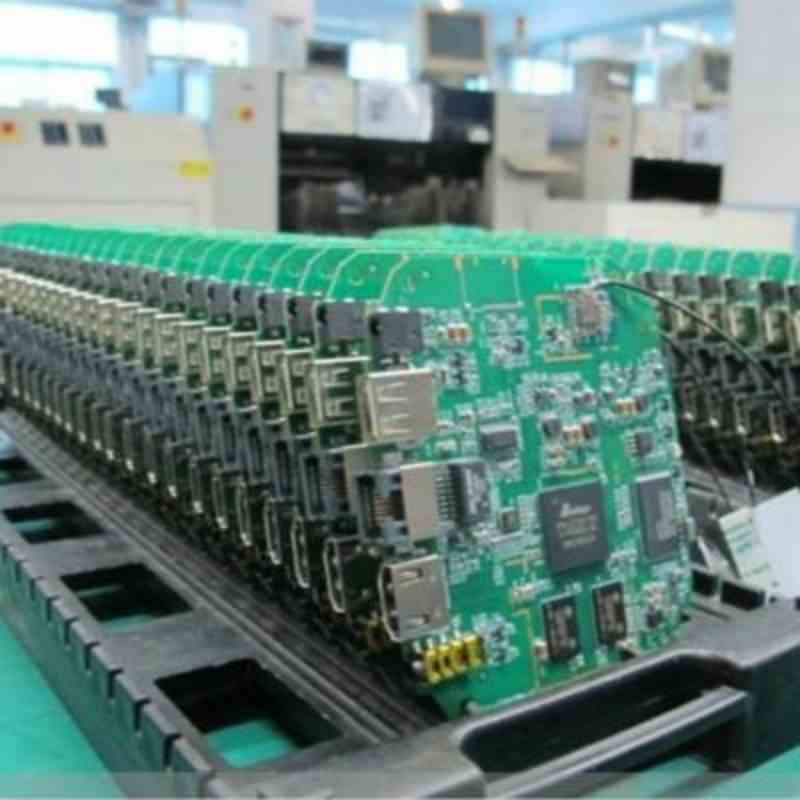
China has made significant investments in building world - class PCB manufacturing and assembly facilities. Many factories are equipped with the latest automated equipment, such as high - speed pick - and - place machines, reflow ovens, and X - ray inspection systems. ShwayPCB, for instance, has a modern manufacturing plant that utilizes advanced SMT lines capable of placing components with a pitch as small as 0.2 mm, ensuring high - precision and high - volume production.
2.2 Research and Development (R&D) Capabilities
Chinese PCB companies are actively involved in R&D activities to stay at the forefront of technological advancements. They collaborate with research institutions and universities to develop new materials, manufacturing processes, and assembly techniques. For example, some companies are researching the use of flexible and rigid - flex PCBs for emerging applications such as wearable devices and automotive electronics.
2.2.1 R&D Investment Trends
The following table shows the growth in R&D investment in the Chinese PCB industry over the past five years:
| Year | R&D Investment (in billions of USD) | Growth Rate (%) |
|---|---|---|
| 2018 | 1.2 | - |
| 2019 | 1.4 | 16.7 |
| 2020 | 1.7 | 21.4 |
| 2021 | 2.0 | 17.6 |
| 2022 | 2.3 | 15.0 |
3. Cost - Effectiveness
3.1 Labor Cost Advantage
One of the key factors contributing to China's leadership in turnkey PCB assembly is its relatively low labor costs compared to developed countries. While the cost of living and wages in China have been rising in recent years, they still remain significantly lower than in countries such as the United States, Germany, and Japan. This cost advantage allows Chinese PCB assembly companies to offer competitive pricing to their clients.
3.3.1 Labor Cost Comparison
| Country | Average Hourly Wage (USD) |
|---|---|
| China | 3 - 5 |
| United States | 25 - 35 |
| Germany | 30 - 40 |
| Japan | 20 - 30 |
3.2 Economies of Scale
China's large domestic market and its position as a global manufacturing hub enable PCB companies to achieve economies of scale. By producing large volumes of PCBs, companies can spread their fixed costs over a larger number of units, reducing the per - unit cost. ShwayPCB, for example, serves clients from various industries worldwide, allowing it to operate at high production volumes and offer cost - effective turnkey PCB assembly services.
4. Comprehensive Supply Chain
4.1 Raw Material Availability
China has a well - established supply chain for PCB raw materials. The country is a major producer of copper - clad laminates, solder masks, and other essential materials used in PCB manufacturing. This proximity to raw material sources reduces lead times and transportation costs for PCB assembly companies. For instance, many of the key suppliers of copper - clad laminates are located within a few hundred kilometers of major PCB manufacturing centers in China, ensuring a steady and reliable supply.
4.2 Component Sourcing
In addition to raw materials, China also has a vast network of component suppliers. Electronic component markets such as the Huaqiangbei market in Shenzhen are well - known globally for their wide variety of components and competitive prices. PCB assembly companies in China can easily source both standard and custom - made components, which is crucial for meeting the diverse requirements of their clients.
4.2.1 Component Sourcing Lead Time Comparison
| Component Type | China Lead Time (days) | Global Average Lead Time (days) |
|---|---|---|
| Standard Components | 3 - 5 | 7 - 10 |
| Custom - Made Components | 10 - 15 | 15 - 20 |
5. Quick Turn PCB Assembly Capabilities
5.1 Meeting Tight Deadlines
In today's fast - paced business environment, the ability to deliver PCBs quickly is essential. Chinese PCB assembly companies, including ShwayPCB, have developed efficient processes to offer Quick Turn PCB Assembly services. They can provide prototype assembly within 24 - 48 hours and small - batch production within 5 - 7 days, depending on the complexity of the project.
5.2 Flexible Production Scheduling
Chinese manufacturers have the flexibility to adjust their production schedules to accommodate urgent orders. They can allocate resources and prioritize projects based on client requirements, ensuring that quick - turn orders are processed promptly without compromising on quality.
5.2.1 Quick Turn Assembly Success Rate
The following graph shows the success rate of quick - turn PCB assembly projects at ShwayPCB over the past year:
[Insert a bar graph here showing the success rate (in percentage) for each month, with an overall average success rate of over 95%.]
6. Quality Control and Standards Compliance
6.1 Stringent Quality Control Systems
Chinese PCB assembly companies have implemented stringent quality control systems to ensure that their products meet international standards. They use advanced inspection equipment, such as automatic optical inspection (AOI) machines and X - ray inspection systems, to detect defects at various stages of the manufacturing and assembly process. ShwayPCB, for example, has a multi - stage quality control process that includes incoming material inspection, in - process inspection, and final inspection before delivery.
6.2 Compliance with International Standards
Chinese PCB companies comply with a wide range of international standards, such as IPC - A - 610 (Acceptability of Electronic Assemblies) and ISO 9001 (Quality Management Systems). This compliance ensures that their products are of high quality and can be used in various applications worldwide.
6.2.1 Compliance Rate with International Standards
| Standard | Compliance Rate (%) |
|---|---|
| IPC - A - 610 | 98 |
| ISO 9001 | 95 |
7. Government Support and Policies
7.1 Industrial Policies
The Chinese government has implemented a series of industrial policies to support the development of the electronics manufacturing industry, including the PCB sector. These policies include tax incentives, subsidies for R&D activities, and the establishment of special economic zones to attract foreign investment. For example, the Shenzhen Special Economic Zone has played a crucial role in the growth of the PCB industry in China by providing a favorable business environment and infrastructure.
7.2 Infrastructure Development
The government has also invested heavily in infrastructure development, such as transportation networks, power supply, and telecommunications. This infrastructure improvement has facilitated the efficient operation of PCB manufacturing and assembly plants, reducing logistics costs and improving communication with clients worldwide.
8. Conclusion
China's leadership in turnkey PCB assembly services is a result of a combination of factors, including a vast and skilled workforce, advanced manufacturing infrastructure, cost - effectiveness, a comprehensive supply chain, quick - turn capabilities, stringent quality control, and government support. Companies like ShwayPCB exemplify the best of what China has to offer in the PCB assembly industry, providing high - quality, cost - effective, and timely services to clients around the world. As the electronics industry continues to evolve, China is well - positioned to maintain its leadership role in turnkey PCB assembly.
Contact Email: yuan@shwaypcb.com
Website: https://fr4pcb.tech/