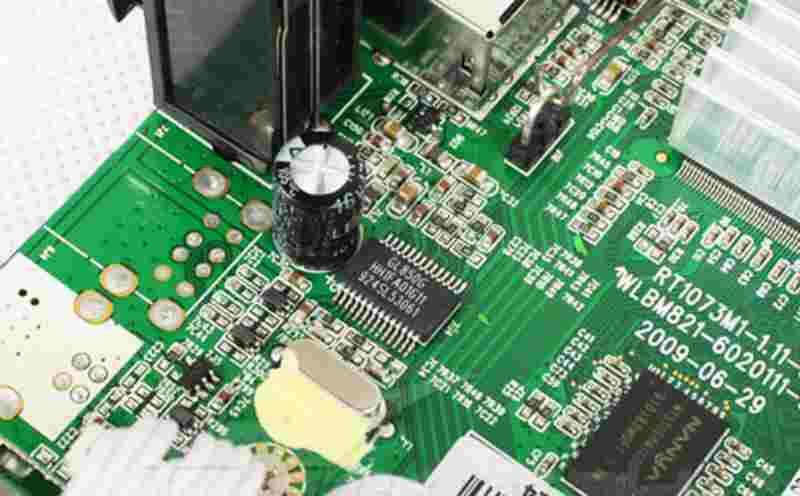
Turnkey PCB Assembly China: Full Service & Competitive Pricing
Turnkey PCB Assembly China: Full Service & Competitive Pricing
Introduction
In the field of electronics manufacturing, Turnkey PCB Assembly has emerged as a core solution for enterprises seeking to shorten R&D cycles and reduce production costs. As the global hub of the PCB industry, China leverages its mature supply chain ecosystem, advanced manufacturing technologies, and economies of scale to provide end-to-end services—from design to delivery—for clients worldwide. This article takes ShwayPCB as an example to analyze the key advantages, technical capabilities, and industry applications of China's Turnkey PCB Assembly services, empowering businesses to achieve efficient product realization.
I. Turnkey PCB Assembly: Definition and Core Value
Turnkey PCB Assembly refers to a service model where the provider handles every stage—PCB design, manufacturing, component procurement, assembly, and testing—enabling clients to receive fully functional PCBA (Printed Circuit Board Assembly) units by simply submitting design files (e.g., Gerber, BOM). Its core value lies in:
- Time Efficiency: Streamlined integration of design, procurement, and production reduces lead times.
- Cost Optimization: Bulk purchasing and automated production lower per-unit costs.
- Quality Control: Unified management of the supply chain and production processes minimizes risks from intermediaries.
- Technical Synergy: Providers offer DFM (Design for Manufacturability) reviews to preempt production issues.
II. ShwayPCB: A Benchmark for Turnkey Services in China
ShwayPCB is a Chinese enterprise specializing in high-end PCB manufacturing and assembly, serving industries such as consumer electronics, telecommunications, automotive electronics, and industrial control. The company focuses on FR-4 substrates while also offering diverse materials like high-TG, high-frequency, and metal-core boards to meet varied application demands.
1. Technical Capabilities and Production Strengths
(1) PCB Manufacturing
- Material Support:
- Standard FR-4: Cost-effective and stable for general electronics.
- High-TG FR-4: Glass transition temperature (TG) up to 180°C, ideal for high-temperature environments (e.g., automotive electronics, power modules).
- High-Frequency Substrates: Such as Rogers 4350B with stable dielectric constant (Dk), suitable for 5G communications and RF devices.
- Metal-Core Substrates: Aluminum-core boards with thermal conductivity of 2.0–3.0 W/m·K for LED lighting and high-power applications.
- Process Precision:
- Minimum trace width/spacing: 3 mil (0.076 mm) for high-density routing.
- Minimum drill size: 0.1 mm to accommodate fine-pitch BGAs and CSPs.
- Layer Count: 1–40 layers, supporting rigid-flex PCBs.
(2) PCB Assembly
- Process Types:
- Surface Mount Technology (SMT): Supports 01005 (0402) chip components, 0.25 mm-pitch BGAs, and QFN packages.
- Through-Hole Technology (THT): Compatible with axial components and connectors.
- Hybrid Assembly: Combines SMT and THT for complex circuit designs.
- Production Efficiency:
- High-Speed Pick-and-Place Machines: Handle 25,000 SMD components per hour.
- Automated Testing: Functional testing (FCT), boundary scan (JTAG), and X-ray inspection ensure quality.
- Rapid Delivery: 5-day turnaround for prototypes, 7–10 days for mass production.
(3) Supply Chain Management
- Component Procurement:
- Partnerships with global distributors like Digi-Key, Mouser, and Element14 for real-time inventory and pricing.
- Local sourcing options to shorten lead times and reduce logistics costs.
- Alternative component recommendations to resolve shortages.
- Inventory Control:
- Smart warehousing tracks 600,000+ component SKUs in real time.
- Customizable "safety stock" strategies to prevent production disruptions.
2. Service Workflow and Quality Assurance
(1) End-to-End Service
- Design Phase: DFM reviews optimize layout and routing.
- Manufacturing Phase: LDI (Laser Direct Imaging) ensures graphic accuracy.
- Assembly Phase: AOI (Automated Optical Inspection) and ICT (In-Circuit Testing) validate quality.
- Testing Phase: High-temperature aging and vibration tests simulate real-world conditions.
- Delivery Phase: Vacuum packaging and ESD-safe transportation protect products.
(2) Quality Standards
- Certifications: ISO 9001, IATF 16949 (automotive), IPC-A-610 Class 3 (high-reliability devices).
- Inspection Equipment: X-ray machines, flying probe testers, and high-speed cameras for solder joint analysis.
- Traceability System: Unique IDs assigned to each PCB for full lifecycle tracking.
III. Industry Application Cases
1. 5G Communication Equipment
A client required a 5G small cell PCB with high-frequency signal integrity (Dk ≤ 4.0), low loss (Df ≤ 0.005), and efficient heat dissipation. ShwayPCB used Rogers 4350B substrate, buried via technology, and metalized vias to reduce signal loss by 30% while maintaining component temperatures below 85°C via aluminum-core cooling.
2. Automotive Electronics Module
For a new energy vehicle (NEV) battery management system (BMS), the client demanded PCBs meeting AEC-Q200 standards and operating at -40°C to 125°C. ShwayPCB selected high-TG FR-4 material, enhanced corrosion resistance with HAL (Hot Air Solder Leveling), and ensured THT reliability through selective wave soldering.
3. Medical Device Prototype
A startup needed a portable ultrasound prototype with a compact PCB (50 mm × 50 mm), 8 layers, and a 7-day delivery window. ShwayPCB leveraged HDI (High-Density Interconnect) technology to minimize layer spacing and combined SMT/THT assembly to meet the deadline.
IV. Cost Advantages and Transparent Pricing
1. Cost Breakdown
- PCB Manufacturing: Material costs account for 40–60%, with processing fees tied to layer count and hole complexity.
- Component Procurement: Bulk purchasing reduces unit prices by 10–30%.
- Assembly Fees: SMT is priced per pad (US$0.01–0.03/pad), while THT is billed by component count.
2. Transparent Pricing Model
ShwayPCB’s intelligent quoting system syncs global component prices in real time, providing clients with an all-inclusive price covering PCB manufacturing, component sourcing, and assembly testing—eliminating hidden costs. For example:
- 4-Layer FR-4 PCB (10 cm × 10 cm): Manufacturing cost ~US$15.
- Component Procurement: Real-time quotes based on BOM.
- SMT Assembly (500 pads): ~US$25.
- Total Cost: 20–35% lower than traditional subcontracting models.
V. Customer Support and After-Sales Service
- Technical Assistance: 24/7 online engineers resolve design issues promptly.
- Rapid Response: Quotes within 2 hours, DFM reports within 24 hours.
- Warranty: 90-day quality guarantee with support for returns and repairs.
- Customization: Tailored processes like embedded resistors/capacitors and rigid-flex integration.
VI. Conclusion
China’s Turnkey PCB Assembly services, driven by technical maturity, cost competitiveness, and supply chain resilience, have become the top choice for global electronics manufacturing. ShwayPCB, as an industry leader, delivers efficient, reliable, and transparent one-stop solutions by vertically integrating PCB manufacturing, component procurement, and assembly testing. Whether for prototyping or mass production, partnering with Chinese Turnkey providers achieves optimal balance across quality, speed, and cost.
Contact Us:
- Email: yuan@shwaypcb.com
- Website: https://fr4pcb.tech/