We use cookles to Improve your online experience. By continuing browsing this website, we assume you agree our use of cookies.

The H670 ATX Motherboard: A Robust Powerhouse for Industrial Automation with 6 PCIe 4.0 Slots and -20°C~60°C Operation
September 8th, 2025
183 views
The H670 ATX Motherboard: A Robust Powerhouse for Industrial Automation with 6 PCIe 4.0 Slots and -20°C~60°C Operation
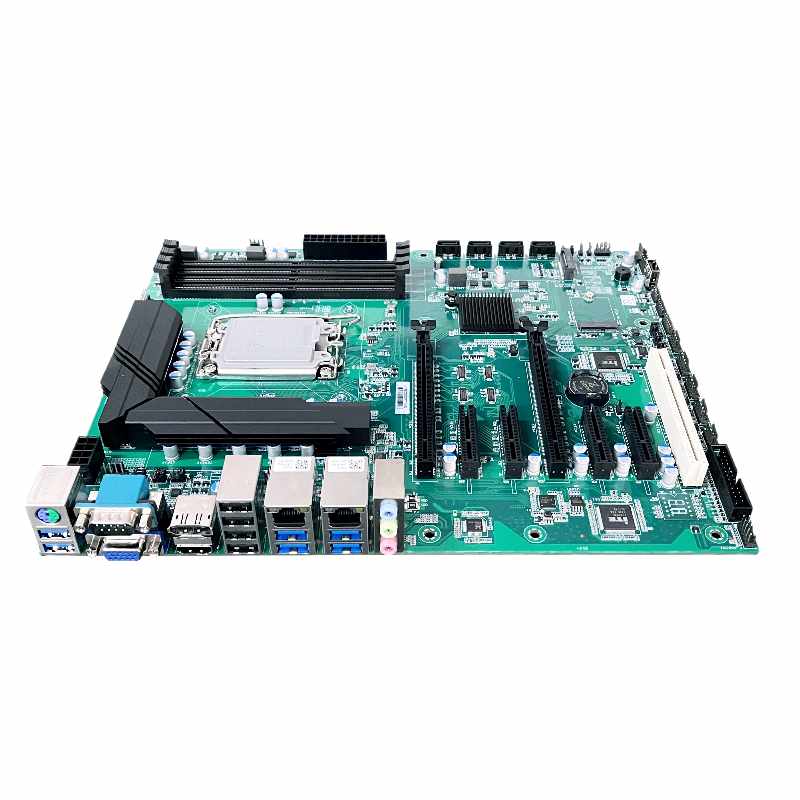
In the dynamic and exacting domain of industrial automation, the choice of motherboard can make or break the efficiency, reliability, and adaptability of the entire system. The H670 ATX motherboard, equipped with 6 PCIe 4.0 slots and capable of operating within an extreme temperature range of -20°C to 60°C, has emerged as a game - changing solution for industrial applications. This article delves deep into the features, advantages, and real - world applications of this remarkable motherboard in the industrial automation landscape.
1. Understanding the H670 Chipset in the Industrial Context
1.1 Core Features of the H670 Chipset
The H670 chipset, developed by Intel, serves as the fundamental building block of this industrial - grade motherboard. It is engineered to offer a balanced combination of performance and functionality. One of its key attributes is support for high - speed data transfer interfaces. With support for PCIe 3.0 and 4.0, it enables the seamless operation of the 6 PCIe 4.0 slots on the motherboard. PCIe 4.0, in particular, provides data transfer rates of up to 16 GT/s per lane, which is twice as fast as PCIe 3.0. This high - speed data transfer is crucial for industrial automation applications that require rapid communication between different components, such as sensors, actuators, and control units.
The H670 chipset also has excellent memory management capabilities. It supports DDR4 memory, with some motherboards allowing for relatively high - speed DDR4 modules. This ensures that the system can quickly access and process data, which is essential for real - time control and monitoring in industrial settings. Additionally, the chipset is designed to work in harmony with a wide range of Intel processors, providing flexibility in system configuration.
1.2 How the H670 Chipset Differs for Industrial Use
When compared to consumer - oriented H670 chipsets, the ones used in industrial - grade motherboards are enhanced for ruggedness and reliability. They often undergo additional testing to ensure they can withstand the harsh environmental conditions typical of industrial environments. In industrial automation, where systems may operate continuously for long periods and be exposed to vibrations, dust, and extreme temperatures, the H670 chipset in these motherboards is designed with extra - robust components. For example, the capacitors used are of higher quality, capable of withstanding voltage fluctuations and temperature variations more effectively. The PCB (Printed Circuit Board) layout is also optimized to reduce electromagnetic interference, which can be a significant issue in industrial settings filled with various electrical devices.
2. The Significance of 6 PCIe 4.0 Slots in Industrial Automation
2.1 High - Speed Data Transfer for Real - Time Control
In industrial automation, real - time control is of utmost importance. The 6 PCIe 4.0 slots on the H670 ATX motherboard play a pivotal role in enabling this. For instance, in a manufacturing plant's automated assembly line, sensors are used to detect the position and status of products as they move along the line. These sensors are often connected to data acquisition cards, which can be installed in the PCIe 4.0 slots. The high - speed data transfer capabilities of PCIe 4.0 allow these cards to quickly collect and transmit sensor data to the motherboard. The motherboard can then process this data in real - time and send control signals to actuators, such as robotic arms, to perform tasks like picking, placing, and assembling components. The low latency and high bandwidth of PCIe 4.0 ensure that there are no delays in this data transfer and control loop, leading to smooth and efficient operation of the assembly line.
2.2 Versatile Expansion Options for Diverse Industrial Needs
The multiple PCIe 4.0 slots also offer extensive expansion possibilities. In a smart factory setting, where there is a growing need for connectivity and data processing, a variety of expansion cards can be installed. For example, network interface cards with advanced features can be added to the PCIe 4.0 slots. These cards can provide high - speed, reliable network connections, which are essential for communicating with other devices on the factory floor, as well as for transmitting data to the cloud for analytics and remote monitoring. In addition, graphics cards can be installed in the PCIe 4.0 slots for applications that require real - time visualization, such as in quality control systems where high - resolution images of products need to be analyzed. This versatility allows industrial automation systems to be customized according to specific requirements, making the H670 ATX motherboard a highly adaptable solution.
3. Operating Temperature Range: -20°C~60°C
3.1 Design Considerations for Extreme Temperatures
The ability of the H670 ATX motherboard to operate within the temperature range of -20°C to 60°C is a result of careful design and component selection. At low temperatures, components can become more brittle, and electrical conductivity can be affected. To counter this, the motherboard uses components that are specifically rated for low - temperature operation. For example, the capacitors are chosen for their ability to maintain their electrical properties even in sub - zero temperatures. The motherboard's PCB is also designed with materials that can withstand thermal expansion and contraction, which is more pronounced at extreme temperatures.
At high temperatures, components can overheat and fail. The H670 ATX motherboard addresses this through efficient cooling mechanisms. It often features large - surface - area heatsinks on critical components, such as the CPU voltage regulators and the chipset itself. These heatsinks help to dissipate heat effectively. In addition, some motherboards may have additional cooling fans or liquid - cooling options to ensure that the components remain within a safe operating temperature range, even in hot industrial environments.
3.2 Applications in Harsh Industrial Environments
There are numerous industrial environments where the -20°C to 60°C operating temperature range of the H670 ATX motherboard is invaluable. In cold storage facilities, where temperatures can drop well below freezing, the motherboard can be used in control systems that manage the temperature, humidity, and inventory. These systems need to operate continuously and reliably, and the H670 motherboard's ability to function in low - temperature conditions ensures that there are no disruptions in the cold storage operations.
On the other hand, in industrial settings such as steel mills or foundries, where temperatures can be extremely high due to the nature of the manufacturing processes, the motherboard can be used in monitoring and control systems. These systems need to withstand the intense heat while still providing accurate and real - time data. The H670 ATX motherboard's high - temperature tolerance makes it suitable for such applications, ensuring the smooth running of the industrial processes.
4. Compatibility with Industrial Components
4.1 Processor Compatibility
The H670 ATX motherboard is compatible with a wide range of Intel processors, which is beneficial for industrial automation. In industrial applications, different levels of processing power may be required depending on the complexity of the tasks. For simple control tasks, such as basic sensor monitoring and actuator control in a small - scale manufacturing unit, an entry - level Intel processor may be sufficient. The H670 motherboard can support these processors while still providing the necessary performance and features.
For more complex applications, such as running advanced algorithms for predictive maintenance in a large - scale factory, high - performance Intel processors can be used. The motherboard's architecture is designed to fully utilize the capabilities of these processors, ensuring that the industrial automation system can handle the demanding computational tasks. Whether it's a 12th - generation, 13th - generation, or 14th - generation Intel processor, the H670 motherboard can provide a stable and efficient platform for industrial use.
4.2 Memory and Storage Compatibility
In terms of memory, the H670 motherboard supports DDR4 memory modules. In industrial automation, having sufficient and fast memory is crucial for storing and accessing data related to production processes, inventory management, and control algorithms. The motherboard can support a variety of DDR4 memory speeds and capacities, allowing for customization based on the specific needs of the industrial application.
When it comes to storage, the H670 motherboard offers support for both traditional SATA - based storage devices, such as hard disk drives (HDDs) and SATA solid - state drives (SSDs), as well as NVMe SSDs. NVMe SSDs, which can be connected via the PCIe 4.0 slots, are particularly useful in industrial applications that require fast data access. For example, in a data - intensive industrial control system where large amounts of historical data need to be accessed quickly for analysis, an NVMe SSD can significantly reduce the data retrieval time, improving the overall efficiency of the system.
5. Build Quality and Reliability in Industrial Automation
5.1 Components and Construction
The build quality of the H670 ATX motherboard is a key factor in its suitability for industrial automation. It is constructed using high - quality components that are built to last. The power delivery system, for instance, is designed to provide stable and reliable power to all components. High - quality capacitors and voltage regulators are used to ensure that the motherboard can handle the power demands of industrial applications without experiencing voltage fluctuations or overheating.
The PCB of the motherboard is also of high quality. It is often multilayered, which helps to improve signal integrity and reduce electromagnetic interference. The layers are carefully designed to route electrical signals between different components, ensuring that the motherboard operates smoothly and efficiently. In addition, the motherboard may have features such as reinforced slots, which can better withstand the vibrations and mechanical stress often present in industrial environments.
5.2 Long - Term Reliability
Long - term reliability is non - negotiable in industrial automation, where system downtime can result in significant losses. The H670 ATX motherboard is engineered to be highly reliable over an extended period. It undergoes rigorous testing during the manufacturing process to ensure that it can meet the demands of industrial use. This includes testing for electrical stability, compatibility with various industrial components, and resistance to environmental factors such as temperature, humidity, and vibration.
Many manufacturers also offer extended warranties for their industrial - grade motherboards, providing an extra layer of assurance to customers. In addition, the motherboard may have features such as redundant power connectors, which can ensure that the system remains operational even in the event of a power supply failure. These reliability - enhancing features make the H670 ATX motherboard a trusted choice for industrial automation applications.
6. Real - World Applications of the H670 ATX Motherboard in Industrial Automation
6.1 Manufacturing and Assembly Lines
In manufacturing and assembly lines, the H670 ATX motherboard is widely used. It can be found in automated robotic systems that perform tasks such as welding, painting, and assembly. The 6 PCIe 4.0 slots allow for the connection of multiple high - performance components, such as motion control cards, which are used to precisely control the movement of robotic arms. The motherboard's ability to operate in harsh environments, including the heat and vibrations often present in manufacturing plants, ensures that these robotic systems can work continuously and accurately.
The motherboard is also used in quality control systems. High - resolution cameras are connected to the motherboard via PCIe 4.0 slots, and the motherboard processes the images captured by these cameras to detect defects in products. The real - time data processing capabilities of the motherboard, combined with its compatibility with industrial - grade components, make it an ideal choice for ensuring product quality in manufacturing and assembly lines.
6.2 Process Control in Chemical and Petrochemical Industries
In the chemical and petrochemical industries, process control is critical for safety and efficiency. The H670 ATX motherboard can be used in control systems that monitor and regulate various chemical processes. Sensors that measure parameters such as temperature, pressure, and chemical composition are connected to the motherboard via data acquisition cards installed in the PCIe 4.0 slots. The motherboard then processes this data and sends control signals to valves, pumps, and other equipment to maintain optimal process conditions.
The ability of the motherboard to operate in extreme temperatures is particularly relevant in these industries, where the process environment can be very hot or cold. For example, in a petrochemical refinery, the motherboard can be used in a control room that monitors the refining process, and it needs to function reliably in the hot and humid conditions often found in such facilities.
6.3 Smart Grids and Energy Management
In the field of smart grids and energy management, the H670 ATX motherboard plays an important role. It can be used in energy monitoring and control systems that manage the distribution and consumption of electricity. The motherboard can be connected to various sensors and meters that measure electricity usage, voltage, and current. The data from these devices is then processed by the motherboard, and control signals are sent to equipment such as power switches and inverters to optimize energy distribution.
The 6 PCIe 4.0 slots can be used to connect high - speed communication cards, which are essential for transmitting data between different parts of the smart grid network. The motherboard's reliability and compatibility with industrial - grade components make it suitable for use in energy management systems, which need to operate continuously and accurately to ensure the stable supply of electricity.
7. FAQ
7.1 Can the H670 ATX Motherboard Be Used in Hazardous Industrial Environments?
While the H670 ATX motherboard is designed to be rugged and reliable for industrial use, its suitability for hazardous environments depends on additional factors. In environments where there are flammable gases, dust, or other hazardous substances, the motherboard may need to be installed in an enclosure that meets the relevant safety standards. Some industrial - grade motherboards may also have specific certifications for use in hazardous areas. It's important to check with the motherboard manufacturer and consult relevant safety regulations to determine if the H670 ATX motherboard can be used in a particular hazardous industrial environment.
7.2 How Does the Motherboard Handle Power Outages in Industrial Settings?
Many H670 ATX motherboards for industrial use are designed to handle power outages gracefully. Some models may have features such as redundant power connectors, which allow for the connection of multiple power supplies. In the event of a power outage in one supply, the motherboard can switch to the other supply, ensuring continuous operation. Additionally, the motherboard may be able to save important data and system settings to non - volatile storage in the event of a power loss. Some motherboards also support features like wake - on - LAN, which can be used to remotely power on the system once power is restored.
7.3 What is the Maintenance Requirement for the H670 ATX Motherboard in Industrial Automation?
The maintenance requirements for the H670 ATX motherboard in industrial automation are relatively low. However, it's recommended to periodically check for dust accumulation, especially in environments with high levels of particulate matter. Dust can affect the cooling efficiency of the motherboard and potentially cause overheating. Cleaning the motherboard with compressed air or a suitable cleaning solution can help to keep it in good working condition. It's also advisable to update the motherboard's BIOS and drivers regularly to ensure compatibility with the latest industrial components and to take advantage of any performance improvements or bug fixes provided by the manufacturer.
8. Conclusion
The H670 ATX motherboard, with its 6 PCIe 4.0 slots and -20°C to 60°C operating temperature range, has proven to be an outstanding choice for industrial automation applications. Its ability to provide high - speed data transfer, support a wide range of industrial components, and operate reliably in harsh environments makes it a versatile and powerful solution. Whether it's in manufacturing, process control, or energy management, the H670 ATX motherboard can enhance the efficiency, reliability, and adaptability of industrial automation systems.
As the industrial automation industry continues to evolve and demand more advanced and reliable technologies, the H670 ATX motherboard is well - positioned to meet these challenges. Its combination of performance, compatibility, and durability makes it a top choice for engineers, system integrators, and industrial operators looking to build or upgrade their industrial automation systems. By investing in the H670 ATX motherboard, businesses can ensure that their industrial processes are more efficient, productive, and competitive in the global market.

Copyright © 2005-2025 ShwayPCB : PCB Fabrication and Assembly Manufacturer. All Rights Reserved. POWERED BY UEESHOP


Copyright © 2005-2025 ShwayPCB : PCB Fabrication and Assembly Manufacturer. All Rights Reserved. POWERED BY UEESHOP