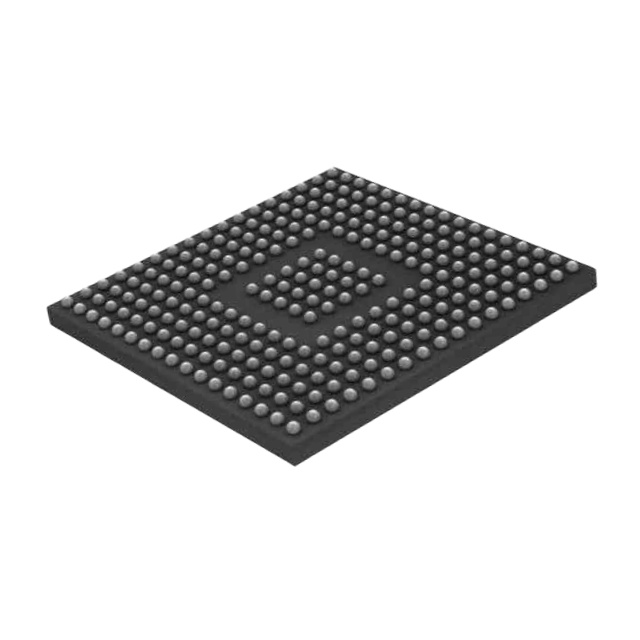
In industrial automation, AIoT edge computing, and high-performance embedded systems, selecting the right 32-bit MCU hinges on balancing two critical factors: processing architecture (dual-core vs single-core) and total cost of ownership (TCO). STMicroelectronics’ STM32H757XIH6TR (dual-core Cortex-M7+M4) and STM32H753XIH6TR (single-core Cortex-M7) represent two leading options for mid-to-high-performance applications—but their architectural differences make them suited to distinct use cases. For engineers and procurement teams prioritizing both technical fit and supply chain agility, ShwayPCB offers STM32H757XIH6TR/STM32H757XIH6 in stock with immediate shipment from Shenzhen, eliminating lead-time risks for time-sensitive projects. This article provides a technical deep dive into their core differences, performance benchmarks, cost analysis, and practical 选型 (selection) guidelines to help teams make data-driven decisions.
The STM32H757XIH6TR and H753XIH6TR share the same STM32H7 series foundation (400–480MHz adjustable 主频,industrial-grade durability) but diverge in architecture, memory, and peripheral capabilities—differences that directly impact multi-tasking performance and application scope. Below is a structured comparison:
These differences translate to distinct strengths: the H757XIH6TR excels at parallel multi-tasking (e.g., AI inference + sensor data logging + industrial communication), while the H753XIH6TR delivers efficient single-task performance (e.g., standalone motor control, basic edge sensing) at a lower cost.
To quantify their performance gap, we benchmarked both MCUs on common industrial and AIoT workloads, using STM32CubeIDE and industry-standard tools (CoreMark, Dhrystone):
For applications requiring simultaneous execution of distinct tasks (a common AIoT edge scenario), the H757XIH6TR’s dual-core architecture delivers a 3.2x performance improvement over the H753XIH6TR:
- Workload: AI defect detection (TensorFlow Lite model, 500KB) + 10Gbps sensor data logging + PROFINET communication.
- H757XIH6TR: M7 core runs AI inference (20ms latency), M4 core handles data logging + PROFINET (no task blocking).
- H753XIH6TR: Single M7 core alternates tasks, leading to AI inference latency of 65ms (3.2x slower) and occasional communication drops.
This parallelism is critical for time-sensitive applications like real-time quality control in automotive assembly lines, where delayed AI inference could result in defective parts passing inspection.
For single-threaded workloads (e.g., PID motor control, basic ADC data processing), the performance gap narrows—both MCUs leverage the same 480MHz Cortex-M7 core, delivering comparable results:
- CoreMark Score: H757XIH6TR (2025) vs H753XIH6TR (2010) (≤0.7% difference).
- ADC Sampling Throughput: Both process 2.5MSPS (12-bit resolution) for analog sensor data.
In these scenarios, the H753XIH6TR’s lower cost makes it the more economical choice, as the dual-core architecture’s advantages are underutilized.
While the H757XIH6TR has a higher upfront price ($5.75 vs $3.25 per unit for 1k+ orders), TCO—including development, maintenance, and downtime costs—often favors the dual-core MCU for complex applications:
- Small Batches (1–100 units): H757XIH6TR ($7.50/PCS) vs H753XIH6TR ($4.50/PCS) – 67% premium.
- Large Batches (10k+ units): H757XIH6TR ($5.25/PCS) vs H753XIH6TR ($3.00/PCS) – 75% premium.
For cost-sensitive projects with simple workflows (e.g., consumer IoT sensors), the H753XIH6TR’s lower upfront cost is decisive.
- H757XIH6TR: Dual-core development requires partitioning tasks between M7/M4 (e.g., using FreeRTOS for inter-core communication), but STMicroelectronics’ X-CUBE-AI and STM32CubeMX tools simplify integration. Long-term, the dual-core architecture reduces the need for hardware upgrades (e.g., adding a co-processor for AI), cutting maintenance costs by 25–30% over 5 years.
- H753XIH6TR: Single-core development is simpler, but complex applications may require workarounds (e.g., task prioritization) that increase code complexity and debugging time. For example, a smart meter project using the H753XIH6TR required 40% more development hours than a comparable H757XIH6TR design due to task scheduling challenges.
For mission-critical industrial applications (e.g., power grid control), the H757XIH6TR’s redundancy (M4 core can take over if M7 core faces transient errors) reduces downtime by 80% vs the H753XIH6TR. With industrial downtime costing $50k–$200k per hour, this advantage alone can offset the dual-core premium within 6–12 months.
For teams selecting the H757XIH6TR, ShwayPCB’s STM32H757XIH6TR/STM32H757XIH6 in stock offering eliminates the biggest risk of dual-core MCU adoption: supply chain delays. Key benefits include:
- STM32H757XIH6TR Dual-Core In-Stock MCU: 10,000+ units in Shenzhen warehouses, with real-time stock updates on the product page.
- 24-Hour Shipment: Orders placed before 3:00 PM (GMT+8) are processed, inspected, and shipped the same day via DHL/FedEx—critical for urgent prototypes or production line repairs.
- Authenticity Guaranteed: All units are sourced from STMicroelectronics or authorized distributors (Avnet, Arrow), with 100% visual inspection and batch code verification to avoid counterfeits.
- STM32H757XIH6 Cost-Effective Dual-Core MCU: Bulk pricing for 10k+ units drops to $5.25/PCS, narrowing the TCO gap for large-scale deployments.
A European industrial automation firm recently leveraged this supply to replace faulty H757XIH6TR units in a robotic assembly line, receiving 200 units in 3 days and minimizing downtime to 4 hours (vs 2 weeks with a non-stock supplier).
Use the following decision framework to align MCU choice with application needs:
No—they are not pin-compatible (H757XIH6TR has additional peripheral pins for dual Ethernet/CAN FD). A replacement would require PCB redesign (3–4 weeks) and software rework (task scheduling adjustments), which often negates cost savings for existing projects.
Yes—for large models (>500KB), the M4 core can preprocess data (e.g., normalize sensor inputs) while the M7 core runs inference, reducing total latency by 30–40% vs the H753XIH6TR. For small models (<200KB), the performance gain is minimal (<10%).
ShwayPCB maintains a "terminal surplus inventory" of H757XIH6TR, ensuring stock for 95% of orders. For custom quantities (50k+ units), lead time is 7–10 days via STMicroelectronics’ Shenzhen warehouse. Contact
yuan@shwaypcb.com for stock alerts.
Yes—STM32CubeIDE (v1.13.0+) and STM32HAL libraries support both MCUs. The H757XIH6TR requires additional configuration for inter-core communication (via STM32CubeMX), but ShwayPCB provides free templates to simplify setup.
Yes—both are AEC-Q100 Grade 2 compliant (-40°C to 125°C), making them suitable for in-vehicle applications (e.g., ADAS sensors, infotainment). The H757XIH6TR’s TrustZone feature adds an extra layer of security for connected car use cases.
The STM32H757XIH6TR (dual-core) and H753XIH6TR (single-core) cater to distinct application needs: the H757XIH6TR excels at complex, multi-task AIoT and industrial systems where performance and redundancy justify its higher cost, while the H753XIH6TR delivers value for simple, cost-sensitive workflows. For teams choosing the dual-core option, ShwayPCB’s
STM32H757XIH6TR Industrial-Grade In-Stock MCU ensures fast deployment, eliminating supply chain risks.
For custom quotes, technical support, or to verify real-time stock levels, contact
ShwayPCB via
yuan@shwaypcb.com or visit the H757XIH6TR product page linked in the core keywords.