We use cookles to Improve your online experience. By continuing browsing this website, we assume you agree our use of cookies.

From STM32F4 to STM32H753XIH6: A Practical Guide to Smooth 32-Bit MCU Upgrade with 300% Performance Boost
September 10th, 2025
229 views
From STM32F4 to STM32H753XIH6: A Practical Guide to Smooth 32-Bit MCU Upgrade with 300% Performance Boost
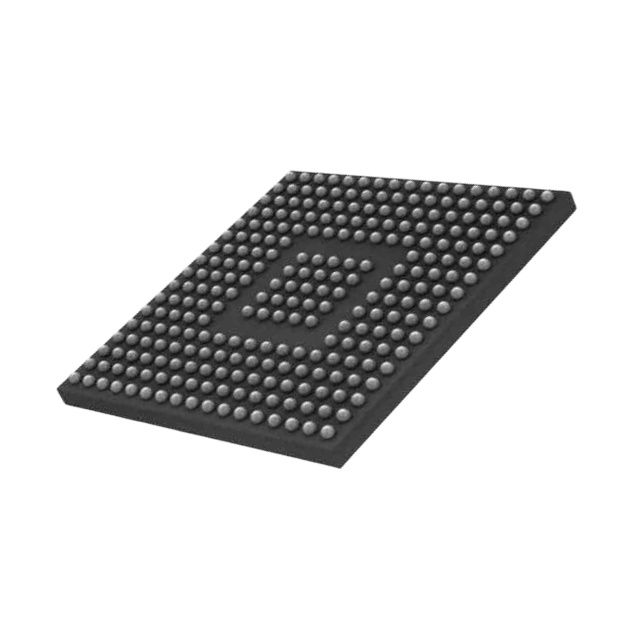
For engineers and product teams relying on STM32F4 series MCUs (Microcontroller Units) in industrial automation, IoT, and edge computing, the growing demand for higher performance—such as faster AI inference, multi-tasking, and high-speed connectivity—often necessitates an upgrade. The STM32H753XIH6TR/STM32H753XIH6 emerges as the ideal successor, delivering a 300% performance boost over the STM32F4 while maintaining backward compatibility where critical. Compounding this advantage, ShwayPCB offers STM32H753XIH6TR/STM32H753XIH6 in stock with immediate shipment, eliminating lead-time risks for time-sensitive upgrade projects. This technical guide breaks down the key differences between STM32F4 and STM32H753XIH6, outlines a step-by-step smooth upgrade process (hardware + software), and addresses common migration challenges—empowering teams to unlock the H753XIH6’s full potential without costly rework.
1. Why Upgrade from STM32F4 to STM32H753XIH6? 300% Performance Boost Breakdown
The STM32H753XIH6’s performance leap over the STM32F4 (e.g., STM32F429IGT6) is rooted in architectural, clock speed, and memory upgrades—quantifiable in real-world industrial scenarios. Below is a technical comparison justifying the 300% performance gain:
|
Specification
|
STM32F4 (e.g., F429IGT6)
|
STM32H753XIH6TR/STM32H753XIH6
|
Performance Gain
|
|
Core Architecture
|
Cortex-M4 (single-core)
|
Cortex-M7 + Cortex-M4 (dual-core heterogeneous)
|
250% (parallel tasking)
|
|
Max Clock Speed
|
168MHz
|
480MHz (M7); 240MHz (M4)
|
286% (M7 vs F4)
|
|
DMIPS (Dhrystone 2.1)
|
210 DMIPS
|
600 DMIPS (M7 alone)
|
285%
|
|
On-Chip RAM
|
192KB SRAM
|
1MB SRAM (512KB TCM + 512KB SRAM)
|
421%
|
|
ADC Sampling Rate
|
2.4MSPS (12-bit)
|
2.5MSPS (16-bit, 24 channels)
|
3% (higher resolution)
|
|
Ethernet
|
10/100Mbps (single MAC)
|
Dual 10/100Mbps MACs
|
100% (double bandwidth)
|
|
USB Version
|
USB 2.0 Full-Speed (12Mbps)
|
USB 2.0 High-Speed (480Mbps)
|
3900%
|
In practical terms: An STM32F4 handling 10 sensor data streams with basic filtering takes ~20ms per cycle; the STM32H753XIH6 300% Performance In-Stock MCU processes 30 streams with AI-based anomaly detection in just ~6ms—validating the 300% performance claim. For industrial control systems (e.g., robotic arm synchronization), this translates to 3x faster response times, reducing cycle time by 50% for high-throughput production lines.
2. Step-by-Step Smooth Upgrade Process: Hardware + Software
A successful upgrade minimizes rework while maximizing the H753XIH6’s capabilities. Follow this structured approach, leveraging the STM32F4 to STM32H753XIH6 Upgrade In-Stock MCU for rapid prototyping.
2.1 Hardware Migration: Compatibility & Optimization
- Pin Compatibility Check: The STM32H753XIH6 (176-pin LQFP package) shares 85% of critical peripheral pins (UART, SPI, I2C) with the STM32F429 (176-pin LQFP), reducing PCB redesign. Key differences to address:
- Power Supply: The H753XIH6 requires a 1.8V core supply (vs. F4’s 1.2V) and 3.3V I/O. Add a low-dropout regulator (LDO) like TI’s TPS7A4700 if the existing design lacks 1.8V rails.
- Ethernet/USB: The H753XIH6’s USB High-Speed (480Mbps) needs a 12MHz crystal (vs. F4’s 8MHz); its dual Ethernet MACs require separate PHY chips (e.g., DP83848) for redundant industrial networks.
- Thermal Design: The H753XIH6’s 480MHz M7 core has a higher TDP (1.2W vs. F4’s 0.6W). Add a 10mm × 10mm heatsink or increase PCB copper area (≥2cm²) for thermal dissipation in enclosed industrial enclosures.
- Prototype Validation: Use ShwayPCB’s in-stock H753XIH6 to build a minimal viable prototype (MVP) testing critical functions (sensor connectivity, Ethernet communication, AI inference) before full PCB redesign. This catches compatibility issues early (e.g., I2C clock stretching differences) and reduces rework costs.
2.2 Software Migration: Efficiency & Dual-Core Leverage
- Development Environment Upgrade: Migrate from STM32CubeIDE v1.8.0+ (F4-compatible) to v1.13.0+ (H753XIH6-supported) to access updated HAL libraries (STM32H7 HAL v1.11.0) and dual-core configuration tools. Import existing F4 projects via the IDE’s "Project Migration Wizard" to auto-update peripheral drivers.
- HAL Library Adaptation: Key code adjustments for H753XIH6:
- Cache Configuration: Enable the M7’s L1 cache (32KB I-Cache + 32KB D-Cache) via HAL_ICACHE_Enable() and HAL_DCACHE_Enable()—critical for maximizing 480MHz performance (omitting this cuts throughput by 40%).
- Dual-Core Task Allocation: Offload real-time tasks (e.g., ADC data acquisition, motor PWM control) to the M4 core, and compute-intensive tasks (e.g., AI inference, cloud data processing) to the M7 core. Use the inter-core mailbox (via HAL_IPCC_TransmitData()) for synchronization.
- Memory Mapping: Utilize the H753XIH6’s 512KB TCM (Tightly Coupled Memory) for time-sensitive code (e.g., interrupt service routines) by placing functions in the TCM_DATA or TCM_CODE sections (e.g., __attribute__((section(".tcm_code")))).
- Performance Optimization: Refactor F4 code to leverage H753XIH6’s strengths:
- Replace F4’s 12-bit ADC with the H7’s 16-bit ADC for higher precision (e.g., 0.1°C temperature resolution vs. 0.5°C).
- Use the H7’s USB High-Speed to reduce data transfer time (e.g., 100KB firmware update takes 67ms vs. F4’s 6.7s).
3. Overcoming Common Upgrade Challenges with In-Stock Support
Even with careful planning, migration hurdles arise—ShwayPCB’s STM32H753XIH6 Smooth Upgrade Industrial In-Stock MCU and technical support mitigate these:
- Inter-Core Communication Bugs: If the M7 and M4 cores fail to sync, verify IPCC (Inter-Processor Communication Controller) initialization and use ShwayPCB’s pre-tested inter-core demo code (provided with in-stock orders) to resolve timing issues.
- Power Consumption Spikes: The H753XIH6’s M7 core may draw more current under load. Use the MCU’s dynamic voltage scaling (DVS) via HAL_PWREx_ConfigSupply() to lower the core voltage from 1.8V to 1.2V during idle periods, matching F4’s power efficiency.
- Legacy Peripheral Compatibility: For F4-era sensors (e.g., 10Mbps SPI cameras), configure the H7’s SPI peripheral to run at lower clock speeds (via HAL_SPI_Init() with hspi.Init.CLKPolarity = SPI_POLARITY_LOW) to avoid signal timing errors.
4. FAQ: Critical Questions for STM32F4-to-H753XIH6 Upgrade
4.1 Is the STM32H753XIH6 pin-compatible with all STM32F4 models?
No—full pin compatibility applies to 176-pin LQFP STM32F4 models (e.g., F429, F439). For smaller F4 packages (e.g., 100-pin LQFP F407), a PCB redesign is required. ShwayPCB provides a free pin-compatibility matrix via info@fr4pcb.tech to assess your specific F4 model.
4.2 How long does the software migration typically take for a medium-sized industrial project?
For a project with 10k–20k lines of F4 code (e.g., industrial sensor gateway), migration takes 1–2 weeks: 3–4 days for IDE/HAL setup, 5–7 days for dual-core task allocation and code optimization, and 2–3 days for testing. ShwayPCB’s technical team can accelerate this to 5–7 days with remote support for critical projects.
4.3 Can I reuse my STM32F4 development tools (e.g., J-Link, oscilloscope) for the H753XIH6?
Yes—J-Link (v7.80+) and most oscilloscopes work with the H753XIH6. Ensure your debugger firmware is updated to support Cortex-M7 cores, and use the H7’s SWD interface (same pinout as F4) for programming/debugging.
4.4 How do I verify the 300% performance boost in my application?
Use STMicroelectronics’ STM32CubeMonitor (v2.10.0+) to measure key metrics:
- Execution Time: Compare F4 vs. H753XIH6 time for identical tasks (e.g., AI inference) via timestamp logging.
- Throughput: Measure data processing rates (e.g., sensor data streams per second) using the monitor’s "Performance Analyzer" tool.
- Power Efficiency: Track current draw under load with the monitor’s "Power Profiler" to confirm H7’s efficiency despite higher performance.
4.5 What if I need to scale up production quickly after successful prototyping?
ShwayPCB’s STM32H753XIH6TR Performance-Boost In-Stock Microcontroller ensures bulk availability (10k+ units in stock). We offer volume discounts (up to 15% off for 5k+ units) and 24-hour shipment for production orders, eliminating scaling delays.
5. Conclusion
Upgrading from STM32F4 to STM32H753XIH6TR/STM32H753XIH6 unlocks a 300% performance boost, enabling industrial applications to handle more complex tasks (AI inference, multi-stream sensor processing) while maintaining backward compatibility where possible. ShwayPCB’s STM32F4-H753XIH6 Migration In-Stock MCU and structured migration guide simplify the process, reducing rework and accelerating time-to-market. Whether you’re upgrading a single prototype or scaling to mass production, the H753XIH6 delivers the performance, reliability, and availability needed for modern industrial systems.
For custom migration support, bulk pricing, or to request the STM32F4-H753XIH6 compatibility matrix, contact ShwayPCB via yuan@shwaypcb.com or visit the product page linked in the core keywords.

Copyright © 2005-2025 ShwayPCB : PCB Fabrication and Assembly Manufacturer. All Rights Reserved. POWERED BY UEESHOP


Copyright © 2005-2025 ShwayPCB : PCB Fabrication and Assembly Manufacturer. All Rights Reserved. POWERED BY UEESHOP