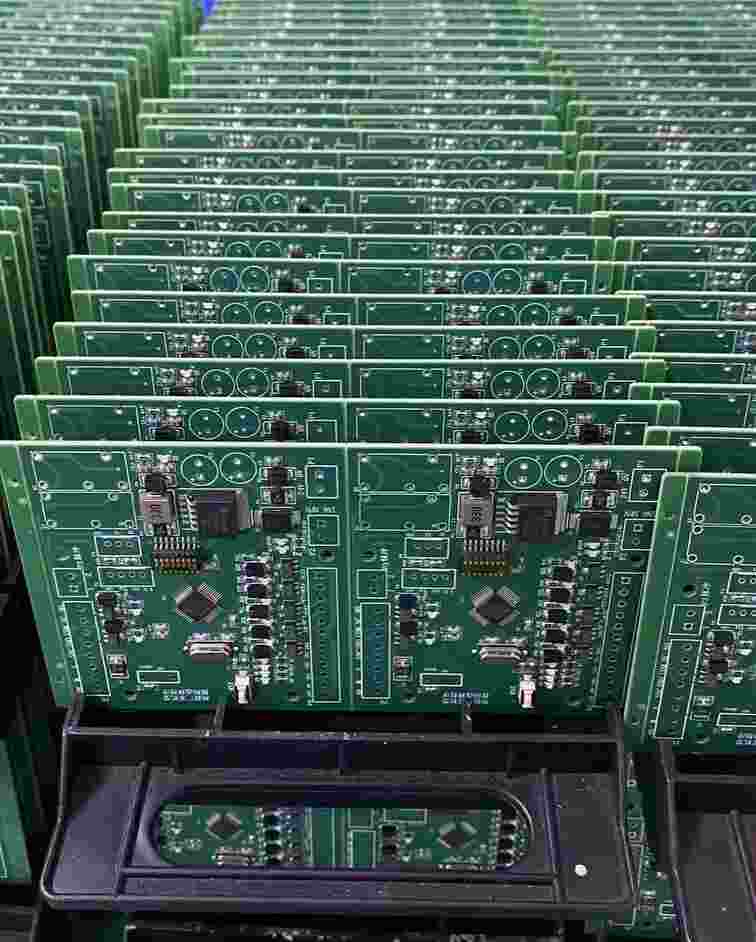
In the high-stakes world of electronics manufacturing, faster turnaround times in PCB Fabrication and Assembly are not just a competitive advantage—they are a necessity. Markets like consumer electronics, automotive prototyping, and IoT demand rapid iteration, with product cycles shrinking from months to weeks. Traditional, labor-intensive processes—manual component placement, human inspection, and disjointed workflow stages—cannot keep pace, often leading to delays, errors, and missed deadlines. Automation, however, is redefining what’s possible: from AI-driven fabrication lines to robotic assembly cells, automated systems cut turnaround times by 40–60% while maintaining precision and quality.
ShwayPCB’s
PCB Fabrication and Assembly service has pioneered automated workflows for 3,000+ clients, delivering prototype batches in 48 hours and high-volume production in 5–7 days—all with 99.5% first-pass yields. Below, we explore how automation accelerates each stage of
PCB Fabrication and Assembly, with technical insights and actionable strategies for faster turnaround.
PCB fabrication—converting raw substrates into functional bare boards—relies on precision processes like drilling, etching, and plating. Automation eliminates bottlenecks in these steps, ensuring consistent speed and accuracy.
- Laser Drilling and Routing:
Manual drilling struggles with microvias (<0.1mm) and complex hole patterns, often taking hours for a single panel. Automated UV laser drilling systems (e.g., LPKF MicroLine) drill 10,000+ holes per minute with ±2μm accuracy, cutting drilling time by 70%. For Automated PCB Fabrication and Assembly, this is critical for high-density designs (e.g., 0.3mm-pitch BGAs), where microvias enable compact layouts without slowing production. ShwayPCB’s laser drilling lines reduce panel processing time from 8 hours (manual) to 2 hours (automated).
- Closed-Loop Etching Systems:
Traditional etching relies on manual monitoring of chemical concentrations, leading to inconsistent trace widths and rework. Automated etching systems with real-time sensors (e.g., pH meters, optical width gauges) adjust chemical flows dynamically, maintaining trace tolerance at ±3μm. This eliminates 90% of etching-related rework, a major cause of delays in Quickturn PCB Fabrication and Assembly. For a client’s 12-layer prototype, automated etching cut fabrication time from 3 days to 1.5 days.
- Robotic Material Handling:
Automated guided vehicles (AGVs) and robotic arms streamline substrate movement between fabrication stages—from lamination to solder mask application. This eliminates wait times caused by manual material transport, increasing line utilization by 35%. ShwayPCB’s AGV-integrated lines process 50% more panels daily compared to manual workflows, critical for meeting tight deadlines in High-Volume PCB Fabrication and Assembly.
PCB assembly—mounting components onto bare boards—is a high-risk, high-reward stage where delays (e.g., misaligned BGAs, solder bridges) can derail production. Automation here focuses on high-speed, high-accuracy placement and real-time quality checks.
- High-Speed SMT Lines:
Manual component placement (for 0402 or smaller parts) averages 500 components per hour with 95% accuracy—insufficient for quickturn projects. Automated SMT lines (e.g., Samsung SM482) with multi-head placement systems achieve 40,000+ components per hour and 99.9% accuracy, reducing assembly time for a 100-component PCB from 8 hours (manual) to 15 minutes (automated). This speed is foundational for Quickturn PCB Fabrication and Assembly, where prototype batches (10–50 units) must ship within 3–5 days.
- AI-Powered Inspection Systems:
Post-assembly inspection is a classic bottleneck: human inspectors check 1–2 boards per minute, missing 10–15% of defects (e.g., 0.01mm solder voids). Automated optical inspection (AOI) with 3D imaging (0.001mm resolution) and AI defect classification inspects 1 board per minute with <0.1% defect escape rates. For AI-Driven PCB Fabrication and Assembly, ShwayPCB’s AOI systems flag issues like tombstoning or bridging in real time, allowing immediate rework instead of batch-wide delays.
- Inline Testing Integration:
Automated in-circuit testing (ICT) and functional testing (FCT) are built into assembly lines, eliminating the need to transport boards to separate test labs. For a client’s IoT sensor PCB, inline ICT reduced testing time by 60%, ensuring 100% of units are validated before shipping—critical for maintaining fast turnaround without sacrificing quality.
Automation alone isn’t enough—AI transforms data from automated systems into predictive insights, preventing delays before they occur. AI-Driven PCB Fabrication and Assembly uses machine learning to optimize scheduling, maintenance, and process parameters.
- Predictive Maintenance:
AI models analyze sensor data from fabrication/assembly equipment (e.g., vibration in placement heads, temperature fluctuations in reflow ovens) to predict failures 24–48 hours in advance. For example, ShwayPCB’s AI system identified a failing solder paste printer nozzle, scheduling replacement during a planned break—avoiding a 4-hour unplanned shutdown that would have delayed a client’s batch.
- Dynamic Scheduling:
AI algorithms balance workloads across production lines, prioritizing urgent orders (e.g., a startup’s prototype) without disrupting high-volume runs. During peak periods, this reduces order wait times by 30%, ensuring Turnkey Automated PCB Fabrication and Assembly clients meet tight deadlines.
- Process Optimization:
AI learns from historical data to fine-tune parameters (e.g., reflow profiles for lead-free solder, laser power for microvia drilling) for faster cycles. For a client’s 5G PCB, AI-optimized reflow reduced peak temperature hold time from 60s to 40s, cutting assembly time by 20% without compromising solder joint integrity.
Disjointed automation (e.g., automated fabrication but manual assembly) creates new bottlenecks. Turnkey Automated PCB Fabrication and Assembly unifies all stages—design, fabrication, assembly, testing—under a single automated workflow, eliminating handoffs and data silos.
- Design-to-Production Sync:
CAD files are automatically converted into machine-readable formats (e.g., Gerber, ODB++) with DFM checks, ensuring designs are fabrication-ready upon submission. For a client’s automotive PCB, this reduced design iterations from 3 to 1, saving 5 days.
- Unified Data Tracking:
A central dashboard monitors every board’s progress (e.g., “Panel 123: etching → solder mask → inspection”), allowing real-time adjustments. If a delay occurs in fabrication, assembly lines are pre-alerted to resequence jobs, minimizing downtime.
- Scalable Automation:
Turnkey systems adapt to batch size—using the same high-speed SMT line for 10-unit prototypes and 10,000-unit runs. ShwayPCB’s turnkey clients scale from prototypes to mass production 2x faster than those using fragmented automation.
Short-term, automated equipment has higher upfront costs, but for batches ≥10 units, per-unit costs drop by 15–20% due to reduced rework and labor. ShwayPCB’s quickturn service uses shared automated lines, letting small-batch clients access speed without large investments.
Yes—advanced systems (e.g., Fuji NXT III) place 0.1mm-pitch BGAs with ±0.005mm accuracy, supported by AI-driven vision alignment. ShwayPCB’s automated lines achieve 99.7% first-pass yields for high-complexity boards.
AI-automated workflows reduce turnaround times by 40–60%:
- Prototype batches (10 units): 3–5 days (automated) vs. 7–10 days (manual).
- High-volume (10k units): 5–7 days (automated) vs. 12–15 days (manual).
No—automation improves quality:
- 3D AOI catches 99.9% of defects (vs. 85% for manual inspection).
- AI-optimized processes reduce variability (e.g., trace width tolerance ±3μm vs. ±10μm manually).
Absolutely—startups benefit most from reduced iteration times. ShwayPCB’s turnkey service includes DFM feedback, automated assembly, and fast testing, helping startups launch products 2–3 months faster.
Leveraging automation in PCB Fabrication and Assembly is the only way to meet modern demands for speed, precision, and scalability. From laser drilling to AI-driven inspection, automated systems eliminate delays, reduce errors, and enable turnarounds that were once impossible. Whether you need a 10-unit prototype or 100k-unit production run, the right automation strategy—paired with end-to-end integration—delivers results.
ShwayPCB’s
PCB Fabrication and Assembly service harnesses automation and AI to deliver industry-leading turnaround times, with
Automated,
Quickturn, and
AI-Driven solutions tailored to your needs. Our engineers work with you to optimize workflows, ensuring faster time-to-market without compromising quality.
To request a quote for automated PCB production or learn how to reduce your turnaround time, contact ShwayPCB at
yuan@shwaypcb.com. For case studies and technical specs, visit our
service page.