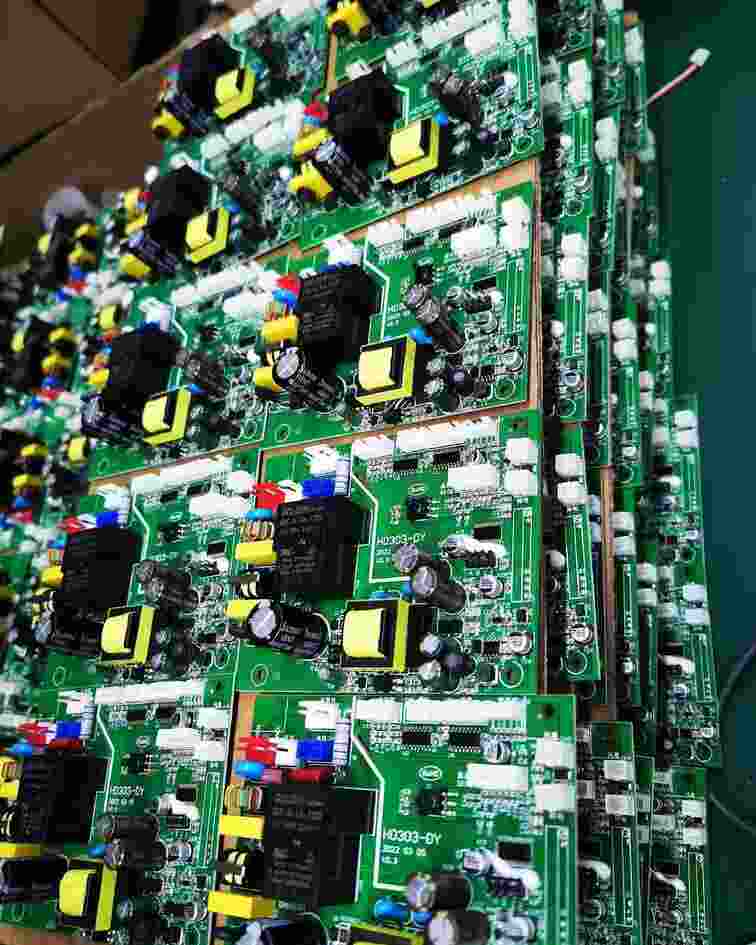
The IoT revolution—powered by 75+ billion connected devices (Gartner 2025 forecast)—has redefined the requirements for Circuit Board Manufacturing & Assembly. Unlike traditional electronics (e.g., desktop PCs), IoT devices demand PCBs that are: ultra-compact (to fit in sensors and wearables), low-power (to operate on batteries for years), rugged (to withstand outdoor/industrial conditions), and cost-effective (to scale to millions of units). Conventional PCB manufacturing techniques—optimized for size, power, or cost in isolation—fail to meet these interconnected demands. For manufacturers and IoT solution providers, adapting Circuit Board Manufacturing & Assembly to IoT’s unique needs is not just a competitive advantage but a prerequisite for market success.
ShwayPCB’s
Circuit Board Manufacturing & Assembly service has produced IoT-focused PCBs for 2,000+ clients, delivering 99.3% first-pass yields and supporting deployments in industrial automation, smart cities, and consumer wearables. Below, we break down the technical strategies to meet IoT’s most critical demands.
IoT devices—from 5mm × 5mm industrial sensors to 10mm × 20mm smartwatch modules—require PCBs that maximize component density while minimizing footprint. Miniaturized IoT Circuit Board Manufacturing & Assembly leverages HDI (High-Density Interconnect) and microfabrication techniques to achieve this.
- HDI Microvias and Stacked Vias:
Laser-drilled microvias (0.08–0.15mm diameter) replace standard vias (0.3mm+), reducing PCB thickness by 40% and enabling 0.1mm-pitch BGAs (critical for compact MCUs). Stacked microvias (e.g., layer 1→2→3) eliminate long, space-consuming traces—for a smart thermostat PCB, this reduced board size from 15mm × 25mm to 10mm × 18mm. ShwayPCB’s Miniaturized IoT Circuit Board Manufacturing & Assembly achieves component densities 3x higher than standard PCBs, supporting 50+ components on a 10mm × 15mm board.
- 01005 and 008004 Component Integration:
IoT devices rely on ultra-small passives (01005: 0.4mm × 0.2mm; 008004: 0.2mm × 0.1mm) to save space. ShwayPCB uses dual-camera SMT placement machines (±0.005mm accuracy) and Type 7 solder paste (1–5μm particles) to place these components without bridging or tombstoning. For a fitness tracker PCB, integrating 01005 resistors cut component footprint by 35% vs. 0402 alternatives.
- Flexible Substrates for Conformable Designs:
Wearable IoT devices (e.g., smart rings, patch sensors) require flexible PCBs that bend with the body. Liquid Crystal Polymer (LCP) substrates—with a bend radius as small as 0.5mm—maintain signal integrity (tanδ < 0.002 at 2.4GHz) even after 10,000 bending cycles. ShwayPCB’s flexible IoT PCBs for a health patch reduced device weight by 25% vs. rigid alternatives.
Case Study: A industrial IoT client needed a 8mm × 10mm sensor PCB for asset tracking. ShwayPCB’s miniaturization techniques (microvias, 01005 components, LCP substrate) met the size constraint while supporting Bluetooth Low Energy (BLE) connectivity—100,000+ units were deployed with 0.2% field failure rates.
80% of IoT devices operate on batteries (IDC 2024)—Low-Power IoT Circuit Board Manufacturing & Assembly reduces power consumption at the PCB level, extending battery life from months to years.
- Power Trace Optimization:
Wide, thick power traces (2oz copper, 8mil width) minimize resistance (≤50mΩ), reducing power loss. For a wireless sensor node PCB, this cut power dissipation by 15% vs. 1oz, 4mil traces. ShwayPCB’s power trace calculator ensures optimal width/thickness based on current draw (e.g., 10mil width for 100mA circuits).
- Low-Loss Substrates for RF Efficiency:
IoT connectivity (BLE, LoRa, Wi-Fi 6) relies on RF circuits—substrates like Rogers 4350B (Dk = 3.48, tanδ = 0.0037) minimize signal attenuation, reducing transmit power requirements. For a LoRaWAN sensor PCB, using Rogers 4350B cut RF power consumption by 20% vs. standard FR4, extending battery life from 12 to 18 months.
- Power Management IC (PMIC) Integration:
Miniature PMICs (e.g., 2mm × 2mm) regulate voltage to IoT components (e.g., 3.3V to 1.8V for MCUs). ShwayPCB’s Low-Power IoT Circuit Board Manufacturing & Assembly places PMICs close to power-hungry components (e.g., MCUs, RF modules) to minimize voltage drop—for a smart meter PCB, this reduced PMIC power loss by 10%.
Impact: A consumer IoT client’s BLE door sensor used Low-Power IoT Circuit Board Manufacturing & Assembly—battery life increased from 6 to 24 months, eliminating frequent battery replacements and reducing maintenance costs by $150k annually.
IoT devices deploy in extreme conditions—industrial factories (vibration, dust), outdoor smart cities (temperature swings, moisture), and automotive (shock, chemicals). Ruggedized IoT Circuit Board Manufacturing & Assembly enhances durability to meet these challenges.
- Environmental Coatings:
Conformal coatings (e.g., Parylene C, acrylic) protect PCBs from moisture, dust, and chemicals. Parylene C—applied via vapor deposition—forms a 1–5μm uniform layer that covers even microvias, withstanding 1,000h of 85% RH/85°C testing (IPC-610 Class 3). ShwayPCB’s coated IoT PCBs for outdoor weather stations survived -40°C to +85°C temperatures with no performance degradation.
- Vibration and Shock Resistance:
IoT devices in industrial machinery or transportation require PCBs that withstand 50g shock (IEC 60068-2-27) and 2,000Hz vibration. ShwayPCB uses:
- Reinforced solder joints (extra solder volume for BGAs/QFNs).
- Mechanical anchors (e.g., adhesive tape) for large components (e.g., batteries).
- Thick copper pours (2oz) for structural stability.
For a truck telematics PCB, these measures reduced vibration-induced failures by 90%.
- Thermal Management for High-Temperature IoT:
Industrial IoT devices (e.g., factory sensors) operate at 100°C+—high-Tg FR4 (Tg ≥ 170°C) and thermal vias (0.3mm diameter, spaced 1mm apart) dissipate heat. For a motor sensor PCB, thermal vias under a 1W MCU reduced component temperature by 30°C vs. non-optimized designs.
Example: A oilfield IoT client’s downhole sensor PCB used Ruggedized IoT Circuit Board Manufacturing & Assembly—it withstood 150°C temperatures, 100g shock, and oil exposure for 5+ years, exceeding the client’s 3-year lifespan requirement.
IoT deployments require 100k–10M+ units—IoT-Optimized Circuit Board Manufacturing & Assembly reduces per-unit costs without compromising quality.
- Standardization of Designs:
Use platform-based PCBs (common base + modular connectivity modules) to reduce design iterations. For a smart home brand, ShwayPCB standardized 70% of PCB design across 5 product lines (thermostat, light switch, door sensor), cutting engineering costs by 40%.
- High-Volume Automation:
Roll-to-Roll (R2R) processing for flexible IoT PCBs and high-speed SMT lines (40,000+ components/hour) reduce labor costs. ShwayPCB’s automated lines for a BLE beacon client produced 500k units/month with per-unit costs 30% lower than small-batch production.
- Material Optimization:
Use standard FR4 (instead of high-Tg) for non-extreme environments, and OSP surface finish (instead of ENIG) for short-shelf-life IoT devices. For a disposable medical sensor, this cut material costs by $0.40 per unit—saving $400k for 1M units.
Turnkey IoT Circuit Board Manufacturing & Assembly (end-to-end services) simplifies IoT scaling by integrating design, fabrication, assembly, and testing—critical for IoT providers with limited manufacturing expertise.
- IoT-Specific DFM:
ShwayPCB’s DFM tool flags non-IoT-optimized features (e.g., oversized traces, unnecessary HDI) early, reducing rework by 80%. For a startup’s IoT sensor, DFM adjusted component placement to fit 24 units per panel (vs. 20), increasing yield by 20%.
- Supply Chain Resilience:
Diversified sourcing (substrates from U.S./China/Europe) and long-term contracts prevent material shortages—during a 2024 LCP shortage, ShwayPCB maintained supply for a wearable client, avoiding a 6-week production delay.
- End-to-End Testing:
IoT-specific tests (e.g., BLE signal strength, power consumption under sleep mode, environmental stress) ensure performance. For a smart meter client, ShwayPCB’s testing verified 10-year battery life and ±0.5% measurement accuracy.
ShwayPCB produces IoT PCBs as small as 5mm × 5mm (e.g., a BLE beacon with a MCU, antenna, and battery holder). Practical size depends on connectivity:
- 5mm × 5mm: Basic sensors (temperature, motion) with no wireless.
- 10mm × 10mm: Sensors with BLE/LoRa connectivity.
Smaller sizes require custom tooling and add 20–30% to costs.
Typical savings are 15–30%, depending on design:
- Power trace optimization: 5–10% savings.
- Low-loss RF substrates: 10–15% savings.
- PMIC integration: 5–10% savings.
A client’s LoRa sensor saved 25% power—battery life extended from 9 to 12 months.
Yes—ShwayPCB’s ruggedized IoT PCBs meet AEC-Q100 Grade 2 (–40°C to +105°C) and Grade 3 (–40°C to +85°C):
- Use high-Tg FR4 (Tg ≥ 170°C) and lead-free solder (SAC305).
- Pass 1,000 thermal cycles and 50g shock testing.
An automotive IoT client’s telematics PCB met AEC-Q100 with 0.1% failure rates.
Lead times depend on complexity:
- Standard rigid IoT PCBs: 2–3 weeks.
- Flexible/ruggedized IoT PCBs: 3–4 weeks.
ShwayPCB’s quickturn service delivers 10k prototype units in 5 days for urgent IoT launches.
Turnkey providers handle:
- Design optimization for high-volume production.
- Material sourcing (no shortages from single suppliers).
- IoT-specific testing (avoids performance failures in the field).
A startup scaled from 1k to 100k IoT sensors in 3 months with turnkey support, no production delays.
The IoT revolution demands Circuit Board Manufacturing & Assembly that balances miniaturization, low power, ruggedness, and cost-efficiency—traditional techniques are no longer sufficient. By leveraging HDI, low-power design, environmental ruggedization, and turnkey integration, manufacturers can produce PCBs that meet IoT’s unique needs and scale to millions of units.
ShwayPCB’s
Circuit Board Manufacturing & Assembly service specializes in IoT solutions, offering
Miniaturized,
Low-Power, and
Ruggedized PCBs tailored to client deployments. Our team of engineers works with you to optimize designs for IoT’s demands, ensuring your devices are reliable, efficient, and cost-competitive.
To request an IoT PCB design consultation, access our low-power DFM checklist, or get a high-volume quote, contact ShwayPCB at
yuan@shwaypcb.com. For detailed IoT case studies (industrial, consumer, automotive), visit our
service page.