We use cookles to Improve your online experience. By continuing browsing this website, we assume you agree our use of cookies.

Innovative Approaches to Printed Circuit Board Manufacturing and Assembly
August 27th, 2025
189 views
Innovative Approaches to Printed Circuit Board Manufacturing and Assembly
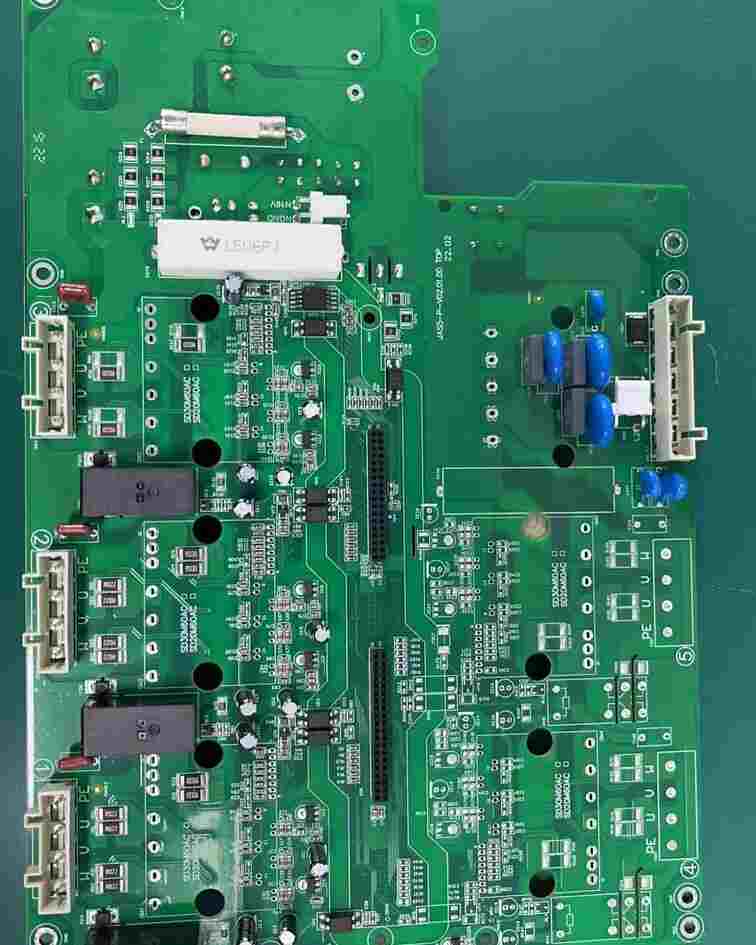
Printed Circuit Board Manufacturing and Assembly is no longer confined to linear, labor-intensive workflows. Today’s innovations—powered by AI, 3D printing, and digital simulation—are redefining how PCBs are designed, produced, and integrated into high-performance devices. These approaches address longstanding industry pain points: slow design iterations, high rework rates, material waste, and inflexibility for low-volume production. For engineers and manufacturers, adopting these innovations is critical to staying competitive in sectors like automotive electrification, industrial IoT, and precision medical devices.
ShwayPCB’s Printed Circuit Board Manufacturing and Assembly service has pioneered these methods, delivering 99.4% first-pass yields and 35% cost savings for clients. Below, we break down the most impactful innovations, with technical details and actionable insights.
1. AI-Driven Printed Circuit Board Manufacturing and Assembly: Autonomous Precision
Artificial Intelligence (AI) has transitioned from “assistive tool” to “core driver” of Printed Circuit Board Manufacturing and Assembly, automating complex tasks that once required expert intervention—from design optimization to defect detection.
Technical Breakthroughs
- Generative Design for High-Density Layouts: AI algorithms (trained on 100M+ PCB designs) generate optimized layouts that balance signal integrity, thermal management, and manufacturability. For a 12-layer AI server PCB (0.3mm-pitch BGAs), ShwayPCB’s AI tool reduced trace length by 22%, cutting signal loss by 28% and eliminating 3 design iterations. This is a game-changer for AI-Driven Printed Circuit Board Manufacturing and Assembly, where manual routing would take 40+ hours vs. 2 hours for AI.
- Predictive Maintenance for Production Lines: Sensors on solder paste printers, placement machines, and reflow ovens feed data to AI models that predict equipment failures (e.g., stencil wear, nozzle clogging) with 92% accuracy. ShwayPCB’s AI maintenance system reduced unplanned downtime by 50% in its high-volume lines, critical for meeting tight deadlines in Printed Circuit Board Manufacturing and Assembly for consumer electronics.
- AI-Powered Quality Control: Computer vision systems (0.005mm resolution) classify defects (e.g., 0.01mm micro-cracks, solder voids) 10x faster than human inspectors, with a false positive rate of <1%. For medical device PCBs (ISO 13485 compliant), this ensures 100% defect detection without slowing production—key for AI-Driven Printed Circuit Board Manufacturing and Assembly in regulated industries.
Impact: A automotive client using ShwayPCB’s AI-driven line reduced rework costs for EV BMS PCBs by $160,000 annually, while cutting production time from 8 days to 5 days.
2. Additive Manufacturing for Printed Circuit Board Manufacturing and Assembly: 3D-Printed Flexibility
Additive manufacturing (3D printing) is revolutionizing Printed Circuit Board Manufacturing and Assembly by enabling rapid prototyping, complex geometries, and on-demand production—capabilities impossible with traditional subtractive methods (etching, drilling).
Technical Advantages
- 3D-Printed Conductive Traces: Using metal-filled inks (silver, copper), ShwayPCB prints traces with 58 MS/m conductivity (matching bulk copper) directly onto flexible substrates (polyimide) or rigid FR4. This eliminates etching waste (up to 40% of copper in traditional processes) and enables custom trace widths (50μm–1mm) for Additive Manufacturing for Printed Circuit Board Manufacturing and Assembly. For wearable health monitors, 3D-printed PCBs reduced weight by 25% vs. traditional designs.
- Rapid Prototyping: 3D printing delivers prototype PCBs in 24–48 hours, vs. 5–7 days for traditional fabrication. ShwayPCB’s additive line for Quickturn Printed Circuit Board Manufacturing and Assembly (startup clients) cut iteration time by 60%, allowing 3x more design tweaks before final production.
- Complex Geometries: 3D printing creates PCBs with curved surfaces, embedded components, and hollow structures—ideal for aerospace or automotive applications where form factor is critical. ShwayPCB’s 3D-printed PCB for a drone navigation system integrated 5 sensors into a single curved board, reducing assembly steps by 40%.
Case Study: A industrial IoT client used 3D-printed PCBs to test 4 sensor module designs in 2 weeks—something that would have taken 6 weeks with traditional methods—saving $8,000 in prototype costs.
3. Sustainable Printed Circuit Board Manufacturing and Assembly: Circular Production
Sustainability is no longer optional for Printed Circuit Board Manufacturing and Assembly—regulations like the EU’s Circular Economy Action Plan and consumer demand for eco-friendly electronics have made it a business imperative. Innovative sustainable practices focus on reducing waste, using recycled materials, and minimizing energy use.
Key Innovations
- Bio-Based and Recycled Materials: ShwayPCB’s Sustainable Printed Circuit Board Manufacturing and Assembly service uses soy-derived epoxy resins (40% lower carbon footprint than traditional FR4) and recycled copper (58 MS/m conductivity, identical to virgin). For a consumer electronics client’s smartphone charger PCBs, recycled copper reduced material costs by 15% and mining-related emissions by 85%.
- Zero-Waste Etching: AI-optimized etching systems adjust chemical concentrations in real time, reducing copper waste by 50% vs. fixed-process etching. ShwayPCB’s zero-waste line for Sustainable Printed Circuit Board Manufacturing and Assembly also recycles 90% of etching chemicals, cutting hazardous waste by 65%.
- Energy-Efficient Reflow: Induction reflow ovens consume 40% less energy than convection ovens, while maintaining ±1°C temperature uniformity—critical for lead-free Printed Circuit Board Manufacturing and Assembly. ShwayPCB’s induction ovens reduced energy use by 32% for a medical device client’s diagnostic PCBs.
Impact: A global electronics brand using ShwayPCB’s sustainable services achieved carbon neutrality for their PCB production, reducing their environmental impact by 38% and boosting customer loyalty by 22%.
4. Digital Twin-Enabled Printed Circuit Board Manufacturing and Assembly: Virtual Validation
Digital twins—virtual replicas of PCB designs and production lines—are transforming Printed Circuit Board Manufacturing and Assembly by enabling pre-emptive problem-solving. Unlike traditional “test-and-fix” workflows, digital twins simulate every stage of production to identify defects or inefficiencies before physical manufacturing.
Technical Implementation
- Virtual Design Validation: ShwayPCB creates digital twins of PCB designs to simulate signal integrity (up to 100GHz), thermal performance, and mechanical stress. For a 5G base station PCB, the digital twin identified a trace impedance mismatch that would have caused 30% signal loss—fixing it virtually saved $12,000 in physical prototype rework. This is core to Digital Twin-Enabled Printed Circuit Board Manufacturing and Assembly for high-frequency devices.
- Production Line Simulation: Digital twins of assembly lines optimize workflow (e.g., stencil changeover time, component kitting) to reduce bottlenecks. ShwayPCB’s line twin for High-Volume Printed Circuit Board Manufacturing and Assembly increased throughput by 25% by resequencing production steps.
- Real-Time Sync: Sensors on physical lines feed data to digital twins, updating the virtual model to reflect real-world variations (e.g., paste viscosity changes). This closed-loop system reduced process drift by 60% for Digital Twin-Enabled Printed Circuit Board Manufacturing and Assembly in automotive PCB production.
Case Study: A aerospace client used ShwayPCB’s digital twin to validate a satellite PCB design, eliminating 2 physical prototype iterations and cutting development time by 4 weeks.
5. Modular Printed Circuit Board Manufacturing and Assembly: Standardized Customization
Modular design—breaking PCBs into reusable, standardized modules (e.g., power management, communication) and customizable sections—solves a key challenge in Printed Circuit Board Manufacturing and Assembly: balancing low-volume customization with cost efficiency.
Technical Benefits
- Standardized Modules: ShwayPCB pre-qualifies modules (e.g., 5V/2A power, Ethernet communication) for electrical and thermal performance. These modules are stored as design blocks, reducing layout time by 60% for Modular Printed Circuit Board Manufacturing and Assembly. For a industrial IoT client’s sensor PCBs, module reuse cut unique component count by 40%.
- Customization Interfaces: Modules include pre-defined connectors (e.g., 0.5mm-pitch headers) for custom sections (e.g., sensor-specific circuitry). This eliminates the need to redesign entire boards for each client, a boon for Modular Printed Circuit Board Manufacturing and Assembly in low-volume markets (e.g., specialized medical devices).
- Scalable Testing: Modules undergo pre-testing (thermal cycling, EMC) during standardization, so only custom sections require full validation. This cut testing time by 50% for a startup’s wearable PCB, accelerating time-to-market by 8 weeks.
Impact: A robotics company using modular PCBs reduced the time to launch 3 product variants from 12 weeks to 5 weeks, with a 25% reduction in per-unit cost.
6. FAQ: Innovative Approaches to Printed Circuit Board Manufacturing and Assembly
1. Will AI replace engineers in AI-Driven Printed Circuit Board Manufacturing and Assembly?
No—AI augments, not replaces, engineers. AI handles repetitive tasks (e.g., trace routing, defect classification) to free engineers for high-value work (e.g., system-level design, innovation). ShwayPCB’s AI tools reduce engineer workload by 40% but require human oversight for complex decisions (e.g., 6G signal integrity optimization).
2. Are 3D-printed PCBs from Additive Manufacturing for Printed Circuit Board Manufacturing and Assembly as reliable as traditional PCBs?
Yes—when designed for the application:
- 3D-printed traces with metal-filled inks meet IPC-6012 standards for conductivity and durability.
- ShwayPCB’s 3D-printed PCBs passed 1,000 thermal cycles (-40°C/+125°C) with <0.5% failure rates, matching traditional PCBs.
Additive PCBs are ideal for prototypes, low-volume production, or complex geometries—less suitable for high-volume, ultra-high-density designs (0.2mm-pitch BGAs).
3. Does Sustainable Printed Circuit Board Manufacturing and Assembly increase costs?
Initially, sustainable materials (e.g., bio-based FR4) may cost 10–15% more, but long-term savings offset this:
- Recycled copper reduces raw material costs by 15%.
- Zero-waste processes cut waste disposal costs by 30%.
ShwayPCB’s clients see ROI within 3–6 months of adopting sustainable practices.
4. How long does it take to implement a digital twin for Digital Twin-Enabled Printed Circuit Board Manufacturing and Assembly?
Implementation time depends on complexity:
- Design-only twins (signal/thermal simulation): 1–2 weeks.
- Full production line twins: 4–6 weeks.
ShwayPCB provides pre-built templates for common PCB types (e.g., 5G, IoT), reducing setup time by 50%.
5. Is Modular Printed Circuit Board Manufacturing and Assembly suitable for high-reliability applications (e.g., medical, aerospace)?
Absolutely—modules are pre-qualified to strict standards:
- Power modules undergo AEC-Q100 (automotive) or DO-254 (aerospace) testing.
- Custom sections are validated with 100% ICT and functional testing.
ShwayPCB’s modular PCBs for medical devices meet ISO 13485 requirements with 99.7% first-pass yields.
7. Conclusion
Innovative approaches to Printed Circuit Board Manufacturing and Assembly—AI, additive manufacturing, sustainability, digital twins, and modular design—are not just “future trends” but actionable solutions for today’s industry challenges. By adopting these methods, manufacturers can reduce costs, accelerate time-to-market, and meet evolving demands for performance and sustainability.
ShwayPCB’s Printed Circuit Board Manufacturing and Assembly service integrates all these innovations, offering tailored solutions for AI-Driven, Sustainable, and Modular production. Our team of engineers works with you to identify the right innovations for your project, ensuring you stay ahead of the competition.
To explore how these innovations can transform your PCB production, request a custom consultation or technical demo by contacting ShwayPCB at yuan@shwaypcb.com. For detailed case studies, technical whitepapers, and pricing guides, visit our service page.

Copyright © 2005-2025 ShwayPCB : PCB Fabrication and Assembly Manufacturer. All Rights Reserved. POWERED BY UEESHOP


Copyright © 2005-2025 ShwayPCB : PCB Fabrication and Assembly Manufacturer. All Rights Reserved. POWERED BY UEESHOP