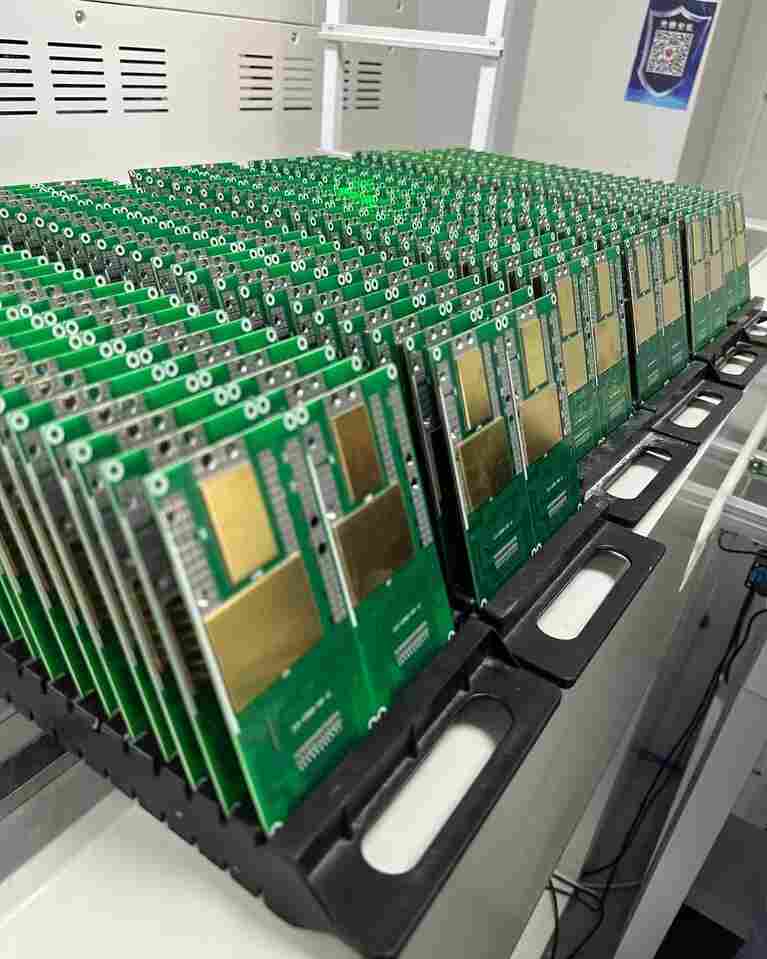
The medical and automotive industries represent the gold standard for PCB reliability—where even a single PCB failure can have catastrophic consequences: a malfunctioning PCB in a medical device (e.g., a heart monitor) may risk patient lives, while a defective PCB in an automotive system (e.g., ADAS, advanced driver-assistance systems) can lead to vehicle accidents. Unlike consumer electronics (which prioritize cost and time-to-market), high-reliability PCB assembly for these sectors demands uncompromising adherence to strict technical standards, specialized materials, and rigorous testing protocols. ShwayPCB’s
PCB assembly service is engineered to meet these demands, with capabilities aligned to
medical PCB assembly biocompatibility standards,
automotive PCB vibration test compliance,
high-reliability PCB soldering process validation,
medical device PCB sterile coating technology, and
automotive electronics PCB thermal cycling resistance—ensuring PCBs perform consistently in the harshest and most safety-critical environments.
Medical devices (e.g., implantable pacemakers, diagnostic imaging equipment, surgical robots) operate in unique, high-risk environments: they must withstand bodily fluids (for implantables), repeated sterilization cycles (for surgical tools), and continuous operation (for monitoring devices). ShwayPCB’s
PCB assembly service addresses these challenges through three non-negotiable technical requirements:
Implantable and wearable medical devices require PCBs that do not trigger adverse biological reactions (e.g., inflammation, tissue rejection). Medical PCB assembly biocompatibility standards (per ISO 10993) mandate strict material controls, which ShwayPCB implements via:
- Biocompatible substrates: High-Tg FR4 substrates with low leachable ions (e.g., chlorine, sodium <10ppm) are used to prevent toxic substance release into the body. For implantables, ceramic substrates (Al₂O₃) are available—they exhibit zero biodegradation and meet ISO 10993-10 (irritation and sensitization) requirements.
- Lead-free, RoHS-compliant solders: SAC305Bi solder (with bismuth additions) is used instead of traditional leaded solders, as it avoids lead leaching and passes ISO 10993-5 (cytotoxicity) testing.
- Material traceability: Every batch of substrates, solders, and components includes a Certificate of Compliance (CoC) linking to raw material sources—critical for FDA (U.S.) and CE (EU) medical device approvals.
The
PCB assembly service provides biocompatibility test reports (e.g., cytotoxicity, genotoxicity) for all medical PCBs, ensuring compliance with regulatory bodies.
Surgical and diagnostic devices (e.g., endoscopes, blood glucose monitors) require PCBs that can withstand repeated sterilization (autoclaving, ethylene oxide (EtO), gamma radiation) without degradation.
Medical device PCB sterile coating technology is a core offering of ShwayPCB’s
PCB assembly service, with two key solutions:
- Parylene C coating: Applied via chemical vapor deposition (CVD), this 0.01–0.02mm thick coating forms a pinhole-free barrier that resists EtO and gamma radiation (up to 50 kGy). It maintains electrical insulation after 1,000 autoclave cycles (121°C, 103 kPa), making it ideal for surgical tools.
- Aqueous-based conformal coatings: For non-implantable devices (e.g., ultrasound machines), these coatings are ISO 10993-11 (biological evaluation of medical devices) compliant and can be easily repaired if damaged—reducing maintenance costs.
Post-coating, PCBs undergo sterility validation (per ISO 11137 for radiation sterilization) to confirm no microbial contamination.
Medical devices often rely on PCBs for life-sustaining functions (e.g., pacemaker power management), so assembly must prioritize precision and fault tolerance:
- High-accuracy soldering: For micro-components (e.g., 0201 passives in glucose monitors), ShwayPCB uses pick-and-place machines with ±0.005mm accuracy and 3D AOI to ensure solder joint integrity—rejecting any joint with >5% voids (per IPC-A-610 Class 3).
- Redundant circuits: For critical paths (e.g., pacemaker heartbeat detection), dual-trace routing and redundant components are integrated. The PCB assembly service includes in-circuit testing (ICT) to verify redundancy—ensuring a single trace failure does not disable the device.
Automotive PCBs operate in extreme conditions: temperature fluctuations (-40°C to +150°C for underhood systems), constant vibration (10–2,000 Hz), and exposure to oil, fuel, and humidity. Compliance with standards like ISO 26262 (functional safety) and AEC-Q100 (component qualification) is mandatory. ShwayPCB’s
PCB assembly service meets these challenges through targeted technical requirements, including
automotive PCB vibration test compliance and
automotive electronics PCB thermal cycling resistance.
Underhood PCBs (e.g., engine control units, EV battery management systems) face rapid temperature changes, which cause solder joint fatigue and substrate delamination. Automotive electronics PCB thermal cycling resistance is ensured via:
- High-temperature materials: Substrates with Tg ≥200°C (e.g., Isola 370HR) and thermal conductivity of 1.5W/mK are used to dissipate heat. For EVs, metal-core PCBs (MCPCBs) with aluminum cores (thermal conductivity 200W/mK) manage heat from high-power LEDs and motors.
- Solder paste optimization: SAC305Bi solder (with 3% bismuth) survives 2,000 thermal cycles (-40°C to +125°C) without cracking—exceeding AEC-Q101 (PCB qualification) requirements of 1,000 cycles.
- Thermal vias: 0.3mm diameter thermal vias (spaced 1mm apart) connect high-power components to inner ground planes, reducing hotspot temperatures by 20–30°C.
ShwayPCB tests all automotive PCBs per IEC 60068-2-14 (thermal cycling) to validate performance.
Road vibrations (e.g., 5g acceleration at 200 Hz for chassis-mounted PCBs) can loosen components or crack traces. Automotive PCB vibration test compliance (per ISO 16750-3) is achieved through:
- Component securing: Heavy components (e.g., connectors, inductors) are attached with epoxy adhesive in addition to soldering—preventing lead fatigue. The adhesive is AEC-Q200 (passive component qualification) compliant and resists oil and fuel.
- Trace and via design: Traces are widened to 0.2mm (minimum) and reinforced with solder mask dams to resist vibration-induced stress. Vias are plated with 30μm copper (vs. 20μm standard) to improve mechanical strength.
- Vibration testing: Post-assembly, PCBs undergo random vibration testing (10–2,000 Hz, 20g RMS) for 24 hours—with real-time electrical monitoring to detect any intermittent failures.
Automotive electronics are sensitive to electromagnetic interference (EMI) from other systems (e.g., radios, radar). Additionally, ISO 26262 requires PCBs to meet functional safety levels (ASIL) based on risk:
- EMC shielding: Conductive gaskets and copper tape shielding are applied to high-speed PCBs (e.g., ADAS radar) to reduce EMI emissions by 40–50%—meeting CISPR 25 (automotive EMC) Class 5.
- ASIL-aligned design: For ASIL B/D systems (e.g., autonomous braking), ShwayPCB implements fault detection (e.g., parity checks for microcontrollers) and single-point fault metric (SPFM) compliance >90%. The PCB assembly service includes ISO 26262 audit trails for all design and assembly steps.
Across medical and automotive sectors,
high-reliability PCB soldering process validation is a universal technical requirement—poor soldering is the root cause of 30% of field failures. ShwayPCB’s
PCB assembly service validates soldering via:
- Solder paste inspection (SPI): 3D SPI measures paste volume, height, and area with ±3μm accuracy—rejecting any paste deposit outside IPC-J-STD-005 limits.
- Reflow profile optimization: Custom reflow profiles (e.g., slower ramp rates for medical micro-components, higher peak temperatures for automotive high-Tg substrates) are validated via thermalcouple testing.
- X-ray inspection: 3D X-ray checks for hidden defects (e.g., BGA voids <20% of joint area, via fill >95%)—critical for medical implantables and automotive underhood PCBs.
We source materials (substrates, solders, coatings) that comply with ISO 10993 and provide biocompatibility test reports (cytotoxicity, sensitization) from accredited labs. Our
PCB assembly service also includes material traceability to raw material batches—essential for FDA/CE approval. For implantables, we use ceramic substrates and Parylene C coatings that meet ISO 10993-10 irritation standards.
Our automotive PCBs comply with ISO 16750-3 (mechanical loads) and AEC-Q101. Tests include:
- Random vibration: 10–2,000 Hz, 20g RMS for 24 hours (chassis-mounted PCBs).
- Sinusoidal vibration: 10–500 Hz, 5g acceleration (engine-mounted PCBs).
Test data (e.g., electrical continuity during vibration) is provided via the PCB assembly service page.
Yes. We have ASIL D-qualified processes, including:
- Fault detection circuits (e.g., dual-core microcontrollers with lockstep cores).
- SPFM (single-point fault metric) >95% and LFM (latent fault metric) >60%.
- Full ISO 26262 audit trails for design, assembly, and testing. Contact our PCB assembly service team for ASIL D case studies.
For standard medical PCBs (e.g., wearable monitors) or automotive infotainment PCBs, lead time is 7–10 business days. For complex orders (e.g., ASIL D ADAS PCBs, implantable medical devices), lead time is 12–15 business days (includes additional testing). Expedited options (5–7 days) are available—ask the
PCB assembly service team for details.
High-reliability assembly costs 15–30% more than standard assembly—due to specialized materials (e.g., biocompatible coatings, high-Tg substrates) and additional testing (e.g., thermal cycling, biocompatibility). However, this cost is offset by lower field failure rates (our medical/automotive PCBs have <0.1% failure rates vs. 2% for standard PCBs), reducing warranty and recall expenses.
High-reliability PCB assembly for medical and automotive industries is defined by strict adherence to industry standards, specialized materials, and rigorous testing. ShwayPCB’s
PCB assembly service delivers on these requirements through
medical PCB assembly biocompatibility standards compliance,
automotive PCB vibration test validation, and
high-reliability soldering processes—ensuring PCBs perform safely and consistently in life-critical and harsh environments. Whether you’re developing a medical implant or an automotive ADAS system, our technical expertise aligns with your most demanding reliability needs.
To discuss your high-reliability PCB assembly project (medical or automotive) or request custom testing (e.g., biocompatibility, vibration), contact ShwayPCB at
yuan@shwaypcb.com. For detailed compliance documents (ISO 10993, ISO 26262) and industry-specific case studies, visit the
PCB assembly service page.