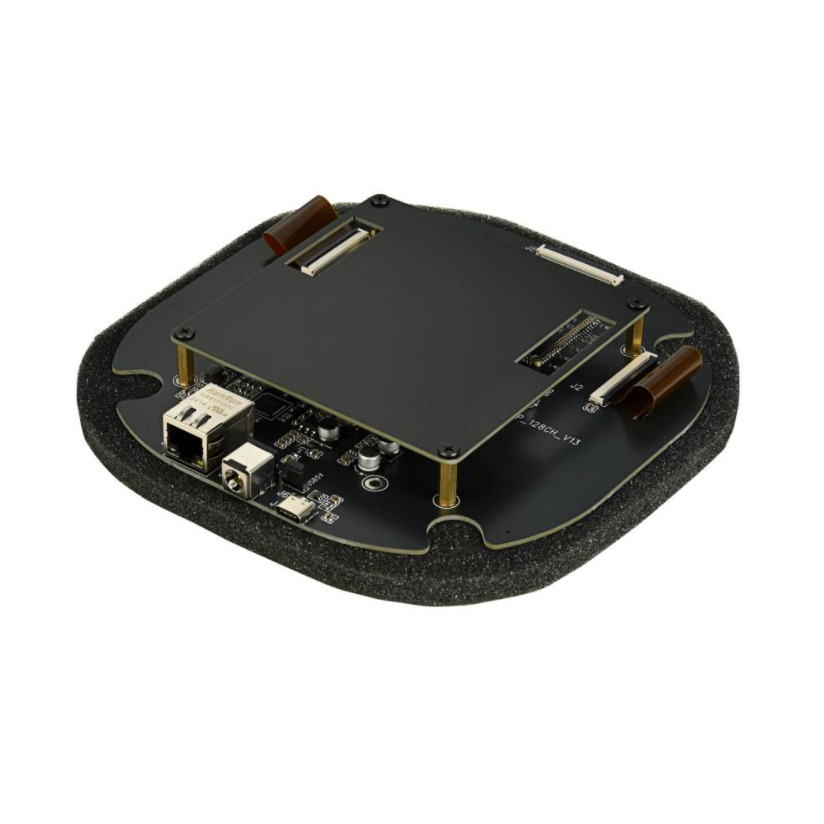
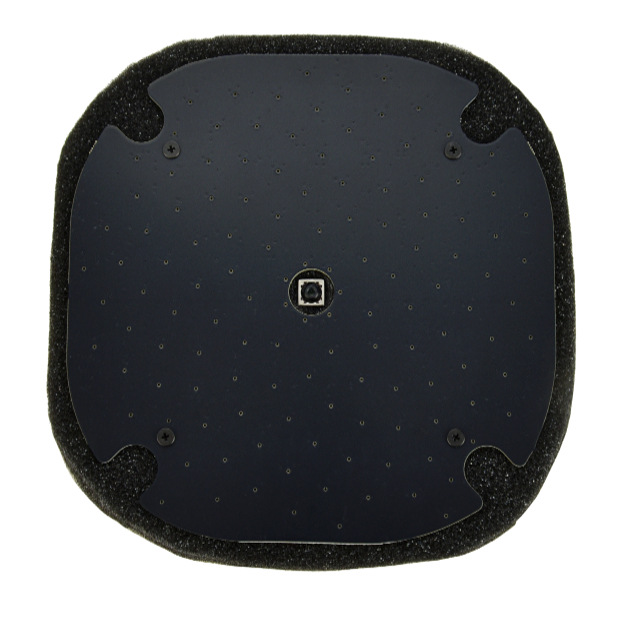
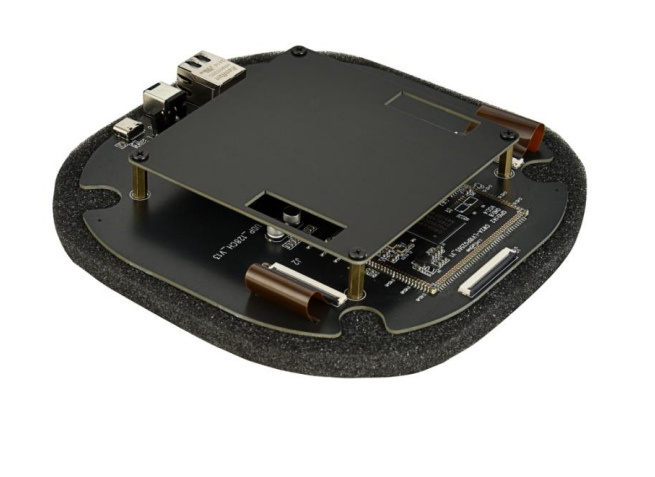
Multi-Arm Helical Microphone Array Acquisition Kit
Kit Components:
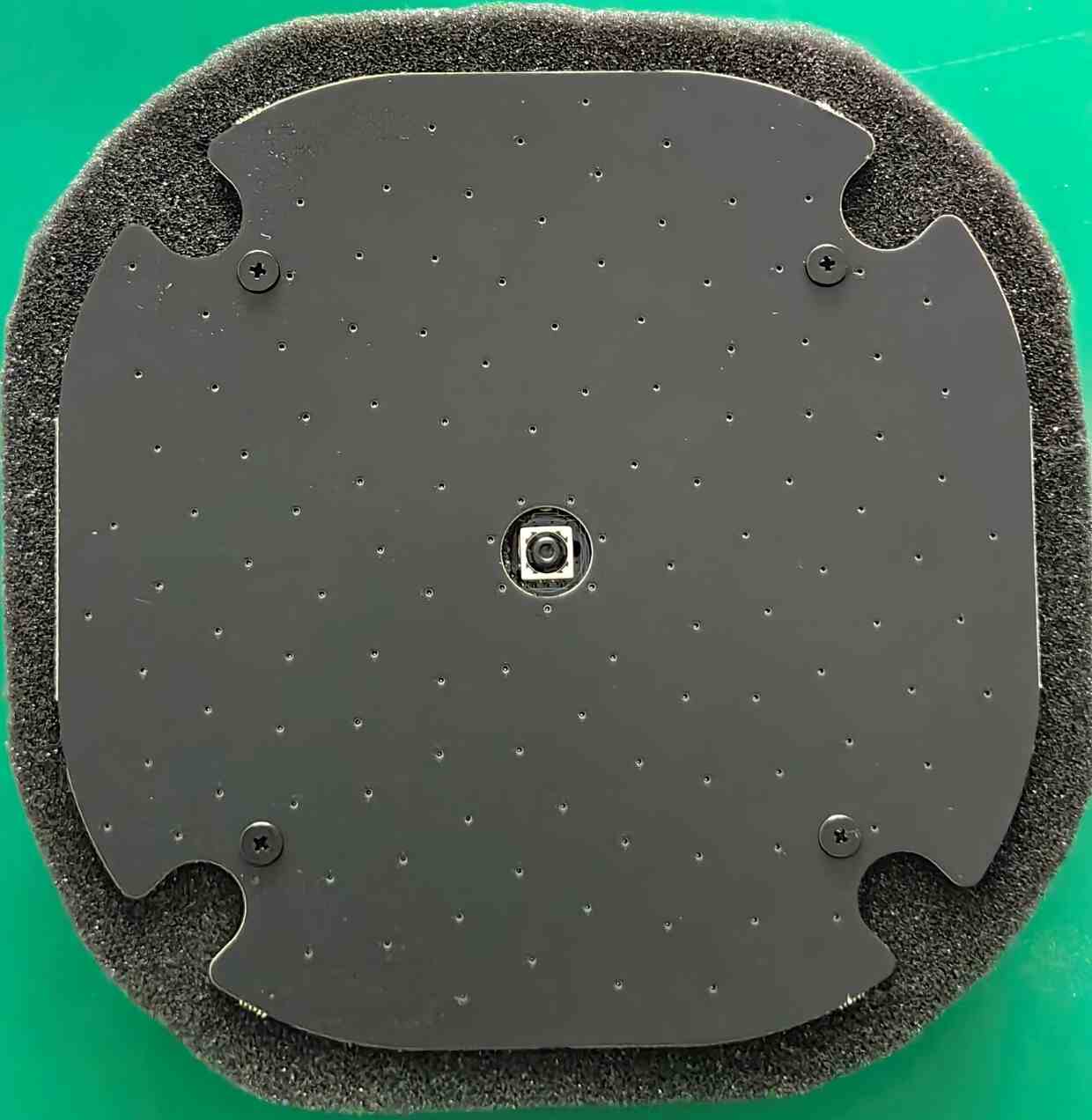
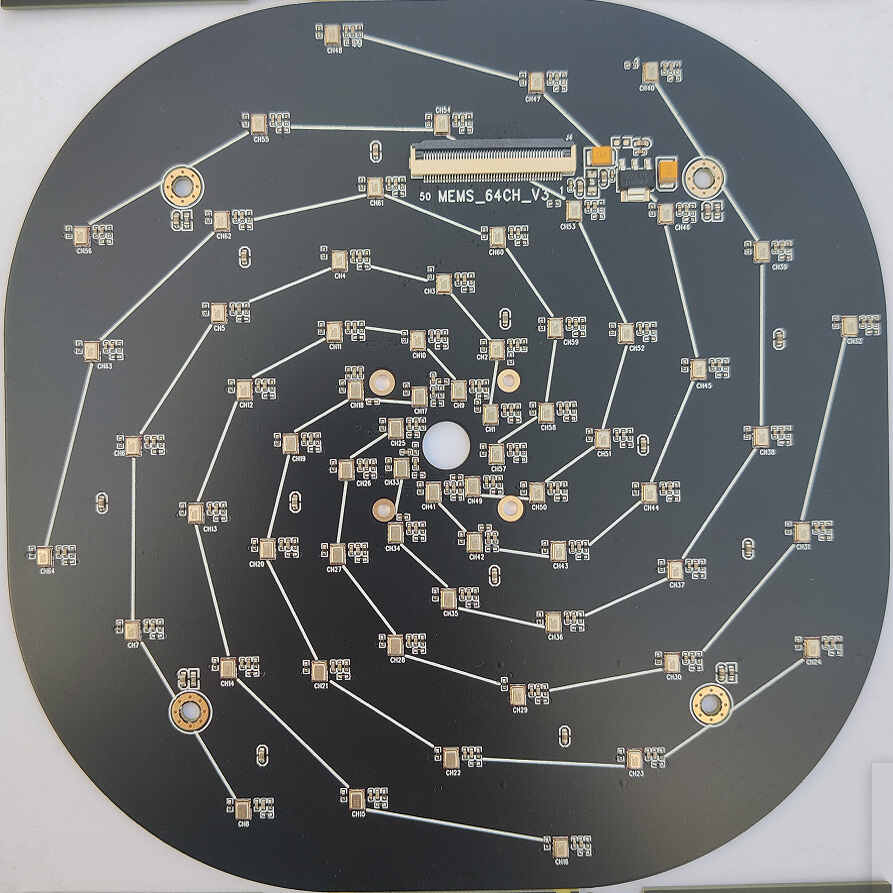
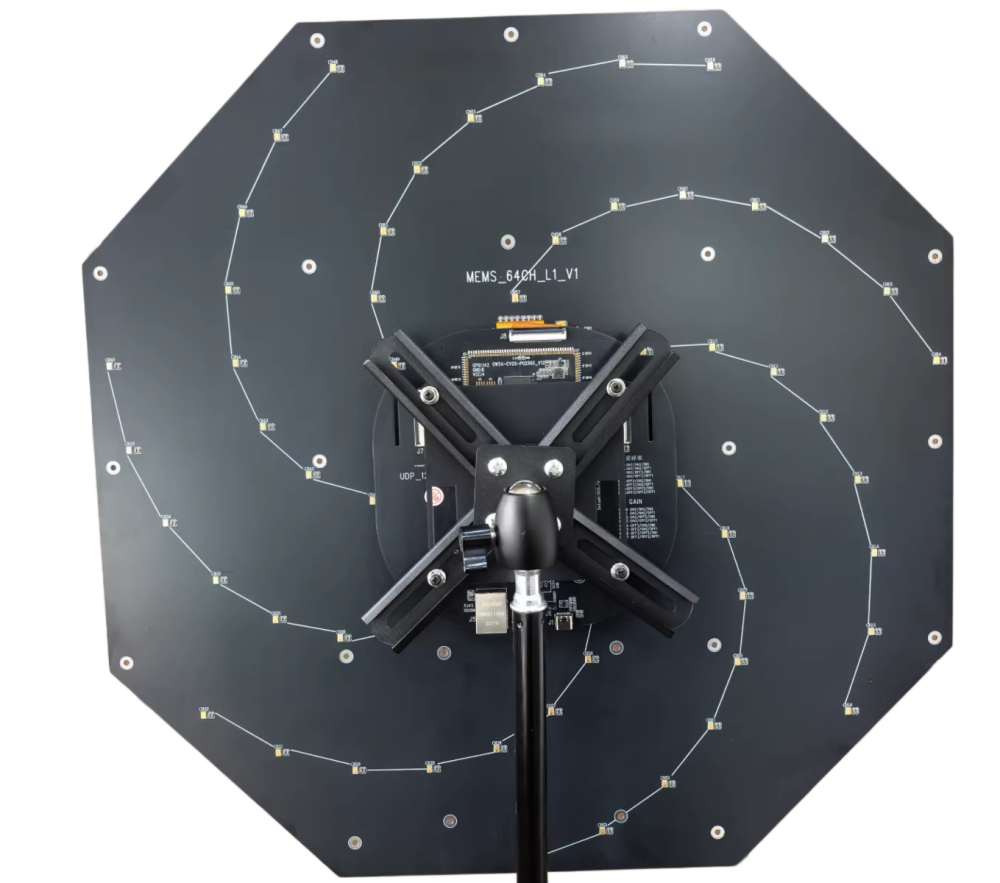
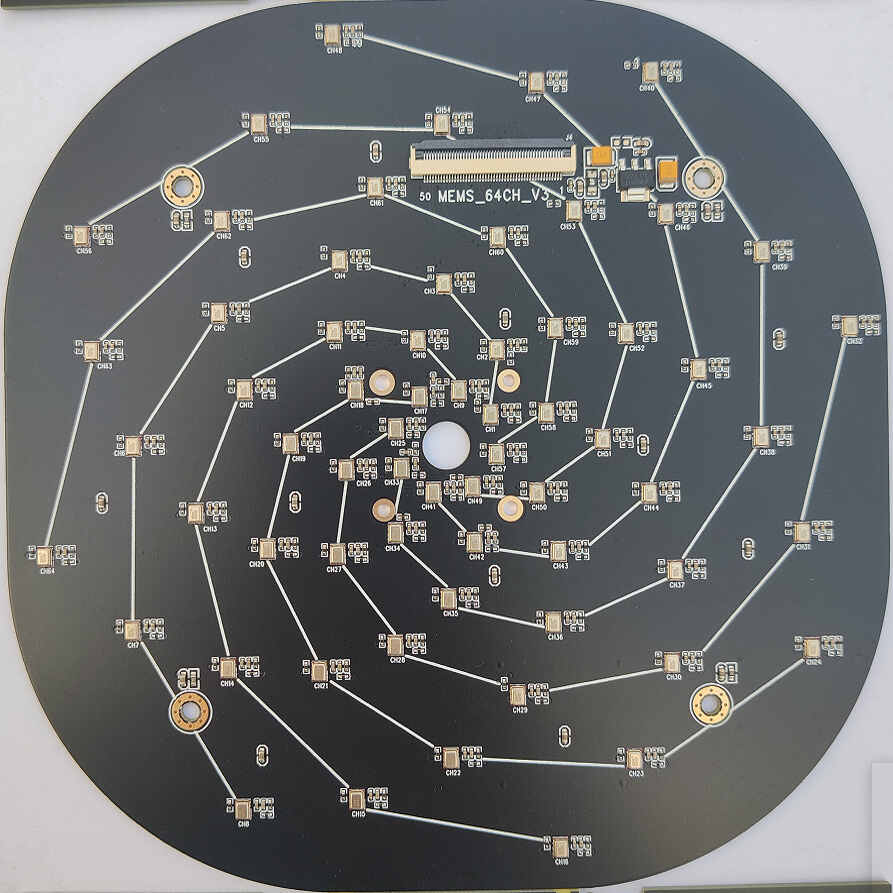
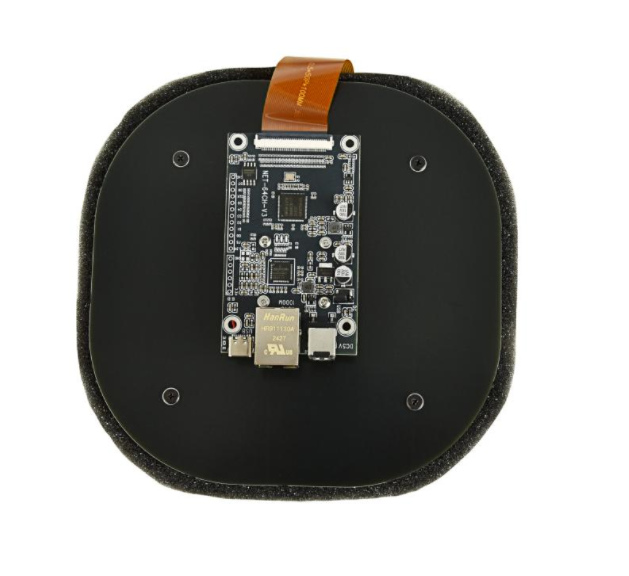
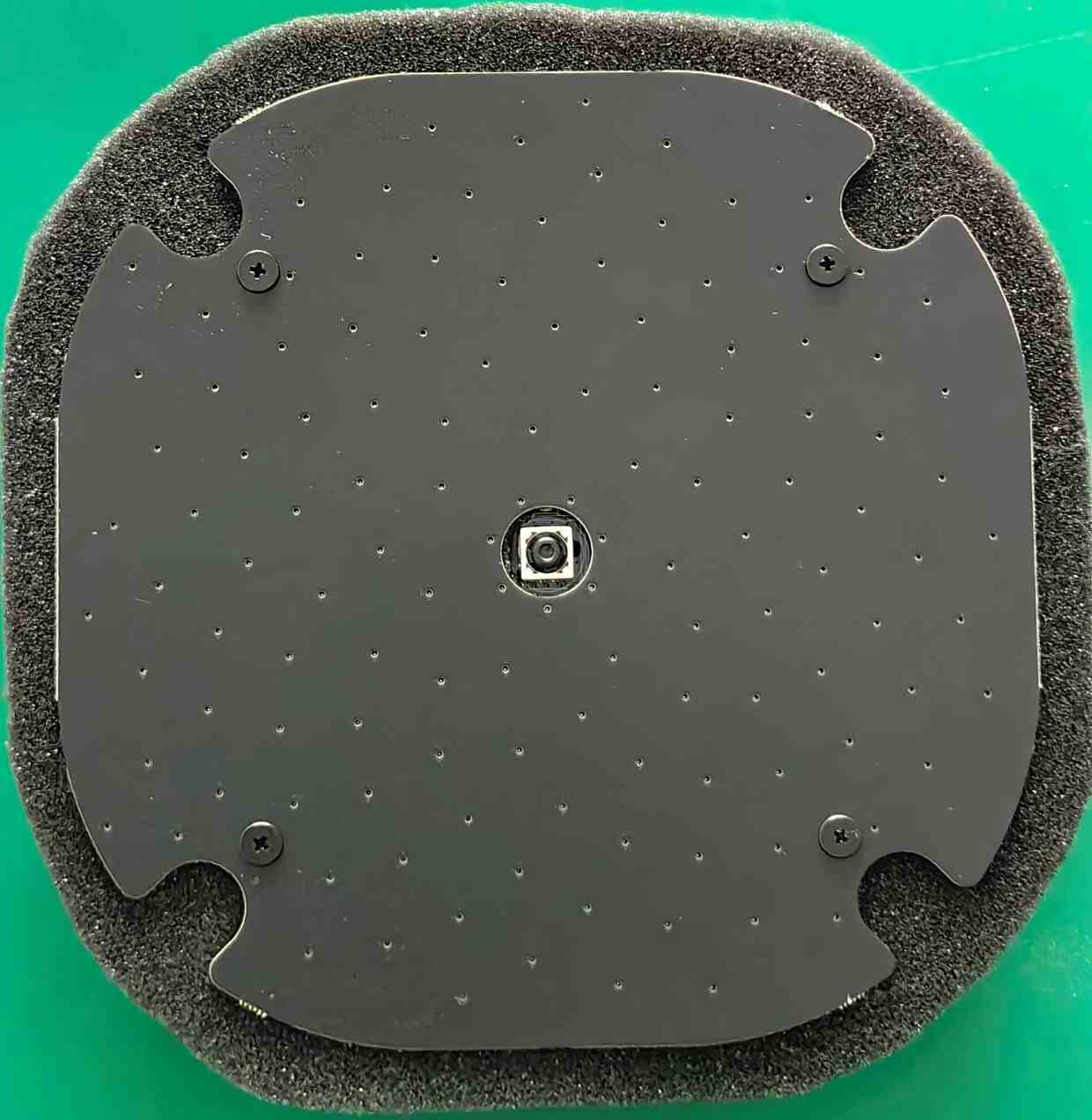
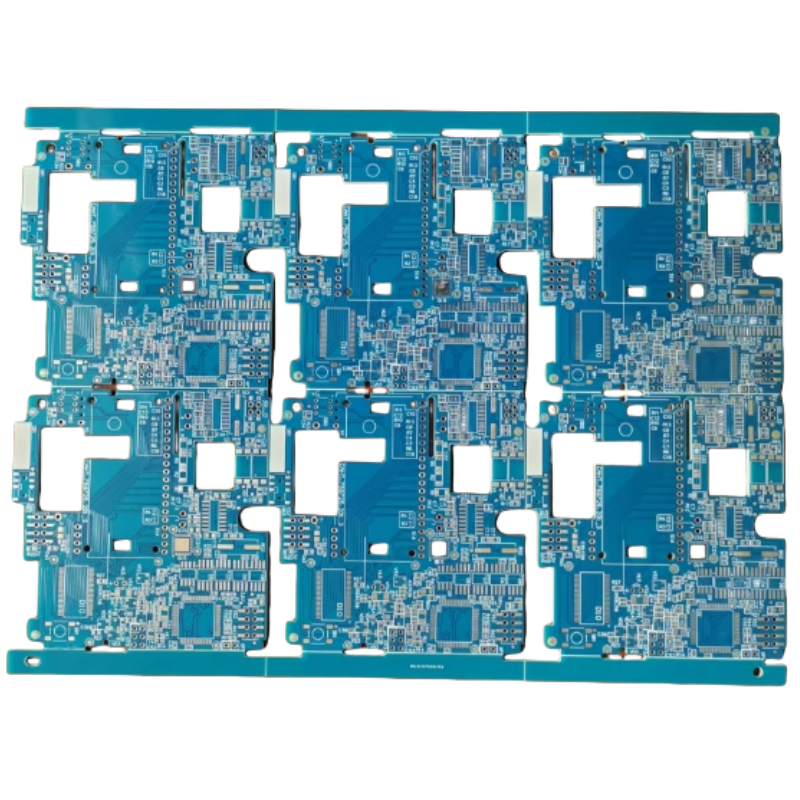
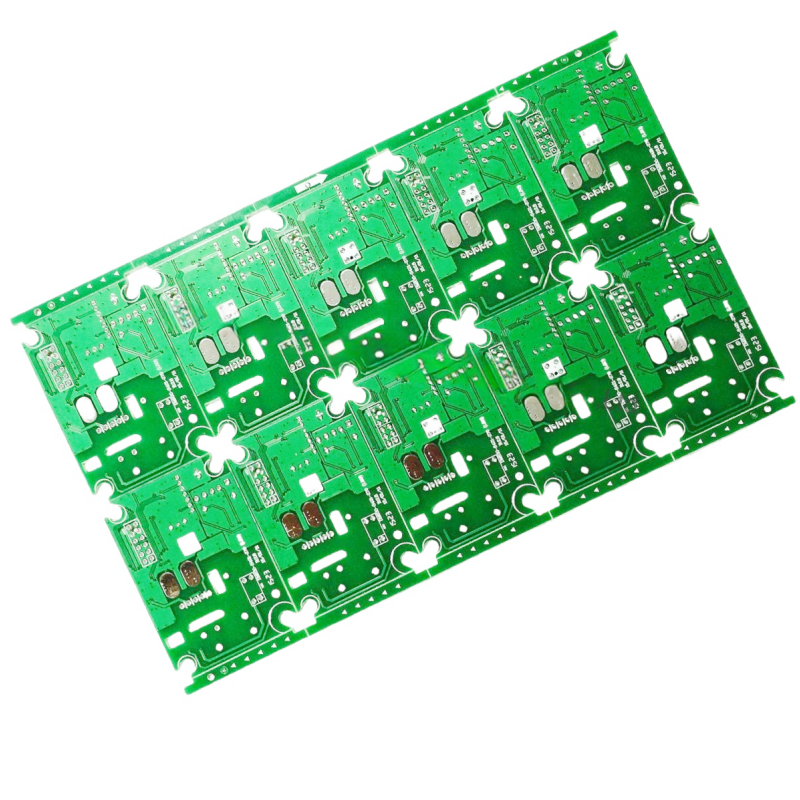
- Microphone Array
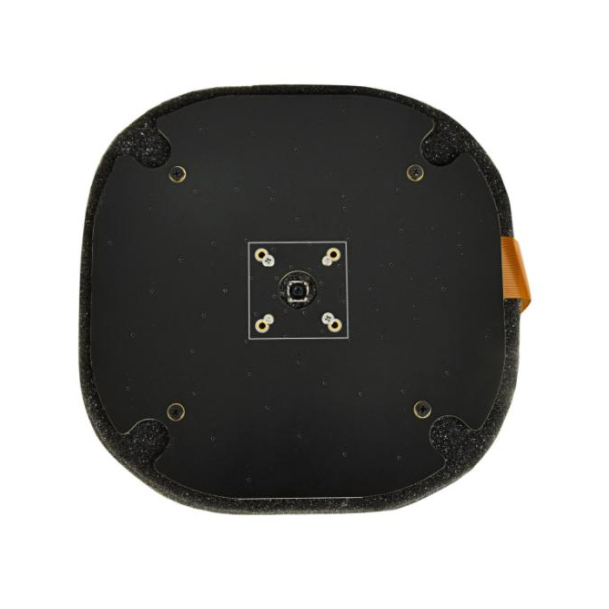
- USB Camera
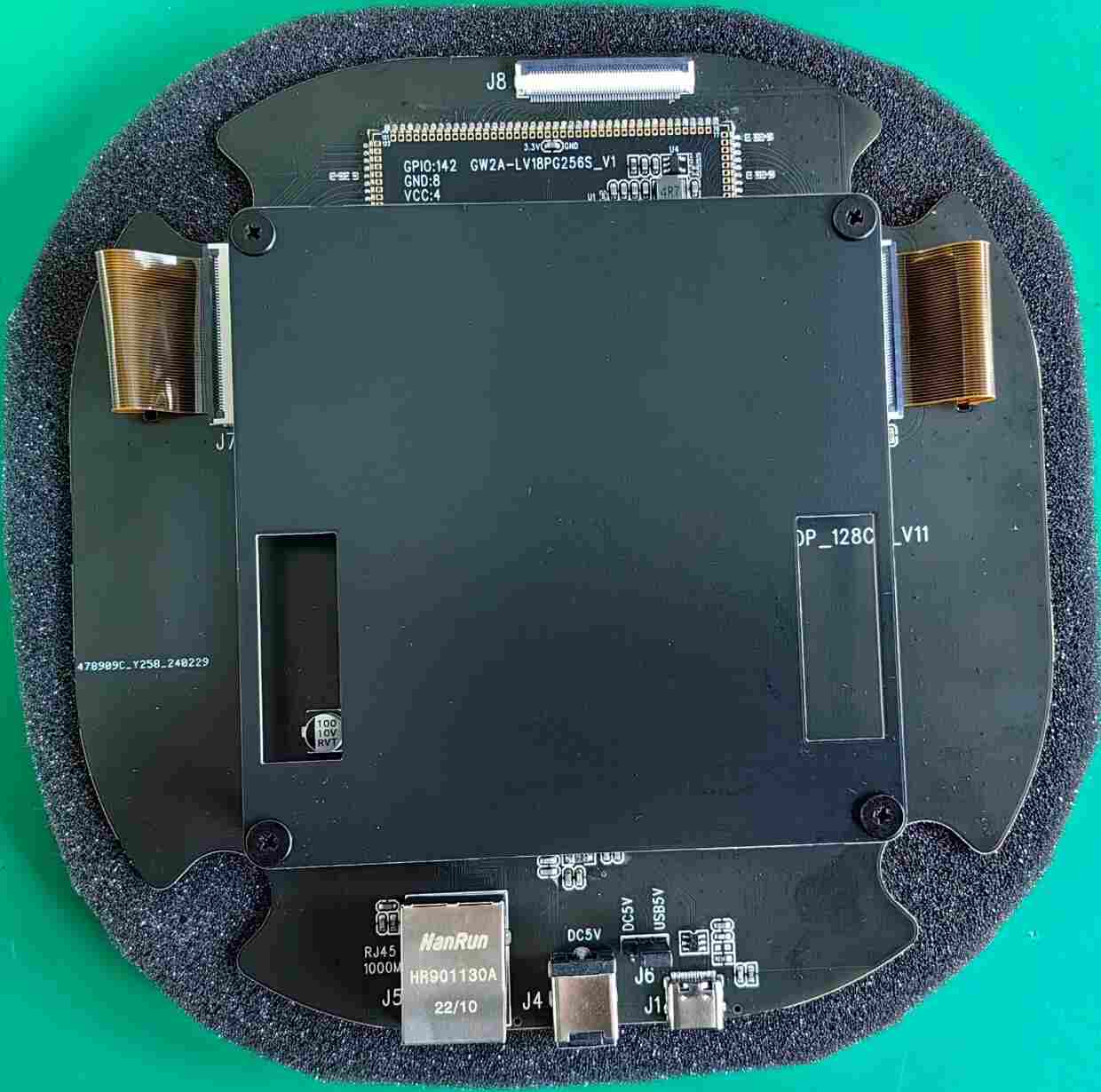
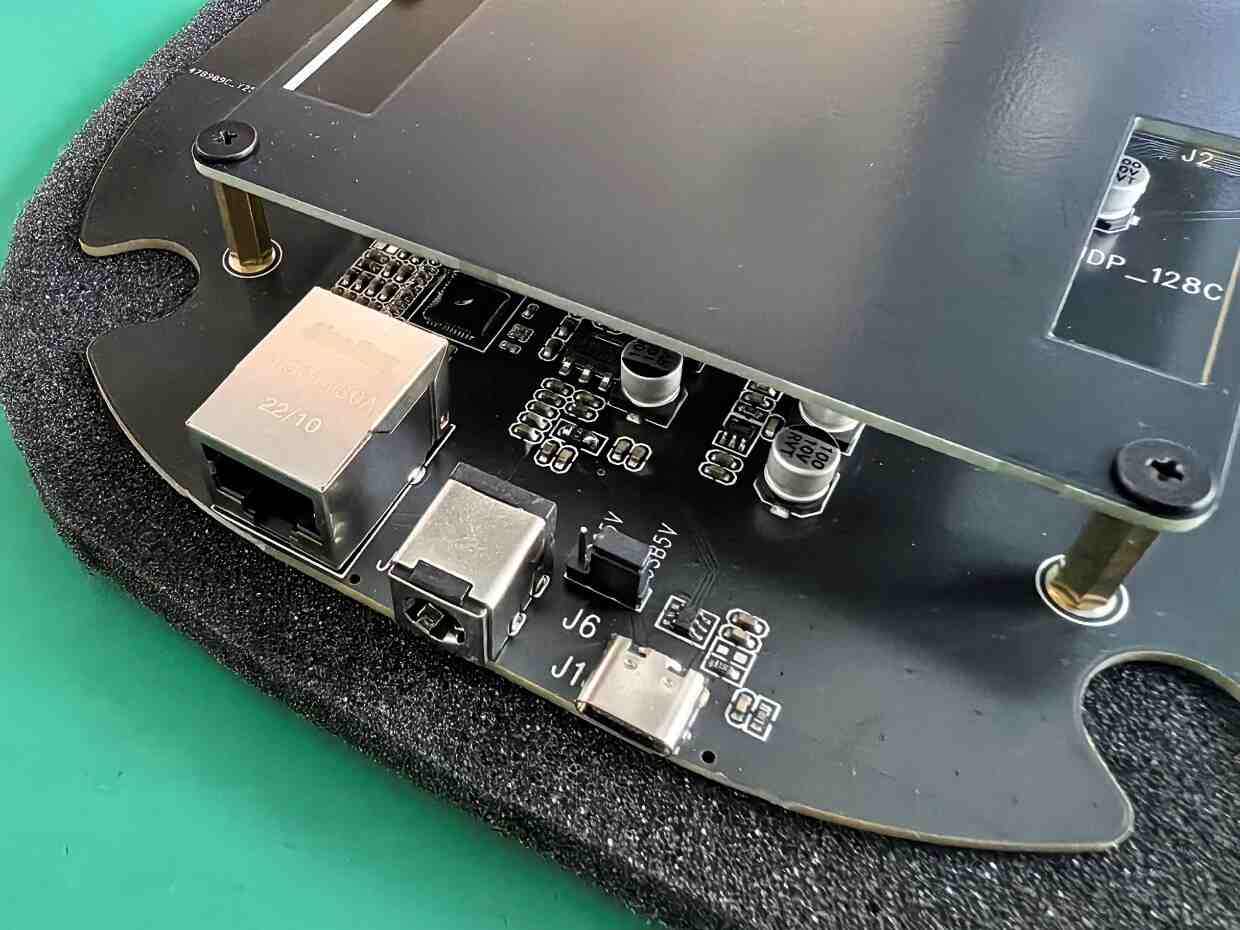
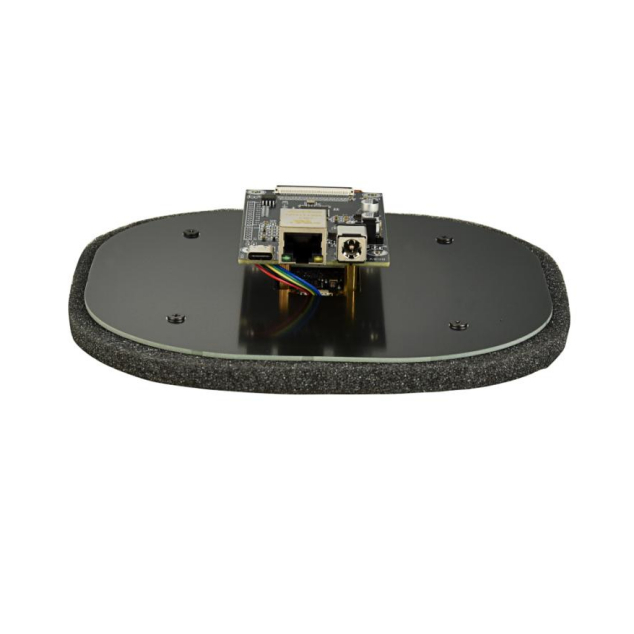
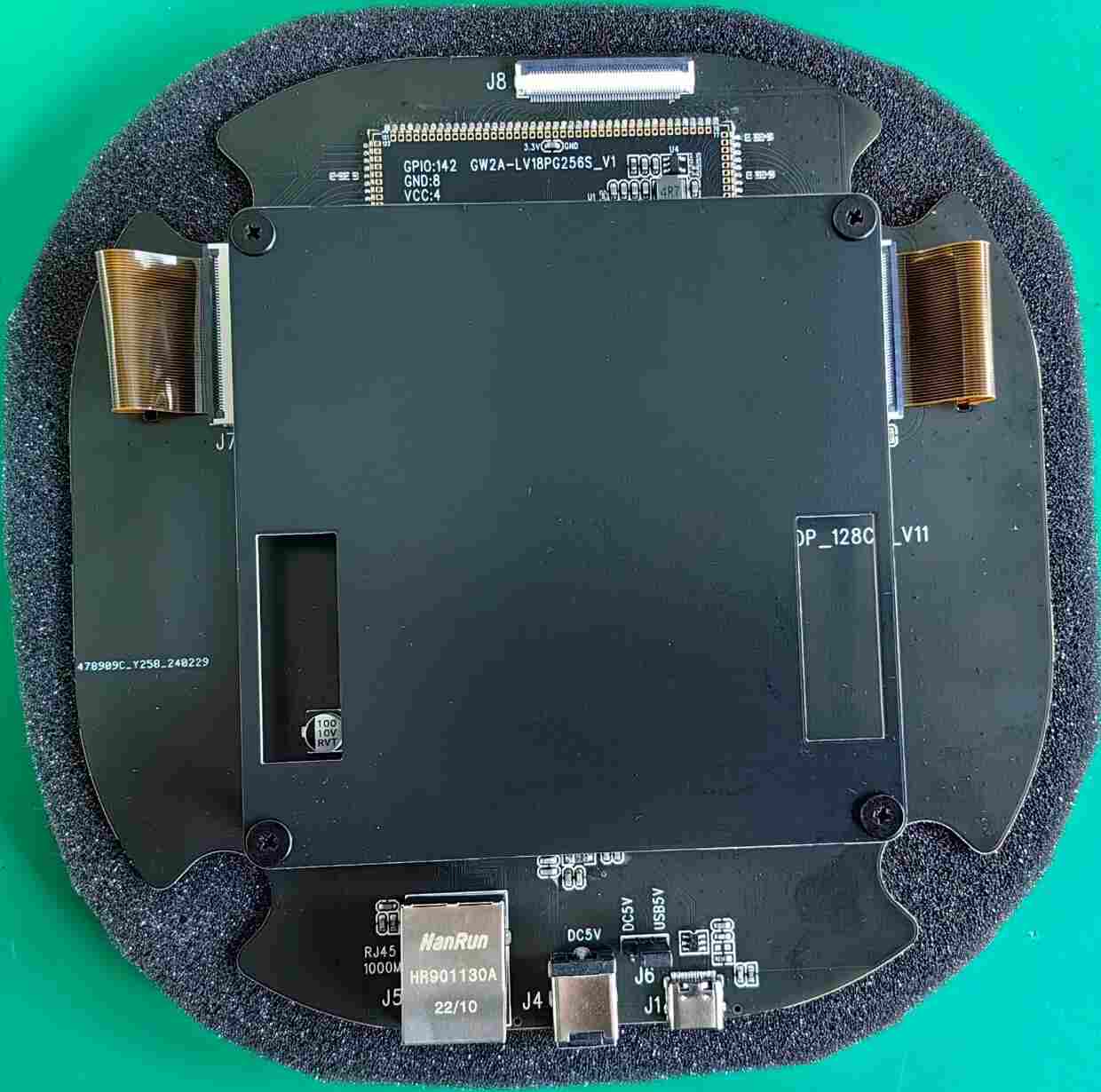
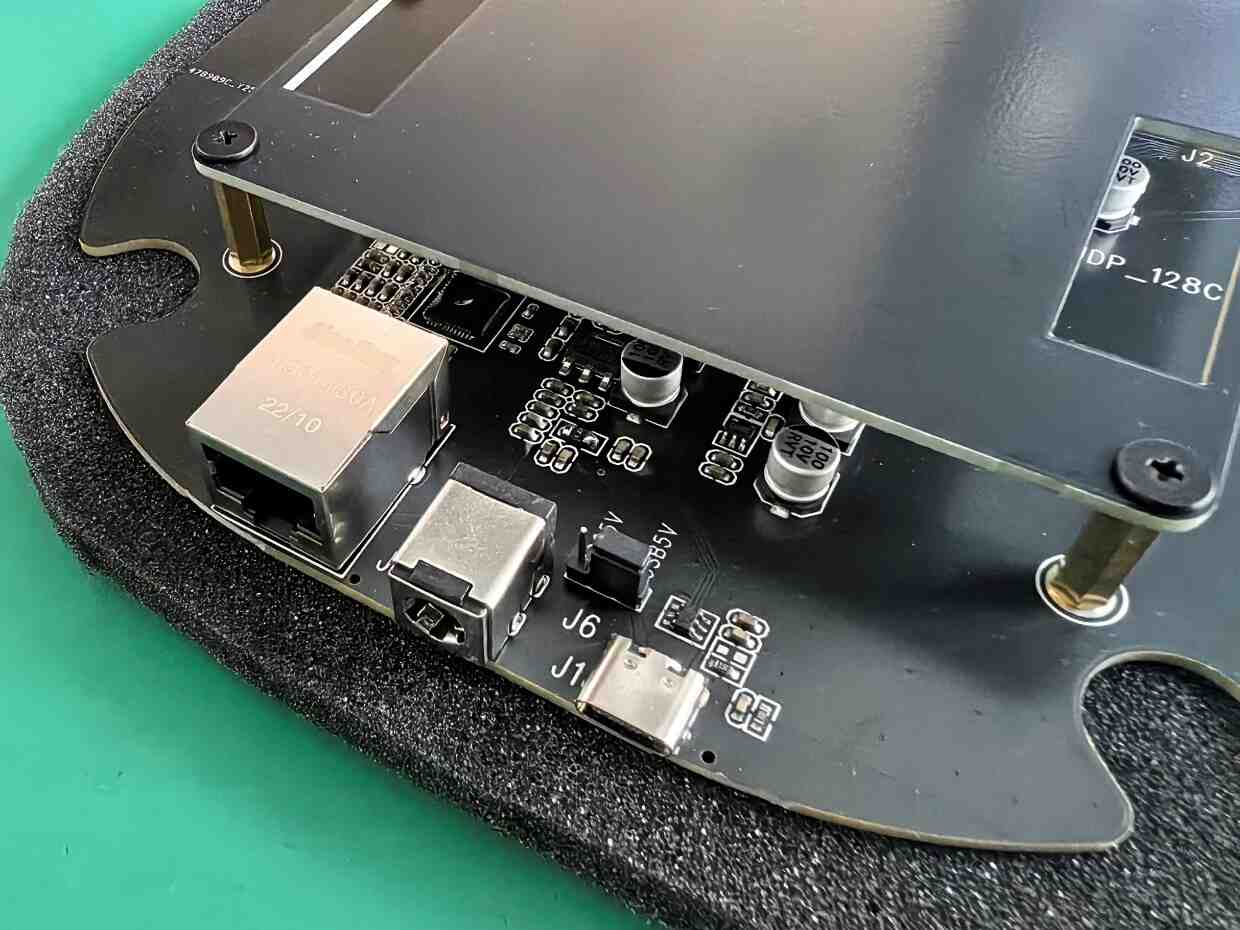
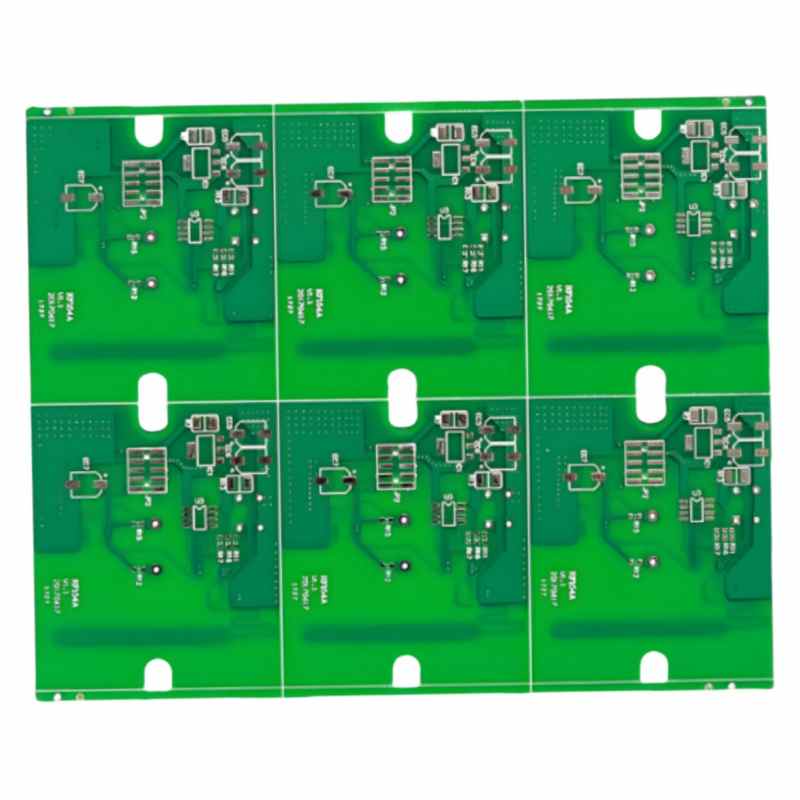
- USB/Gigabit Ethernet Acquisition Board
Kit Functions:
- Transmits MEMS microphone data to a PC via USB or UDP, and streams video to the PC via USB.
- The PC utilizes algorithms to localize sound sources and overlays the positioning information onto the video feed for display.
- Widely Applied in: Power utility partial discharge inspection, pipeline leakage detection, park noise localization, and other scenarios.
Microphone Array Parameters:
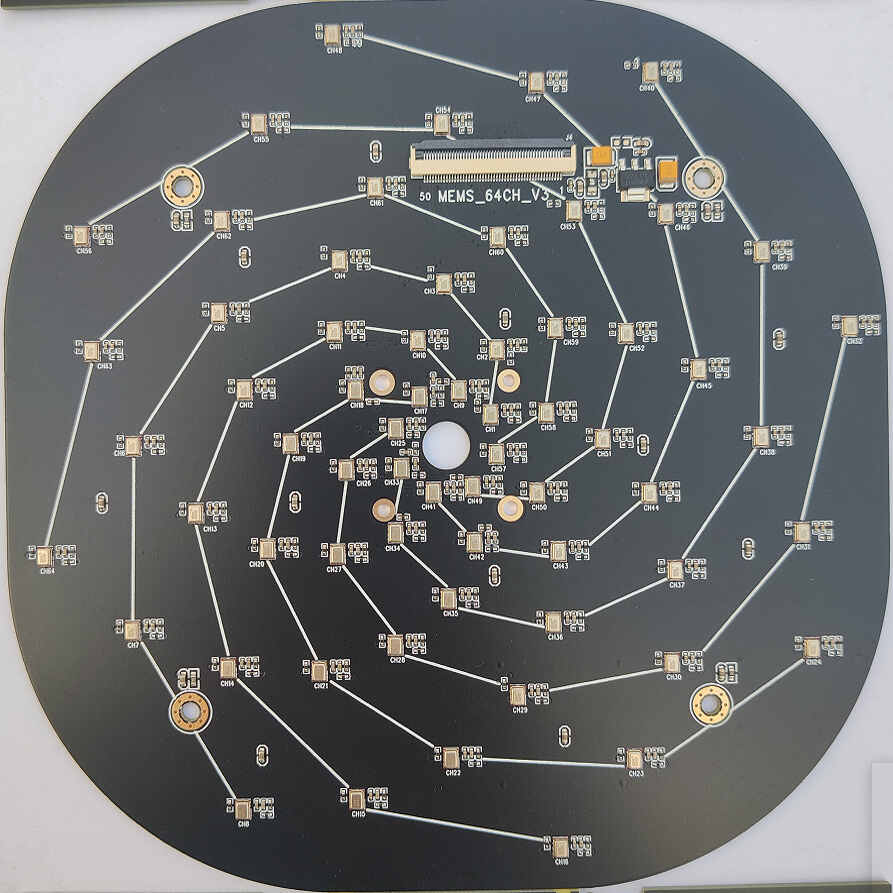
- Number of Microphones: 64/128 channels
- Array Diameter: 150mm
- Arrangement: Multi-arm helical
- Frequency Range: 20Hz - 80KHz
- Recording Sound Pressure Level: 30dBSPL ~ 120dBSPL
USB Camera Parameters:
- Sensor Model: IMX298
- Video Format: 1080P@30fps
Acquisition Board Parameters:
- Interface Types: USB/Gigabit Ethernet UDP
- Sampling Rate: 192K
- Bit Width: 16bit
- Data Format: PCM
- Sampling Method: Synchronous sampling
Technical Support:
- Provides recording software capable of capturing and saving 64/128-channel MEMS microphone data as 64/128-channel WAV files.
- Offers an API for users to independently acquire MEMS microphone data. Includes demo programs for sound source localization. Contact customer service for demonstration videos.
Industrial-Grade 64-128CH Ultrasonic Scanner: Advantages and Features
High Channel Count and Helical Array Design
- Supports 64-128 channels for ultrasonic transmission and reception, combined with a multi-arm helical array structure. This significantly enhances spatial resolution and imaging depth, making it suitable for complex medium detection (e.g., medical ultrasound, industrial non-destructive testing).
- The helical arrangement reduces sidelobe interference and improves target signal focusing, achieving over 30% higher signal-to-noise ratio (SNR) compared to traditional linear arrays.
High-Speed Data Transmission and Low Latency
- Integrates USB 3.2 Gen 2 (10Gbps) and Gigabit Ethernet for real-time data streaming, meeting the bandwidth requirements of high-resolution imaging.
- Compared to traditional USB 2.0 devices, it offers 5x higher data throughput and reduces latency to millisecond levels, making it ideal for dynamic scenarios (e.g., cardiac ultrasound, fluid monitoring).
Multimodal Positioning and Anti-Interference Capabilities
- The microphone array supports beamforming and acoustic source localization, combined with ultrasonic time difference of arrival (TDOA) algorithms to achieve millimeter-level 3D positioning accuracy.
- Built-in AI noise suppression module filters out environmental interference (e.g., industrial noise, electromagnetic interference), ensuring signal stability.
Modularity and Scalability
- Features a hot-swappable USB-C interface compatible with PCs, embedded devices, and industrial controllers; Gigabit Ethernet supports Power over Ethernet (PoE) for simplified deployment.
- Reserved PCIe expansion slots and ARM Cortex-M7 coprocessor interfaces allow for upgrades to higher speeds (e.g., USB4 40Gbps) or integration of edge computing capabilities.
Typical Application Scenarios
- Medical Imaging: Real-time 4D ultrasound imaging, intraoperative navigation, and elastography.
- Industrial Inspection: Composite material defect detection, fluid dynamics analysis, and robotic obstacle avoidance.
- Intelligent Transportation: Vehicle positioning and trajectory tracking, tunnel structural health monitoring.
- Consumer Electronics: AR/VR gesture recognition and smart home acoustic source localization.