We use cookles to Improve your online experience. By continuing browsing this website, we assume you agree our use of cookies.

Top Considerations When Selecting a Flexible PCB Fabrication Supplier
September 3rd, 2025
159 views
Top Considerations When Selecting a Flexible PCB Fabrication Supplier
Selecting the right flexible PCB (FPCB) fabrication supplier is a high-stakes decision—far more critical than choosing a rigid PCB manufacturer. FPCBs’ unique requirements (e.g., bend durability, material compatibility, miniaturization) mean that a supplier lacking specialized expertise can deliver boards that fail in field use: a medical FPCB with poor adhesive bonding may delaminate inside a patient’s body, or an automotive FPCB unable to withstand vibration could cause a critical ADAS failure.
Unlike PCB Manufacturing for rigid boards (which relies on standardized processes), FPCB fabrication demands niche capabilities—from working with polyimide substrates to laser-drilling microvias. This guide breaks down the 6 top considerations to evaluate when selecting an FPCB supplier, ensuring your partner can meet your design’s technical needs, industry standards, and project timelines. ShwayPCB’s PCB manufacturing services are built around these core competencies, making us a trusted choice for FPCBs in wearables, automotive, and medical industries.
1. Evaluate Specialized FPCB Material Expertise
FPCBs rely on unique materials (polyimide, LCP, rolled copper) that behave differently than rigid PCB substrates like FR4. A competent supplier must demonstrate deep material knowledge to avoid costly mistakes:
Key Material Competencies to Verify
- Substrate Selection Guidance: Can the supplier recommend the right substrate for your application? For example:
- Polyimide (PI) for high-temperature automotive/medical FPCBs (-269°C to +200°C).
- LCP (Liquid Crystal Polymer) for high-frequency 5G/RF FPCBs (Df=0.002 at 10 GHz).
- PET for low-cost consumer wearables (-40°C to +120°C).
Avoid suppliers that default to "one-size-fits-all" polyimide—this indicates limited material expertise.
- Material Sourcing & Quality Control: Does the supplier source materials from certified vendors (e.g., DuPont for PI, Toray for LCP) and conduct incoming inspection (IQC)? For example, ShwayPCB tests every batch of polyimide for peel strength (≥0.8 N/mm) and thermal stability (Tg ≥200°C for High-Temperature Flexible PCB projects), ensuring no substandard materials enter production.
- Adhesive & Coverlay Expertise: FPCBs’ durability depends on adhesive selection—suppliers must know when to use acrylic adhesives (consumer FPCBs) vs. epoxy adhesives (automotive/industrial) or adhesive-less lamination (high-reliability designs). A supplier that uses the same adhesive for all FPCBs will deliver boards prone to delamination.
Real-World Impact
A wearable tech client once partnered with a supplier that used PET instead of PI for a smartwatch FPCB. The PET substrate failed after 5k bend cycles (vs. the required 50k), forcing a $200k redesign. ShwayPCB’s material expertise would have recommended PI upfront, avoiding the delay.
2. Assess Technical Capabilities for FPCB-Specific Processes
FPCB fabrication requires specialized equipment and processes that many rigid PCB manufacturers lack. Verify that your supplier can handle your design’s unique requirements:
Critical FPCB Processes to Validate
- Laser Drilling for Microvias: FPCBs rely on microvias (≤0.2mm) for layer interconnects—mechanical drilling (used for rigid PCBs) frays flexible substrates. Ensure the supplier has UV laser drills (not just CO₂ lasers) to achieve ±0.002mm placement accuracy for blind/buried vias. ShwayPCB uses Yamaha UV laser systems to drill 0.08mm microvias for Multi-Layer Flexible PCB designs (up to 8 layers).
- Precision Etching for Fine Traces: FPCBs often require traces as narrow as 0.076mm (vs. 0.1mm for rigid PCBs). Ask if the supplier uses plasma etching (not just spray etching) to minimize undercut (≤0.003mm)—undercut weakens traces, causing them to break during bending.
- Bend Testing Capabilities: Unlike rigid PCBs, FPCBs require specialized durability testing. Does the supplier offer:
- Dynamic Bend Testing: 100k+ cycles at 1–5mm radius, with real-time continuity monitoring.
- Static Bend Testing: 1,000 hours at 0.5mm radius to check for delamination.
Avoid suppliers that skip bend testing—this is the only way to validate field durability.
Technical Red Flags
- The supplier uses mechanical drilling for FPCBs.
- They cannot provide data on trace undercut or microvia placement accuracy.
- They outsource bend testing (adds delays and reduces quality control).
3. Verify Industry-Specific Compliance & Certifications
FPCBs for regulated industries (medical, automotive, aerospace) require strict compliance with standards—suppliers lacking relevant certifications will fail to meet your regulatory needs:
Key Certifications by Industry
|
Industry
|
Mandatory Certifications
|
FPCB-Specific Requirements
|
|
Medical
|
ISO 13485, USP Class VI
|
Biocompatible materials (e.g., immersion tin finishes), traceability to batch level.
|
|
Automotive
|
IATF 16949, AEC-Q200
|
Vibration resistance (ISO 16750-3), thermal cycling (-40°C to +150°C, 1k cycles).
|
|
Aerospace
|
AS9100, MIL-STD-883H
|
Radiation resistance (100kGy gamma), low outgassing (<0.1% weight loss).
|
|
Consumer
|
RoHS 3, REACH
|
Halogen-free materials, lead-free solder (SAC 305).
|
How to Validate Compliance
- Ask for certificate copies (not just claims) and verify them with accrediting bodies (e.g., ANAB for ISO 13485).
- Request test reports for past projects—for example, a medical FPCB supplier should provide USP Class VI biocompatibility test results (cytotoxicity, irritation).
- For automotive projects, confirm the supplier has experience with AEC-Q200 testing for FPCBs—this ensures the board can withstand automotive environmental stress.
ShwayPCB’s Medical Flexible PCB services include full ISO 13485 compliance and USP Class VI testing, with traceability documentation for every component—critical for FDA 510(k) submissions.
4. Evaluate Project Management & Timeline Reliability
FPCB projects often have tight timelines (e.g., a wearable launch or medical device trial), so supplier reliability is non-negotiable. Look for these signs of strong project management:
Key Timeline & Communication Checks
- Prototype Lead Times: A competent supplier should deliver FPCB prototypes (1–10 units, 2-layer) in 5–7 days. Avoid suppliers quoting 2+ weeks—this indicates inefficient processes.
- Dedicated Account Manager: Ensure you have a single point of contact with FPCB expertise (not a general PCB sales rep). This person should resolve technical questions (e.g., "Can we use LCP for this 5G FPCB?") within 24 hours.
- Real-Time Order Tracking: Does the supplier offer a portal to track your order’s progress (e.g., material sourcing, laser drilling, testing)? This transparency helps you plan downstream assembly.
Common Timeline Risks to Avoid
- Outsourcing Critical Processes: Suppliers that outsource laser drilling or bend testing add 3–5 days to lead times.
- Poor DFM Support: A supplier that fails to provide DFM feedback upfront may require design reworks, delaying production. ShwayPCB’s FPCB DFM reviews flag issues like trace width violations or microvia placement errors within 24 hours of receiving Gerber files.
5. Check Quality Control (QC) Protocols for FPCBs
FPCBs have more failure points than rigid PCBs (e.g., adhesive bonds, microvia plating, coverlay alignment), so robust QC is essential. Evaluate the supplier’s QC process for:
FPCB-Specific QC Steps
- 100% Automated Optical Inspection (AOI): FPCBs require high-resolution AOI (5MP+ cameras) to detect micro-cracks in traces or misaligned coverlays—manual inspection misses 20–30% of these defects.
- X-Ray Inspection for Microvias: 3D X-ray verifies microvia plating integrity (voids <1%) and BGA solder joint quality—critical for high-reliability FPCBs.
- Batch Sampling for Bend Testing: Even with 100% AOI, suppliers should test 1–5% of each batch for bend durability to catch process variations (e.g., a bad adhesive batch).
ShwayPCB’s QC Example
For an automotive Automotive Flexible PCB project (ADAS radar), we implemented:
- AOI to check 0.076mm traces for undercut.
- 3D X-ray to inspect 0.1mm microvias for voids.
- Bend testing (100k cycles at 2mm radius) on 5% of the batch.
This resulted in 99.5% first-pass yield (FPY) and zero field failures.
6. Assess Post-Delivery Support & Warranty
FPCB issues (e.g., unexpected delamination) may arise after delivery—suppliers with poor support will leave you stranded. Look for:
Support & Warranty Must-Haves
- Warranty Coverage: A minimum 1-year warranty for consumer FPCBs; 2–5 years for medical/automotive FPCBs. The warranty should cover material defects (e.g., delamination) and process errors (e.g., trace cracking). ShwayPCB offers a 2-year warranty on all FPCBs, with expedited replacement for defective boards.
- Failure Analysis Support: If an FPCB fails, will the supplier conduct root-cause analysis (e.g., using cross-sectional microscopy to identify adhesive failure)? Avoid suppliers that blame "design issues" without evidence.
- Scalability Support: Can the supplier scale from prototypes (10 units) to high-volume production (100k+ units) without quality drops? This is critical for consumer electronics or automotive projects with ramp-up plans.
FAQ: Selecting a Flexible PCB Fabrication Supplier
1. What if my FPCB requires a rare material (e.g., radiation-hardened polyimide)?
Choose a supplier with established relationships with specialty material vendors (e.g., DuPont for radiation-hardened PI). ShwayPCB sources rare FPCB materials through authorized distributors, with lead times 2–3 weeks shorter than competitors. Avoid suppliers that cannot confirm material availability upfront—this leads to project delays.
2. Should I prioritize local suppliers over overseas ones for FPCBs?
It depends on your needs:
- Local Suppliers: Faster shipping (1–3 days), easier on-site audits, and same-time-zone communication—ideal for medical/aerospace projects requiring tight collaboration.
- Overseas Suppliers: Lower costs for high-volume FPCBs (100k+ units), but longer lead times (4–6 weeks) and potential communication barriers.
ShwayPCB offers both local (North America/Europe) and overseas production, tailoring to your volume and timeline.
3. How can I verify a supplier’s FPCB bend durability claims?
- Request test videos of bend cycles (e.g., 100k cycles at 1mm radius) for a similar FPCB design.
- Ask for field failure data—a reputable supplier will share past failure rates (e.g., "0.1% failure rate for our automotive FPCBs").
- Conduct a sample test: Order 5–10 prototype FPCBs and perform your own bend testing (per IEC 60068-2-48) to validate claims.
4. What if my FPCB design combines rigid and flexible sections (rigid-flex)?
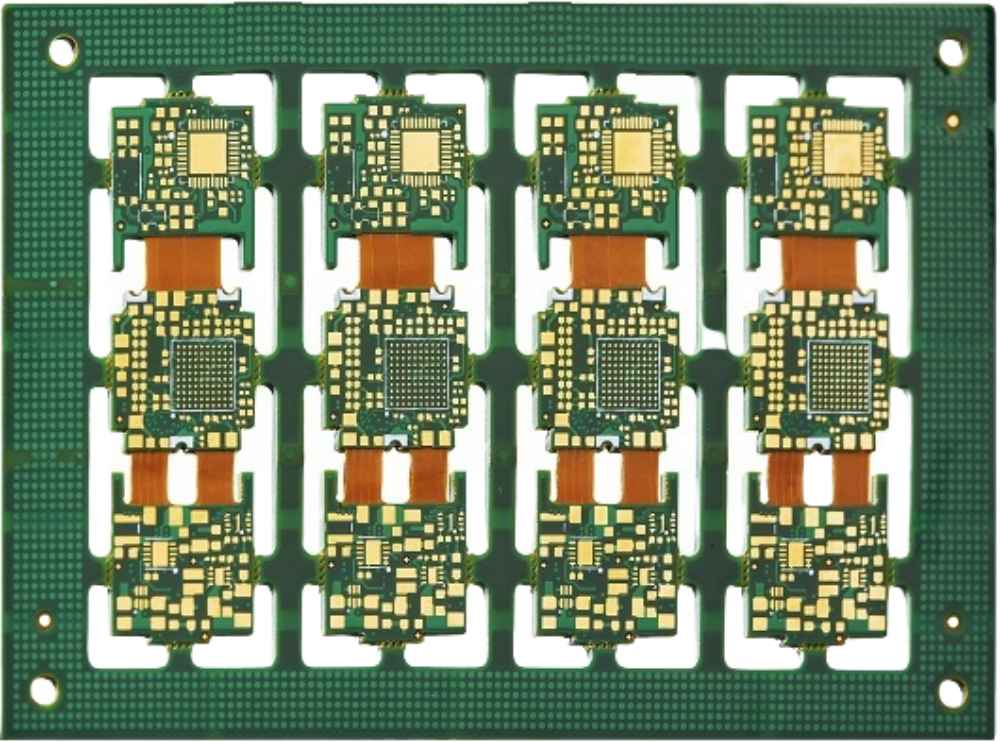
Ensure the supplier has rigid-flex fabrication expertise—this requires integrating FR4 and polyimide layers, with precise lamination to avoid delamination at the rigid-flex interface. ShwayPCB’s rigid-flex capabilities include adhesive-less lamination for the rigid-flex transition, ensuring 100k+ bend cycles without failure.
5. How much should I expect to pay for FPCB fabrication?
Costs vary by complexity:
- 2-layer consumer FPCB (PET substrate, 0.1mm traces): \(2–\)5 per unit (100-unit batch).
- 4-layer automotive FPCB (PI substrate, 0.076mm traces): \(8–\)12 per unit (100-unit batch).
- 6-layer medical FPCB (LCP substrate, microvias): \(15–\)20 per unit (100-unit batch).
Beware of suppliers quoting 30–50% below these ranges—they likely cut corners on materials or QC.
Conclusion
Selecting an FPCB fabrication supplier requires evaluating specialized capabilities that go beyond standard PCB Manufacturing—material expertise, FPCB-specific processes, industry compliance, and post-delivery support are all critical. By focusing on these 6 considerations, you can avoid costly risks (delaminated boards, failed regulatory audits, missed timelines) and partner with a supplier that delivers FPCBs meeting your technical and business needs.
ShwayPCB’s PCB manufacturing services are designed to address FPCBs’ unique demands, with expertise in polyimide/LCP materials, laser drilling, and industry compliance (ISO 13485, IATF 16949). Our dedicated FPCB engineers provide end-to-end support—from DFM reviews to failure analysis—ensuring your boards perform reliably in field use.
To discuss your FPCB project, request a supplier capability audit, or get a customized quote for PCB Manufacturing, contact ShwayPCB at yuan@shwaypcb.com. For detailed specs on our FPCB equipment, material options, and certification compliance, visit our dedicated PCB manufacturing services page.

Copyright © 2005-2025 ShwayPCB : PCB Fabrication and Assembly Manufacturer. All Rights Reserved. POWERED BY UEESHOP


Copyright © 2005-2025 ShwayPCB : PCB Fabrication and Assembly Manufacturer. All Rights Reserved. POWERED BY UEESHOP