We use cookles to Improve your online experience. By continuing browsing this website, we assume you agree our use of cookies.

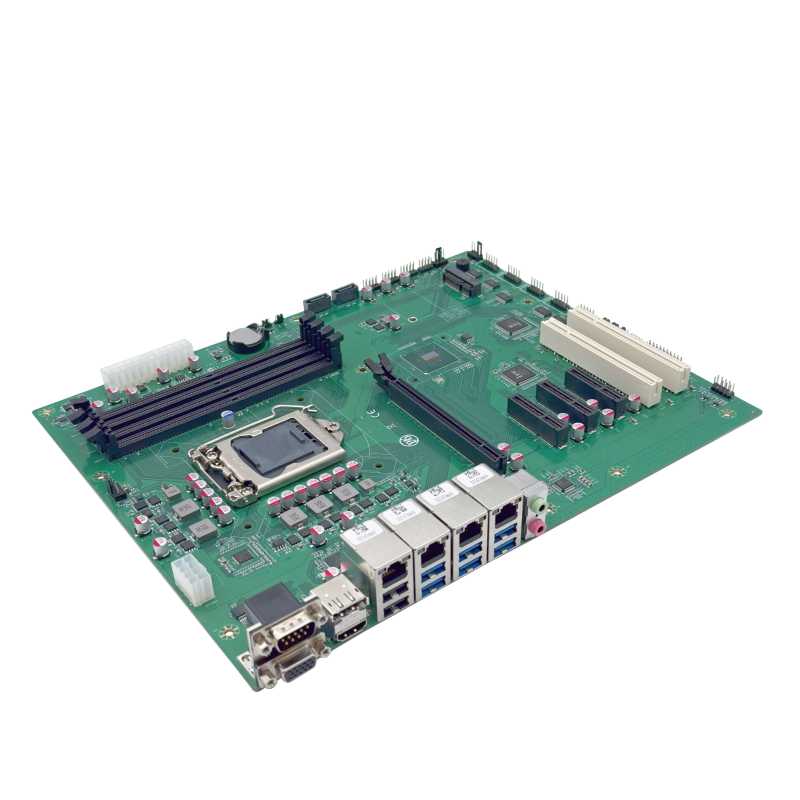
The Q670 ATX Industrial Motherboard: Empowering Edge Computing with 14th Gen i9 and 6 PCIe 4.0 Slots
September 8th, 2025
190 views
The Q670 ATX Industrial Motherboard: Empowering Edge Computing with 14th Gen i9 and 6 PCIe 4.0 Slots
In the rapidly evolving landscape of modern technology, edge computing has emerged as a critical component in enabling real - time data processing, reducing latency, and enhancing the overall efficiency of various applications. At the heart of a high - performance edge computing system lies a reliable and powerful motherboard. The Q670 ATX industrial motherboard, with its support for 14th Gen i9 processors and 6 PCIe 4.0 slots, has positioned itself as a game - changing solution for edge computing scenarios.
Understanding the Q670 Chipset in the Industrial Realm
Core Features of the Q670 Chipset
The Q670 chipset, developed by Intel, forms the backbone of this industrial - grade motherboard. It is engineered to offer a blend of high - performance capabilities and industrial - specific features. One of the primary highlights of the Q670 chipset is its excellent support for high - speed data transfer interfaces. With support for PCIe 3.0 and, more importantly, PCIe 4.0, it enables the seamless operation of the 6 PCIe 4.0 slots on the motherboard. PCIe 4.0, which provides data transfer rates of up to 16 GT/s per lane (twice as fast as PCIe 3.0), is crucial for edge computing applications. These applications often involve handling large volumes of data from multiple sources such as sensors, cameras, and other IoT devices, and the high - speed data transfer ensures that data can be quickly processed and acted upon.
The Q670 chipset also excels in memory management. It supports DDR4 memory, with some motherboard models accommodating relatively high - speed DDR4 modules. This allows for quick access and processing of data, which is essential for real - time analytics and decision - making in edge computing environments. Additionally, the chipset is designed to work harmoniously with a wide range of Intel processors, including the powerful 14th Gen i9, providing flexibility in system configuration based on the specific requirements of edge computing applications.
How the Q670 Chipset Differs for Industrial Use
When compared to consumer - oriented Q670 chipsets, those used in industrial - grade motherboards are fortified for ruggedness and reliability. Industrial environments are often harsh, with exposure to vibrations, dust, extreme temperatures, and electromagnetic interference. The Q670 chipset in industrial motherboards undergoes additional testing to ensure it can withstand these conditions. For example, the components used in the motherboard, such as capacitors, are of higher quality and are selected for their ability to withstand voltage fluctuations and temperature variations more effectively. The PCB (Printed Circuit Board) layout is optimized to reduce electromagnetic interference, which can disrupt the operation of sensitive components in edge computing systems. This focus on durability and reliability makes the Q670 ATX motherboard an ideal choice for edge computing applications that require continuous and stable operation.
The Power of 14th Gen i9 in Edge Computing
Unmatched Processing Performance
The 14th Gen i9 processors are some of the most powerful CPUs in Intel's lineup, and their integration with the Q670 ATX motherboard brings a new level of processing performance to edge computing. These processors are designed with a high number of cores and threads, allowing them to handle complex computational tasks with ease. In edge computing scenarios, where real - time data analysis and processing are crucial, the 14th Gen i9 can quickly analyze large datasets from multiple sensors or devices. For example, in a smart city infrastructure, edge computing nodes equipped with the Q670 motherboard and 14th Gen i9 can process data from traffic sensors, environmental sensors, and surveillance cameras simultaneously. This enables real - time traffic management, environmental monitoring, and security threat detection, all of which are essential for the efficient functioning of a smart city.
Enhanced AI and Machine Learning Capabilities
Edge computing is increasingly being used for AI and machine learning applications, and the 14th Gen i9 processors offer significant advantages in this area. These processors are optimized for running AI algorithms, with features such as Intel's Deep Learning Boost technology. This technology accelerates neural network computations, allowing edge computing systems to perform tasks like image recognition, natural language processing, and predictive maintenance more efficiently. For instance, in a manufacturing plant, an edge computing system with a Q670 motherboard and 14th Gen i9 can use AI - based computer vision to detect defects in products on the assembly line in real - time. The high - performance processing power of the 14th Gen i9 enables quick analysis of high - resolution images, reducing the time it takes to identify and address manufacturing issues.
The Significance of 6 PCIe 4.0 Slots in Edge Computing
High - Speed Data Transfer for Real - Time Applications
In edge computing, real - time data transfer is of utmost importance. The 6 PCIe 4.0 slots on the Q670 ATX motherboard play a pivotal role in enabling this. For example, in an industrial IoT (IIoT) setup, sensors are used to collect data on various parameters such as temperature, pressure, and vibration. These sensors are often connected to data acquisition cards, which can be installed in the PCIe 4.0 slots. The high - speed data transfer capabilities of PCIe 4.0 allow these cards to rapidly collect and transmit sensor data to the motherboard. The motherboard, in turn, can process this data in real - time and send control signals to actuators or other devices. The low latency and high bandwidth of PCIe 4.0 ensure that there are no delays in this data transfer and control loop, leading to efficient and responsive operation of the IIoT system.
Versatile Expansion Options for Diverse Edge Computing Needs
The multiple PCIe 4.0 slots also offer extensive expansion possibilities, which are highly beneficial for edge computing applications. In a smart retail environment, for example, edge computing nodes need to handle a variety of tasks, including video surveillance, customer analytics, and inventory management. Expansion cards can be installed in the PCIe 4.0 slots to meet these diverse needs. Network interface cards with advanced features can be added to provide high - speed, reliable network connections, which are essential for communicating with other devices in the store, as well as for transmitting data to the cloud for further analysis. Graphics cards can also be installed for applications that require real - time video processing, such as facial recognition for security or customer behavior analysis. This versatility allows edge computing systems to be customized according to specific requirements, making the Q670 ATX motherboard a highly adaptable solution for a wide range of edge computing scenarios.
Compatibility with Industrial Components
Processor Compatibility
The Q670 ATX motherboard's compatibility with a wide range of Intel processors, especially the 14th Gen i9, is a major advantage for edge computing. Different edge computing applications have varying processing power requirements. For simple edge devices that perform basic data collection and pre - processing, an entry - level Intel processor may be sufficient. However, for more complex applications such as running advanced AI algorithms for autonomous vehicle control or large - scale data analytics in a data center edge environment, the high - performance 14th Gen i9 processors can be used. The motherboard's architecture is designed to fully utilize the capabilities of these processors, ensuring that the edge computing system can handle the most demanding computational tasks. Whether it's a basic edge sensor node or a high - end edge computing server, the Q670 motherboard can provide a stable and efficient platform for industrial use.
Memory and Storage Compatibility
In terms of memory, the Q670 motherboard supports DDR4 memory modules. In edge computing, having sufficient and fast memory is crucial for storing and accessing data related to real - time operations, analytics, and caching. The motherboard can support a variety of DDR4 memory speeds and capacities, allowing for customization based on the specific needs of the edge computing application. For example, in a video surveillance edge system that needs to store and analyze large amounts of video data in real - time, a high - capacity and high - speed DDR4 memory can be installed to ensure smooth operation.
When it comes to storage, the Q670 motherboard offers support for both traditional SATA - based storage devices, such as hard disk drives (HDDs) and SATA solid - state drives (SSDs), as well as NVMe SSDs. NVMe SSDs, which can be connected via the PCIe 4.0 slots, are particularly useful in edge computing applications that require fast data access. In a financial transaction edge computing system, where quick access to transaction records and customer data is essential, an NVMe SSD can significantly reduce the data retrieval time, improving the overall efficiency of the system.
Build Quality and Reliability in Edge Computing
Components and Construction
The build quality of the Q670 ATX motherboard is a key factor in its suitability for edge computing. It is constructed using high - quality components that are built to last. The power delivery system, for instance, is designed to provide stable and reliable power to all components. High - quality capacitors and voltage regulators are used to ensure that the motherboard can handle the power demands of edge computing applications without experiencing voltage fluctuations or overheating.
The PCB of the motherboard is also of high quality. It is often multilayered, which helps to improve signal integrity and reduce electromagnetic interference. The layers are carefully designed to route electrical signals between different components, ensuring that the motherboard operates smoothly and efficiently. In addition, the motherboard may have features such as reinforced slots, which can better withstand the vibrations and mechanical stress that may be present in some edge computing environments, such as industrial plants or transportation systems.
Long - Term Reliability
Long - term reliability is essential in edge computing, as system downtime can lead to significant losses in terms of data, productivity, and revenue. The Q670 ATX motherboard is engineered to be highly reliable over an extended period. It undergoes rigorous testing during the manufacturing process to ensure that it can meet the demands of edge computing use. This includes testing for electrical stability, compatibility with various industrial components, and resistance to environmental factors such as temperature, humidity, and vibration.
Many manufacturers also offer extended warranties for their industrial - grade motherboards, providing an extra layer of assurance to customers. In addition, the motherboard may have features such as redundant power connectors, which can ensure that the system remains operational even in the event of a power supply failure. These reliability - enhancing features make the Q670 ATX motherboard a trusted choice for edge computing applications, where continuous and stable operation is crucial.
Real - World Applications of the Q670 ATX Motherboard in Edge Computing
Smart Cities
In smart cities, the Q670 ATX motherboard with 14th Gen i9 and 6 PCIe 4.0 slots is used in a variety of edge computing applications. For example, in traffic management systems, edge computing nodes equipped with this motherboard can process data from traffic sensors, cameras, and connected vehicles in real - time. The 14th Gen i9's high - performance processing power allows for quick analysis of traffic patterns, enabling the optimization of traffic signal timings to reduce congestion. The 6 PCIe 4.0 slots can be used to connect network interface cards for seamless communication with other devices in the smart city infrastructure, as well as data acquisition cards for collecting sensor data.
Industrial Automation
In industrial automation, the Q670 motherboard plays a vital role in edge computing - based control and monitoring systems. In a manufacturing plant, for example, edge computing nodes can be used to monitor the performance of production equipment in real - time. The 14th Gen i9 can analyze data from sensors installed on the equipment to detect any signs of impending failure, enabling predictive maintenance. The PCIe 4.0 slots can be used to connect various expansion cards, such as motion control cards for controlling robotic arms and data acquisition cards for collecting data from different types of sensors.
Healthcare
In the healthcare industry, the Q670 ATX motherboard can be used in edge computing applications for remote patient monitoring. Wearable devices and in - hospital sensors can collect patient data such as vital signs, and this data can be transmitted to an edge computing node with a Q670 motherboard. The 14th Gen i9 can analyze this data in real - time, and if any abnormal readings are detected, alerts can be sent to healthcare providers immediately. The PCIe 4.0 slots can be used to connect network interface cards for secure data transmission and other expansion cards for additional functionality, such as data storage or signal processing.
FAQ
Can the Q670 ATX Motherboard Be Used in Hazardous Edge Computing Environments?
While the Q670 ATX motherboard is designed to be rugged and reliable for industrial use, its suitability for hazardous environments depends on additional factors. In environments where there are flammable gases, dust, or other hazardous substances, the motherboard may need to be installed in an enclosure that meets the relevant safety standards. Some industrial - grade motherboards may also have specific certifications for use in hazardous areas. It's important to check with the motherboard manufacturer and consult relevant safety regulations to determine if the Q670 ATX motherboard can be used in a particular hazardous edge computing environment.
How Does the Motherboard Handle Power Outages in Edge Computing Settings?
Many Q670 ATX motherboards for industrial use are designed to handle power outages gracefully. Some models may have features such as redundant power connectors, which allow for the connection of multiple power supplies. In the event of a power outage in one supply, the motherboard can switch to the other supply, ensuring continuous operation. Additionally, the motherboard may be able to save important data and system settings to non - volatile storage in the event of a power loss. Some motherboards also support features like wake - on - LAN, which can be used to remotely power on the system once power is restored.
What is the Maintenance Requirement for the Q670 ATX Motherboard in Edge Computing?
The maintenance requirements for the Q670 ATX motherboard in edge computing are relatively low. However, it's recommended to periodically check for dust accumulation, especially in environments with high levels of particulate matter. Dust can affect the cooling efficiency of the motherboard and potentially cause overheating. Cleaning the motherboard with compressed air or a suitable cleaning solution can help to keep it in good working condition. It's also advisable to update the motherboard's BIOS and drivers regularly to ensure compatibility with the latest industrial components and to take advantage of any performance improvements or bug fixes provided by the manufacturer.
Conclusion
The Q670 ATX industrial motherboard, with its support for 14th Gen i9 processors and 6 PCIe 4.0 slots, has emerged as a powerful and reliable solution for edge computing applications. Its high - speed data transfer capabilities, excellent compatibility with industrial components, and robust build quality make it suitable for a wide range of real - world applications, from smart cities and industrial automation to healthcare. As edge computing continues to grow in importance across various industries, the Q670 ATX motherboard is well - positioned to meet the increasing demands for high - performance, reliable, and customizable edge computing platforms. By investing in this motherboard, businesses and organizations can enhance the efficiency, productivity, and competitiveness of their edge computing - based operations, staying ahead in the fast - paced world of modern technology.

Copyright © 2005-2025 ShwayPCB : PCB Fabrication and Assembly Manufacturer. All Rights Reserved. POWERED BY UEESHOP


Copyright © 2005-2025 ShwayPCB : PCB Fabrication and Assembly Manufacturer. All Rights Reserved. POWERED BY UEESHOP