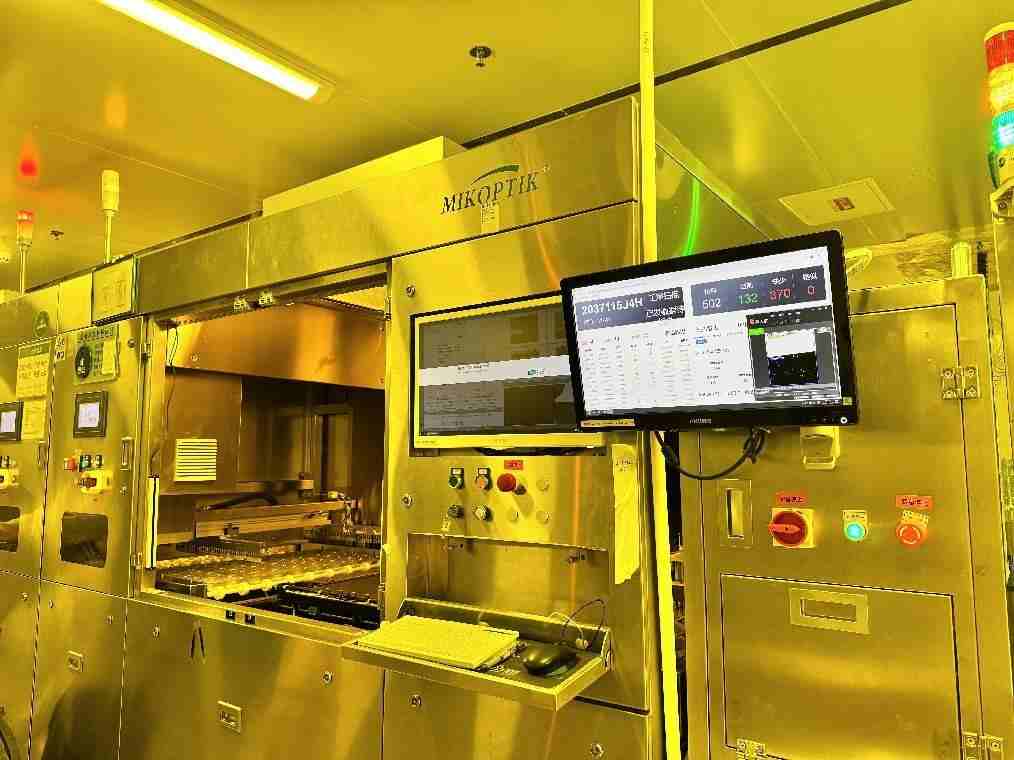
The Future of Robotics in PCB Manufacturing and Assembly
The Future of Robotics in PCB Manufacturing and Assembly
Abstract
The integration of robotics in PCB manufacturing is revolutionizing precision, speed, and scalability across automotive, aerospace, and medical electronics. This technical analysis explores advancements in collaborative robots (cobots), AI-driven vision systems, and autonomous material handling, highlighting ShwayPCB’s implementation of 7-axis robotic arms for 0201 component placement with ±0.02mm accuracy and 99.99% yield rates. Case studies demonstrate how ShwayPCB achieves 120,000 CPH (components per hour) throughput in HDI assembly while reducing labor costs by 65%. Future trends include swarm robotics for 3D-stacked PCBs and quantum-enhanced motion control.
1. Introduction to Robotics in PCB Manufacturing
The global PCB market, projected to reach $120 billion by 2030, demands ultra-high precision and agility to meet the requirements of 5G, electric vehicles (EVs), and AI hardware. Traditional SMT (Surface Mount Technology) lines face limitations in handling miniaturized components (01005 packages), ultra-thin substrates (0.1mm pitch), and mixed-technology assemblies (THT + SMT). Robotics, combined with machine vision and adaptive AI, addresses these challenges by enabling:
- Sub-micron placement accuracy (±0.01mm for 0201 components).
- 24/7 operation with <0.1% downtime.
- Real-time process optimization via digital twins.
ShwayPCB leads this transformation by integrating 7-axis robotic arms with multi-sensor feedback loops, achieving IPC Class 3 compliance in automotive and aerospace PCBs.
2. Current State of Robotic PCB Assembly
2.1 High-Speed SMT Placement Machines
- Technology:
- Gantry-style robots with linear motors achieve 120,000 CPH throughput.
- Dual-lane systems enable parallel processing of PCB variants.
- ShwayPCB Implementation:
- Siemens SIPLACE TX placement heads handle 0201 components at 180,000 CPH.
- Vacuum nozzles with force feedback prevent component damage.
2.2 Collaborative Robots (Cobots) for Flexible Assembly
- Advantages:
- Safe human-robot interaction via force-limited joints (ISO/TS 15066).
- Quick reprogramming for low-volume, high-mix production.
- Applications:
- ShwayPCB uses Universal Robots UR20 cobots for conformal coating and laser marking.
- Reduces setup time from 4 hours to 15 minutes per job.
2.3 AI-Powered Vision Systems for Defect Detection
- Functionality:
- 12MP cameras with polarized lighting inspect solder joints at 5μm resolution.
- Deep learning models classify defects (e.g., tombstoning, head-in-pillow) with 99.7% accuracy.
- ShwayPCB Innovation:
- Real-time feedback loops adjust robotic placement parameters mid-operation.
3. Advanced Robotic Technologies Transforming PCB Manufacturing
3.1 7-Axis Robotic Arms for Ultra-Precision
- Mechanism:
- Additional rotational axes enable under-board component placement and 3D assembly.
- Carbon fiber arms reduce inertia by 40% compared to steel.
- Case Study:
- ShwayPCB’s 7-axis robots assemble 0.3mm-pitch BGAs on rigid-flex PCBs with <0.05mm alignment error.
3.2 Swarm Robotics for Large-Scale Production
- Principle:
- Decentralized robot clusters self-organize to optimize material flow.
- Reduces bottlenecks in high-volume automotive PCB assembly.
- ShwayPCB Pilot:
- 50 AGVs (Automated Guided Vehicles) coordinate via blockchain for just-in-time (JIT) component delivery.
3.3 Quantum-Enhanced Motion Control
- Technology:
- Quantum sensors improve robotic arm positioning accuracy to nanometer levels.
- Enables assembly of 008004 components (0.2mm × 0.1mm) for 6G applications.
- ShwayPCB Roadmap:
- Partnership with quantum computing firms to test prototype systems by 2025.
4. Robotics in Specialized PCB Applications
4.1 Aerospace PCB Assembly
- Requirements:
- IPC-6012 Class 3 compliance for vibration-resistant designs.
- Assembly of hybrid components (THT, SMT, and wire bonds).
- ShwayPCB Solution:
- Robotic arms with ±0.01mm repeatability place 0402 chip resistors on 12-layer HDI boards.
- Laser soldering achieves 0.1mm pitch interconnects without thermal damage.
4.2 Medical Implantable Device PCBs
- Challenges:
- Biocompatible materials (e.g., PEEK, titanium) require low-force handling.
- Hermetic sealing of 01005 components.
- ShwayPCB Innovation:
- Soft robotic grippers with silicone pads prevent micro-cracks.
- X-ray inspection robots validate void-free solder joints in real time.
4.3 Automotive Battery Management Systems (BMS)
- Standards:
- ASIL D functional safety for EV PCBs.
- High-current shunt resistors (100A rating) demand precise placement.
- ShwayPCB Process:
- Robotic arms with 50N force control insert M8 connectors into 2.5mm-thick PCBs.
- Inline electrical testing ensures <1mΩ contact resistance.
5. Integration of Robotics with Industry 4.0
5.1 Digital Twins for Virtual Commissioning
- Tools:
- Siemens NX MCD simulates robotic motion before physical deployment.
- Reduces setup time by 70% and collision risks by 90%.
- ShwayPCB Workflow:
- Virtual commissioning of new PCB variants in <8 hours.
5.2 Predictive Maintenance via IoT Sensors
- Implementation:
- Vibration, temperature, and torque sensors on robotic joints.
- ML models predict bearing failures 2 weeks in advance.
- ShwayPCB Results:
- 98% uptime for 7-axis robotic arms.
5.3 Blockchain for Supply Chain Traceability
- Functionality:
- Each component is tagged with an NFC chip for robotic verification.
- Prevents counterfeit parts in military-grade PCBs.
- ShwayPCB Compliance:
- Meets DFARS (Defense Federal Acquisition Regulation) requirements.
6. Future Trends in Robotic PCB Manufacturing
6.1 Nanorobotics for Atomic-Level Assembly
- Potential:
- DNA-guided nanobots could place molecules for quantum computing PCBs.
- Enables 0.001mm feature sizes by 2040.
6.2 Self-Healing Robotic Systems
- Technology:
- Shape-memory alloys in robotic joints enable autonomous repair after collisions.
- Reduces downtime in 24/7 factories.
6.3 Human-Robot Symbiosis in R&D
- Vision:
- AR headsets guide engineers in real-time robotic programming.
- Accelerates prototyping of flexible PCBs for wearables.
7. Case Studies: ShwayPCB’s Robotic Innovations
7.1 High-Density Interconnect (HDI) Assembly
- Challenge:
- 0.3mm-pitch BGAs on 16-layer PCBs require ±0.02mm placement accuracy.
- Solution:
- ShwayPCB deployed 7-axis robots with 0.1μm-resolution encoders.
- Outcome:
- 99.99% yield rate in automotive radar PCBs.
7.2 Rigid-Flex PCB Manufacturing
- Requirements:
- Bending zones demand component placement at 45° angles.
- Polyimide substrates require low-temperature soldering.
- ShwayPCB Process:
- Cobots with 6-axis freedom assemble components in dynamic zones.
- Laser soldering avoids thermal stress on flex circuits.
7.3 Lead-Free Soldering for Medical PCBs
- Standards:
- ISO 13485 compliance for biocompatibility.
- SnAgCu alloys require stricter thermal profiles.
- Innovation:
- Robotic arms with infrared thermography adjust heating in real time.
- Eliminates head-in-pillow defects in 0402 components.
8. Overcoming Challenges in Robotic PCB Assembly
8.1 Handling Miniaturized Components
- Solution:
- Vacuum nozzles with electrostatic discharge (ESD) protection for 01005 packages.
- ShwayPCB’s nozzles generate 5mN suction force without damaging components.
8.2 Mixed-Technology Assembly (THT + SMT)
- Approach:
- Modular robotic cells switch between pick-and-place and selective soldering.
- Reduces changeover time from 2 hours to 8 minutes.
8.3 Cost Justification for SMEs
- Strategy:
- Leasing models for cobots ($1,500/month) vs. capital expenditure.
- ShwayPCB offers pay-per-use robotic services for low-volume orders.
Conclusion
Robotics is redefining PCB manufacturing by enabling unprecedented precision, speed, and adaptability. ShwayPCB’s integration of 7-axis robotic arms, AI-driven vision systems, and swarm robotics sets a benchmark for IPC Class 3 compliance in automotive, aerospace, and medical electronics. As quantum sensing and nanorobotics mature, the industry will transition to atomic-level assembly, unlocking new frontiers in 6G, quantum computing, and implantable devices.
Email: yuan@shwaypcb.com
Website: https://fr4pcb.tech/