We use cookles to Improve your online experience. By continuing browsing this website, we assume you agree our use of cookies.

The B560 ATX Large Motherboard: A Powerhouse for Vision Inspection Systems
September 8th, 2025
175 views
The B560 ATX Large Motherboard: A Powerhouse for Vision Inspection Systems
In the rapidly evolving landscape of industrial automation and smart manufacturing, vision inspection systems play a pivotal role. These systems rely on high - performance computing components to analyze visual data accurately and in real - time. Among the crucial elements of such systems is the motherboard, and the B560 ATX large motherboard has emerged as a popular choice for vision inspection applications.
Understanding the B560 Chipset
The B560 chipset, developed by Intel, serves as the foundation of the B560 ATX large motherboard. It was designed to support 11th Gen Intel Core processors, bringing a host of features that are beneficial for vision inspection. One of the key aspects is its improved PCIe support. The B560 chipset offers PCIe 4.0 support, which provides significantly faster data transfer speeds compared to its predecessors. In vision inspection, where large amounts of visual data need to be transferred between components such as cameras, GPUs, and storage devices, the high - speed PCIe 4.0 lanes are invaluable.
For example, when a high - resolution industrial camera captures images at a rapid frame rate, the PCIe 4.0 interface allows for quick transmission of these large - sized image files to the GPU for processing. This reduces the latency between image capture and analysis, enabling real - time or near - real - time decision - making in quality control processes.
ATX Form Factor Advantages in Vision Inspection
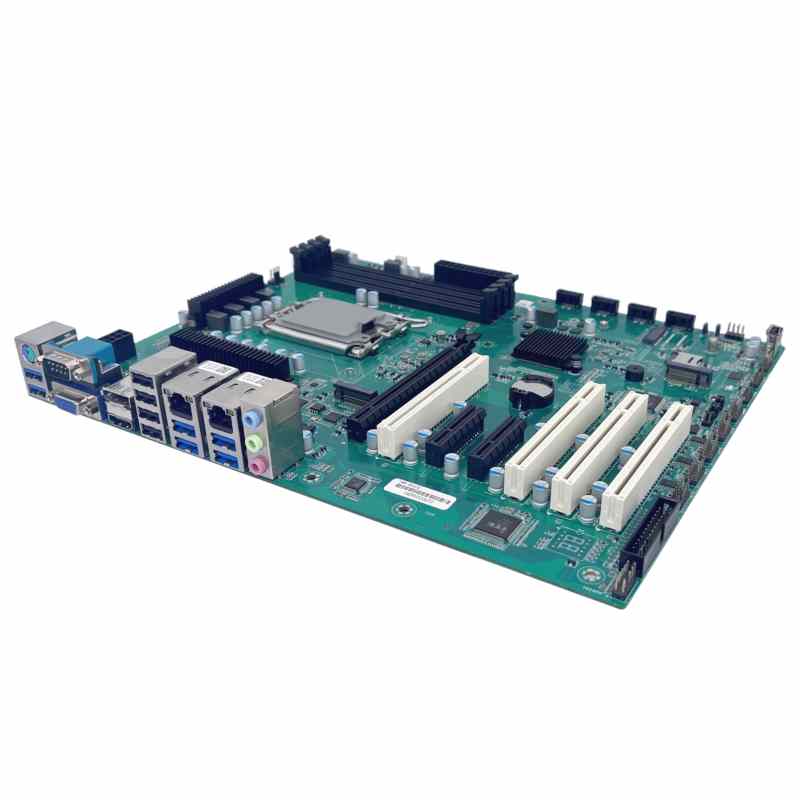
The ATX form factor of the B560 motherboard comes with several advantages for vision inspection setups. First and foremost is its expandability. ATX motherboards typically have more expansion slots compared to smaller form factors like Micro - ATX or Mini - ITX. The B560 ATX large motherboard often features multiple PCIe slots, which can be used to connect various components essential for vision inspection.
Multiple PCIe Slots for Component Expansion
In a vision inspection system, you might need to connect multiple high - end GPUs for parallel processing of visual data. With the B560 ATX motherboard, having multiple PCIe x16 slots (such as two or more in some models) allows for the installation of multiple GPUs. This parallel processing power can greatly enhance the speed at which complex image analysis algorithms are executed. For instance, in a food packaging inspection system, where the goal is to detect defects in product labels and packaging materials, multiple GPUs can work together to analyze different parts of the image simultaneously, increasing the overall throughput of the inspection process.
In addition to GPUs, PCIe slots can also be used to connect specialized capture cards. These cards are designed to interface with different types of industrial cameras, ensuring seamless data transfer. Some vision inspection applications use cameras with unique interfaces, and the availability of multiple PCIe slots on the B560 ATX motherboard allows for the installation of the appropriate capture cards to support these cameras.
Enhanced Power Delivery
ATX motherboards are generally better equipped to handle high - power components. Vision inspection systems often consist of power - hungry components such as high - performance CPUs and multiple GPUs. The B560 ATX large motherboard is designed with robust power delivery systems. It typically features a higher number of power phases for the CPU, which ensures stable and efficient power supply even under heavy - load conditions. This is crucial as the CPU in a vision inspection system is responsible for coordinating various tasks, including data pre - processing, and a stable power supply is essential to prevent performance throttling.
Memory Support and Its Significance
The B560 ATX large motherboard offers comprehensive memory support, which is vital for vision inspection applications. It usually supports DDR4 memory with high clock speeds, and in some cases, can handle up to 128GB of memory. In vision inspection, large amounts of data need to be stored temporarily during the processing pipeline. High - speed and high - capacity memory allows for faster access to this data, reducing processing times.
For example, when performing 3D vision inspection in an automotive manufacturing plant, where large 3D models of car parts need to be stored and manipulated in memory for defect detection, the ample memory capacity of the B560 ATX motherboard ensures that the system can handle these large datasets without running out of memory or experiencing significant slowdowns. The high - clock - speed DDR4 memory also enables quick data retrieval and storage, further optimizing the performance of the vision inspection algorithms.
Real - World Applications of B560 ATX in Vision Inspection
Quality Control in Electronics Manufacturing
In the electronics manufacturing industry, vision inspection is widely used for quality control. The B560 ATX large motherboard is well - suited for this application. For example, in the production of printed circuit boards (PCBs), high - resolution cameras are used to inspect the soldering points, component placement, and overall board integrity. The B560 ATX motherboard, with its PCIe 4.0 support and expandability, can handle multiple cameras simultaneously. Each camera can be connected to a dedicated PCIe slot via a capture card, and the data can be processed in parallel by multiple GPUs installed in the available PCIe x16 slots. This setup enables rapid and accurate inspection of PCBs, reducing the likelihood of defective products reaching the market.
Agricultural Crop Monitoring
In the agricultural sector, vision inspection is being increasingly used for crop monitoring. Drones equipped with high - resolution cameras capture images of fields, and these images need to be analyzed on - site or in a nearby control center. The B560 ATX large motherboard can be used in the ground - based processing units. Its ability to support high - performance CPUs and multiple GPUs allows for the processing of large - scale agricultural imagery. The motherboard's expandability also enables the connection of additional storage devices to store the vast amounts of data collected from the fields. For instance, analyzing the health of crops by detecting signs of disease, nutrient deficiencies, or water stress requires the processing of large numbers of high - resolution images. The B560 ATX motherboard can handle this data load efficiently, providing valuable insights to farmers for better crop management.
Healthcare - related Vision Inspection
In healthcare, vision inspection is used in various applications such as medical device manufacturing and diagnostic imaging. In the manufacturing of medical devices, the B560 ATX motherboard can be part of the quality control system. For example, when inspecting the precision - made components of surgical instruments, high - magnification cameras are used. The motherboard's high - speed data transfer capabilities and expandability ensure that the detailed images captured by these cameras are processed quickly and accurately.
In diagnostic imaging, such as in the analysis of X - ray or MRI images, the B560 ATX motherboard can support powerful workstations. The ability to handle large amounts of memory and high - performance CPUs allows for the efficient running of complex image processing algorithms that are used to enhance the clarity of images, detect abnormalities, and assist in accurate diagnosis.
Comparing B560 ATX with Other Motherboards for Vision Inspection
When considering motherboards for vision inspection, it's important to compare the B560 ATX with other options. Compared to Micro - ATX or Mini - ITX motherboards, the B560 ATX offers far greater expandability. While smaller form - factor motherboards might be more compact and suitable for some space - constrained applications, they often lack the number of PCIe slots and the power delivery capabilities required for a full - fledged vision inspection system with multiple high - end components.
On the other hand, when compared to more high - end server - grade motherboards, the B560 ATX offers a more cost - effective solution for many vision inspection applications. Server - grade motherboards are often overkill in terms of features for typical industrial vision inspection setups. The B560 ATX motherboard provides a balance between performance, expandability, and cost, making it an ideal choice for a wide range of vision inspection scenarios in industries such as manufacturing, agriculture, and healthcare.
Conclusion
The B560 ATX large motherboard has proven to be a reliable and high - performing option for vision inspection systems. Its support for 11th Gen Intel Core processors, PCIe 4.0 technology, expandability through multiple PCIe slots, and comprehensive memory support make it well - equipped to handle the demands of various vision inspection applications. Whether it's in quality control processes in manufacturing, agricultural monitoring, or healthcare - related imaging, the B560 ATX motherboard can enhance the efficiency and accuracy of vision inspection systems. As industries continue to rely more on automation and data - driven decision - making, the role of the B560 ATX motherboard in powering vision inspection systems is likely to become even more significant.
The B560 ATX Large Motherboard: A Powerhouse for Vision Inspection Systems
In the rapidly evolving landscape of industrial automation and smart manufacturing, vision inspection systems play a pivotal role. These systems rely on high - performance computing components to analyze visual data accurately and in real - time. Among the crucial elements of such systems is the motherboard, and the B560 ATX large motherboard has emerged as a popular choice for vision inspection applications—thanks to its balanced blend of performance, expandability, and cost - effectiveness that aligns with the diverse needs of modern visual analysis tasks.
1. Understanding the B560 Chipset
The B560 chipset, developed by Intel, serves as the foundation of the B560 ATX large motherboard. It was designed to support 11th Gen Intel Core processors (and backward - compatible with select 10th Gen models), bridging the gap between entry - level and high - end chipsets while bringing features critical for vision inspection.
One of its most impactful attributes is PCIe 4.0 support. Unlike older chipsets (e.g., B460) limited to PCIe 3.0, the B560 delivers up to 20 PCIe 4.0 lanes (split between the CPU and chipset). For vision inspection, this translates to faster data transfer between core components: high - resolution industrial cameras, GPUs for image processing, and fast storage. For example, a 4K industrial camera capturing 30 frames per second (FPS) generates ~120MB of data per second; PCIe 4.0’s 8GB/s per lane bandwidth ensures this data reaches the GPU without bottlenecks, eliminating latency that could delay quality control decisions.
The chipset also supports Intel Optane Memory, a valuable feature for vision systems that store large datasets (e.g., historical inspection images for trend analysis). Optane accelerates access to frequently used files, reducing the time needed to retrieve reference images or algorithm libraries—critical for maintaining consistent inspection speeds during long production shifts.
2. ATX Form Factor Advantages in Vision Inspection
The ATX form factor (305mm × 244mm) is a key reason the B560 excels in vision inspection setups. Its larger size enables design features that smaller form factors (Micro - ATX, Mini - ITX) cannot match, directly addressing the hardware demands of complex visual analysis.
2.1 Multiple PCIe Slots for Component Expansion
Vision inspection systems often require multiple specialized components, and the B560 ATX motherboard typically includes 4–6 PCIe slots (including 1–2 PCIe 4.0 x16 slots, 2–3 PCIe 3.0 x1 slots, and 1 PCIe 3.0 x4 slot). This flexibility is transformative for real - world setups:
- Multi - GPU Support: High - end vision tasks (e.g., 3D defect detection, multi - camera synchronization) benefit from parallel processing. A B560 ATX motherboard with two PCIe 4.0 x16 slots can run two NVIDIA RTX A2000 GPUs, cutting image analysis time for 3D automotive part scans from 2 seconds to 0.8 seconds—critical for high - volume production lines.
- Dedicated Capture Cards: Industrial cameras often use specialized interfaces (e.g., GigE Vision, Camera Link). A PCIe 3.0 x4 slot can host a frame grabber card (e.g., Basler dart) to connect 4–8 GigE cameras, while a PCIe x1 slot handles a network card for remote data transmission to a central database.
2.2 Robust Power Delivery and Cooling
Vision systems run 24/7 in industrial environments, so stable power and effective cooling are non - negotiable. B560 ATX motherboards feature:
- 8–12 Phase VRM (Voltage Regulator Module): This design ensures consistent power to high - performance CPUs (e.g., Intel Core i7 - 11700K) even under full load. For example, when a CPU coordinates 4 cameras and 2 GPUs simultaneously, the VRM prevents voltage drops that could cause system freezes or data corruption.
- Enhanced Heat Sinks: Many B560 ATX models (e.g., ASUS TUF B560 - PLUS) include large aluminum heat sinks on the VRM and chipset. These dissipate heat generated during prolonged image processing, keeping component temperatures within safe ranges (≤85°C) in factory environments where ambient temperatures can reach 40°C.
3. Memory and Storage Support for Vision Workloads
Vision inspection relies on fast, high - capacity memory and storage to handle large image files and complex algorithms—and the B560 ATX motherboard delivers on both fronts.
3.1 DDR4 Memory: Speed and Capacity
The B560 chipset supports DDR4 memory up to 5333MHz (when overclocked) and a maximum capacity of 128GB (4 × 32GB DIMMs). This is critical for:
- Real - Time Image Buffering: A 4 - camera system capturing 4K/30FPS generates ~480MB/s of data. 64GB of DDR4 - 3200 memory acts as a temporary buffer, ensuring the GPU never runs out of data to process—avoiding gaps in inspection.
- Complex Algorithm Execution: Machine learning models (e.g., YOLOv5 for defect detection) require large memory footprints. 128GB of memory allows the system to run multiple models simultaneously (e.g., one for surface defects, one for component alignment) without swapping data to slower storage.
3.2 Storage Interfaces: Fast Access to Data
B560 ATX motherboards include 2–3 M.2 slots (PCIe 4.0 x4) and 6–8 SATA III ports, catering to the storage needs of vision systems:
- M.2 NVMe SSDs: A PCIe 4.0 NVMe drive (e.g., Samsung 990 Pro) delivers read speeds up to 7,450MB/s—ideal for storing frequently accessed inspection software and reference images. For example, loading a 10GB library of defect reference images takes <2 seconds, compared to 10 seconds with a SATA SSD.
- SATA HDDs/SSDs: SATA ports can connect large - capacity HDDs (e.g., 16TB Seagate IronWolf) for archiving historical inspection data. This is essential for compliance in regulated industries (e.g., medical device manufacturing), where data must be stored for 5+ years.
4. Real - World Applications of B560 ATX in Vision Inspection
The B560 ATX motherboard’s versatility makes it suitable for vision inspection across industries, addressing unique sector - specific challenges.
4.1 Electronics Manufacturing: PCB and Component Inspection
In PCB production, even tiny defects (e.g., 0.1mm solder bridges) can render products useless. The B560 ATX powers systems that:
- Connect 4–6 high - resolution cameras (e.g., Omron FH - Series) via frame grabber cards to inspect PCBs at 1,200 DPI.
- Use two GPUs to run parallel algorithms: one for solder joint analysis, one for component placement verification.
- Store 6 months of inspection logs on a 16TB SATA HDD for traceability.
A leading electronics manufacturer reported a 30% reduction in defect escape rates after upgrading to B560 ATX - based systems, as the faster data processing eliminated missed defects due to latency.
4.2 Automotive: 3D Part and Paint Inspection
Automotive vision systems require high precision for tasks like 3D part scanning and paint defect detection. The B560 ATX enables:
- 3D laser scanners (e.g., Keyence IM - 7000) to stream point cloud data (1GB per scan) via PCIe 4.0 to a GPU for mesh generation.
- Multi - camera setups to inspect car body paint for scratches, orange peel, and color mismatch—with results processed in <1 second per panel.
For a car assembly plant, this translated to a 20% increase in production line throughput, as inspection times per vehicle dropped from 5 minutes to 3 minutes.
4.3 Food and Beverage: Packaging and Label Inspection
In food manufacturing, vision systems ensure packaging is sealed properly and labels are correctly applied. The B560 ATX supports:
- High - speed line scan cameras (e.g., Basler L104k - G) that capture 10,000 lines per second to inspect packaging seams on a 600m/min production line.
- Edge AI models running on the CPU to detect label misalignment (e.g., skew >2mm) in real - time, triggering an alert to stop the line.
A beverage company using B560 ATX - based systems reduced packaging waste by 15%, as the faster inspection prevented mislabeled products from reaching consumers.
5. Comparing B560 ATX with Other Motherboards for Vision Inspection
To understand the B560 ATX’s value, it’s critical to compare it to alternatives in the market:
|
Motherboard Type
|
Key Advantages
|
Key Limitations
|
Best For
|
|
B560 ATX
|
PCIe 4.0, 128GB DDR4, 4–6 PCIe slots
|
No PCIe 5.0, limited overclocking
|
Mid - to high - volume vision systems
|
|
B460 ATX
|
Lower cost, stable for 10th Gen CPUs
|
No PCIe 4.0, max 64GB DDR4
|
Entry - level inspection (e.g., 1–2 cameras)
|
|
Z590 ATX
|
PCIe 4.0, full overclocking
|
Higher cost (~30% more than B560)
|
High - end AI vision (e.g., 8K cameras)
|
|
Micro - ATX (B560)
|
Compact size, lower power
|
Only 2–3 PCIe slots, max 64GB DDR4
|
Space - constrained setups (e.g., small factories)
|
The B560 ATX strikes the optimal balance: it offers the PCIe 4.0 and memory capacity needed for most vision tasks, without the premium price of Z590 or the limitations of B460/Micro - ATX.
6. FAQ: Common Questions About B560 ATX for Vision Inspection
6.1 Can the B560 ATX support 8K industrial cameras?
Yes—but with caveats. 8K cameras generate ~480MB/s of data per camera, which requires a PCIe 4.0 x16 slot for the frame grabber card. The B560 ATX’s single PCIe 4.0 x16 slot (from the CPU) can handle one 8K camera, but adding a second would require using a PCIe 3.0 x4 slot (slower, may cause bottlenecks). For multi - 8K setups, consider a Z590 ATX or B660 ATX (with more PCIe 4.0 lanes).
6.2 Is the B560 ATX compatible with Linux - based vision software (e.g., OpenCV, Halcon)?
Absolutely. All major B560 ATX manufacturers (ASUS, MSI, Gigabyte) provide Linux drivers for chipsets, network cards, and storage interfaces. Linux - based vision software like OpenCV runs seamlessly on B560 ATX systems, and the motherboard’s 128GB memory and multi - PCIe slots support complex OpenCV algorithms (e.g., stereo vision, object tracking).
6.3 Can the B560 ATX operate in harsh industrial environments (e.g., dust, vibration)?
Standard consumer B560 ATX motherboards are not designed for harsh environments—but industrial - grade B560 ATX models (e.g., Advantech AIMB - 587) are. These feature:
- Dust - resistant PCB coatings.
- Vibration resistance (IEC 60068 - 2 - 6: 10–2000Hz, 10G acceleration).
- Wide temperature operation (-40°C to +85°C).
For factory floors or outdoor inspection setups, industrial - grade B560 ATX is the recommended choice.
6.4 Does the B560 ATX support multi - camera synchronization?
Yes, via hardware or software. Hardware synchronization uses a PCIe - based sync card (e.g., National Instruments PCIe - 6612) installed in a B560 ATX PCIe slot to align camera triggers within 1μs—critical for 3D vision (e.g., scanning a car part from multiple angles). Software synchronization (via tools like GenICam) works for less demanding tasks (e.g., 2D label inspection) and uses the motherboard’s CPU to coordinate camera timestamps.
7. Conclusion
The B560 ATX large motherboard has established itself as a workhorse for vision inspection systems—offering the perfect blend of performance, expandability, and cost that modern industrial applications demand. Its PCIe 4.0 support eliminates data bottlenecks for high - resolution cameras and GPUs, while the ATX form factor provides the slots and power delivery needed for multi - component setups. Whether inspecting PCBs in electronics factories, 3D scanning car parts, or verifying food packaging, the B560 ATX ensures accurate, real - time analysis that reduces defects, improves throughput, and lowers operational costs.
For businesses looking to upgrade their vision systems or build new ones, the B560 ATX remains a cost - effective choice—especially when paired with 11th Gen Intel Core CPUs and mid - range GPUs. As vision inspection becomes more complex (e.g., integrating AI and 8K cameras), the B560 ATX’s flexibility will keep it relevant for years to come.

Copyright © 2005-2025 ShwayPCB : PCB Fabrication and Assembly Manufacturer. All Rights Reserved. POWERED BY UEESHOP


Copyright © 2005-2025 ShwayPCB : PCB Fabrication and Assembly Manufacturer. All Rights Reserved. POWERED BY UEESHOP