Supporting 01005 & 0.2mm BGA: What Makes a PCB Assembly Manufacturer “High-Precision”?
Supporting 01005 & 0.2mm BGA: What Makes a PCB Assembly Manufacturer “High-Precision”?
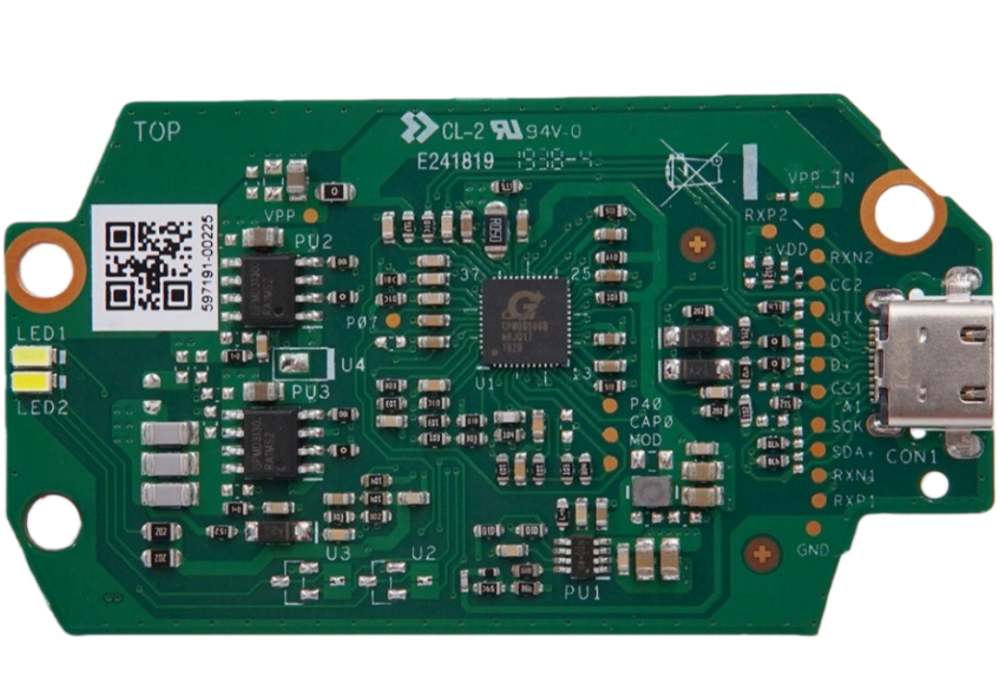
In today’s race toward miniaturization, wearable tech, medical implants, and advanced IoT devices demand components smaller than ever: 01005 passives (0.4mm × 0.2mm) and BGAs with 0.2mm pitch—barely wider than a human hair.
Yet many PCB assembly providers claim they can handle “fine-pitch” or “high-density” builds… only to deliver tombstoned capacitors, misaligned BGAs, or boards that fail functional test.
So what truly separates a marketing-driven assembler from a genuine high-precision manufacturer?
It’s not just about owning expensive machines—it’s about process control, material science, inspection rigor, and engineering culture. This article breaks down the real capabilities behind reliable 01005 and sub-0.3mm BGA assembly—and how to verify them before you commit.
Why 01005 & 0.2mm BGA Are So Challenging
🔹 The Physics of Miniaturization
- 01005 component: Weighs ~0.04 mg; easily displaced by solder paste surface tension → tombstoning risk is extreme
- 0.2mm BGA pitch: Solder ball diameter ≈ 0.12mm; pad-to-pad clearance < 0.08mm → bridging and voiding are inevitable without precision control
- Stencil aperture tolerance: Must be ±5μm or better; standard stencils (±10–15μm) cause inconsistent paste volume
🔹 Common Failure Modes
| Issue | Root Cause |
|---|---|
| Tombstoning (01005) | Uneven paste deposition, thermal imbalance, poor pad design |
| BGA head-in-pillow | Oxidized balls, insufficient reflow, warpage |
| Solder bridging (0.2mm BGA) | Excess paste, stencil misalignment, poor squeegee pressure |
| No-clean residue under BGA | Incompatible flux, inadequate preheat → traps contaminants |
⚠️ Reality check: If a factory hasn’t built 01005/0.2mm BGA in the last 6 months, their process is likely outdated.
The 5 Pillars of True High-Precision PCBA
1. Advanced Stencil & Solder Paste Control
- Laser-cut nano-coated stencils with trapezoidal apertures for consistent release
- Type 5 or Type 6 solder paste (finer particle size: 15–25μm)
- Automated stencil alignment with vision systems (<±10μm accuracy)
- Real-time SPI feedback loop to adjust squeegee pressure and speed
Without this, even the best pick-and-place machine can’t compensate.
2. Ultra-High-Accuracy Placement Systems
- Placement accuracy ≤ ±15μm @ 3σ (standard machines: ±30–50μm)
- Dual-camera fiducial recognition with sub-pixel resolution
- Vacuum nozzle calibration for micro-components (01005 requires specialized nozzles)
- Dynamic warpage compensation during placement
Example: Yamaha YSM20 or Fuji NXT III platforms with high-res vision.
3. Precision Reflow Profiling
- Multi-zone reflow ovens (10+ zones) with ±1°C temperature control
- Nitrogen atmosphere to reduce oxidation on fine-pitch joints
- Real-time thermal profiling per board (not just oven settings)
- Warpage monitoring via laser sensors during reflow
A 2°C overshoot can vaporize flux too early—causing head-in-pillow on BGAs.
4. Non-Negotiable Inspection: AOI + 3D AXI
- 3D AOI with multi-angle lighting to detect 01005 tombstoning, skew, and missing parts
- 3D X-ray (AXI) with <5μm resolution for BGA void analysis, bridging, and ball collapse
- Automated void quantification per IPC-7095 (e.g., max 25% per ball for Class 2)
Visual inspection is useless here—you need metrology-grade data.
5. Materials & Design Partnership
- DFM feedback specific to micro-assembly:
- Pad size optimization for 01005 (typically 0.25mm × 0.15mm)
- Solder mask defined (SMD) vs. non-solder mask defined (NSMD) for 0.2mm BGA
- Via-in-pad filling requirements to prevent outgassing
- In-house materials lab to validate laminate CTE, Tg, and Z-axis expansion
Great manufacturers don’t just build your Gerber—they help you design for success.
Red Flags: When “High-Precision” Is Just a Buzzword
Avoid suppliers who:
- Say “We’ve done 01005 before” but can’t show recent AXI images or yield data
- Use standard stencils (not nano-coated, not laser-cut)
- Offer only 2D AOI (can’t detect tombstoning reliably)
- Quote no extra cost for 0.2mm BGA—precision isn’t free
- Can’t provide reflow profile logs or SPI reports
True high-precision assembly costs more—but failure costs far more.
Case Study: Medical Wearable with 01005 + 0.25mm BGA
A U.S. MedTech client needed a 10-layer HDI board for a continuous glucose monitor:
- 800+ 01005 resistors/capacitors
- Two 0.25mm-pitch BGAs (processor + BLE chip)
- Class 3 reliability, ISO 13485 compliance
Challenges:
- Initial prototype had 42% tombstoning rate at another assembler
- BGA voiding >40% due to poor reflow profile
ShwayPCB solution:
✅ Switched to Type 6 paste + nano-coated stencil
✅ Optimized pad design to NSMD with 90% solder mask opening
✅ Implemented nitrogen reflow with real-time warpage control
✅ Added 3D AXI + automated void mapping
Result:
- 99.6% first-pass yield
- Passed thermal cycling (-40°C to +85°C, 500 cycles)
- Cleared FDA audit with full traceability
How to Verify a Supplier’s High-Precision Claims
Before placing an order, ask for:
- Recent AXI report of a 0.2–0.3mm BGA build (show void %, bridging)
- AOI image showing 01005 placement accuracy and tombstoning rate
- Stencil spec sheet: material, thickness, aperture tolerance, coating
- Pick-and-place machine model and certified placement accuracy
- Yield data for similar micro-assembly projects (last 6 months)
If they hesitate or say “trust us,” walk away.
Why ShwayPCB Delivers Where Others Can’t
At ShwayPCB, high-precision isn’t a marketing tagline—it’s our daily reality.
With 12+ years of experience in ultra-fine assembly, we’ve engineered every step for micro-component success:
- Supports 01005 passives & 0.2mm-pitch BGAs as standard capability
- ±5μm BGA rework accuracy with thermal imaging feedback
- LDI direct imaging ensures pad registration <±10μm
- In-house FR4 materials lab matches laminate performance to your thermal/mechanical needs
- 99.8%+ yield on complex HDI builds, backed by 7 quality checkpoints
We don’t just assemble—we de-risk your miniaturization journey.
“They built our 0.25mm BGA board when three other ‘high-precision’ shops refused.”
— Hardware Lead, EU Medical Startup
Final Thought: Precision Is Proven, Not Promised
In micro-assembly, there’s no room for guesswork. The difference between success and scrap lies in microns, milliseconds, and material choices.
Choose a partner who speaks the language of sigma levels, void percentages, and CTE curves—not just “we can do it.”
👉 Ready to build the impossible?
Upload your Gerber + BOM at fr4pcb.tech for a free DFM review, precision feasibility assessment, and transparent quote—in under 2 hours.
ShwayPCB – Engineering Micro-Scale Reliability, One Micron at a Time.