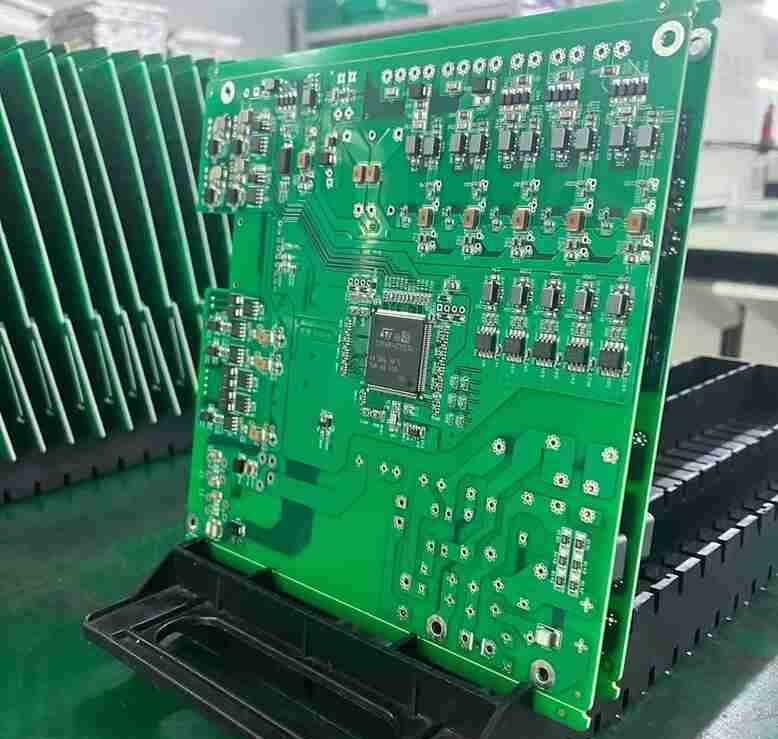
Small-batch PCBA Prototype manufacturing (1–50 units) is a critical step in product development—enabling validation of design functionality, thermal performance, and manufacturability before high-volume production. However, traditional workflows (7–14-day lead times) are plagued by disjointed supply chains: material delays, sequential processing, and poor communication between PCB fabrication, component sourcing, and assembly teams. For PCB assembly service providers, delivering small-batch prototypes in 48 hours requires a radical rethinking of supply chain dynamics—one that prioritizes pre-emptive material stocking, parallel task execution, and real-time data sharing.
ShwayPCB’s
specialized PCB assembly service has refined this 48-hour model across 2,000+ small-batch projects, achieving 99.2% on-time delivery for prototypes ranging from consumer IoT sensors to medical device components. Below, we detail the model’s core components, technical enablers, and real-world implementation.
The model is structured around three synchronized phases—pre-order preparation, parallel execution, and final validation—each designed to eliminate downtime and bottlenecks:
Proactivity is key to 48-hour delivery. Quickturn PCB Assembly Service teams complete 60% of work before the client confirms the order:
- Material Pre-Stocking: Maintain a “quickturn inventory” of high-demand components and substrates:
- PCBs: Pre-fabricated FR4 boards (1–2mm thickness, 2–8 layers) with standard finishes (ENIG, HASL) and pre-drilled holes for common footprints (0402, 0603, 0.5mm-pitch BGAs).
- Components: Stock 500+ common passives (resistors, capacitors), active components (MCUs, op-amps), and connectors (JST, Molex) in quantities of 100–500 units—ensuring 90% of BOM items are available on-site.
- Consumables: Pre-load solder paste (SAC305, Type 7), flux, and conformal coating into assembly stations to avoid setup delays.
- BOM Pre-Analysis: Offer clients a “pre-quote BOM review” 24–48 hours before order placement:
- Validate component availability (cross-check against in-stock inventory and 24-hour supplier partners).
- Flag design issues (e.g., unmanufacturable footprints, incompatible component combinations) to avoid rework post-order.
- Program Pre-Generation: Use client CAD/gerber files to pre-program pick-and-place machines, AOI systems, and reflow ovens—saving 4–6 hours of setup time post-order.
Example: A client’s IoT sensor prototype BOM (20 components) was pre-analyzed 36 hours before order confirmation. Two out-of-stock components were replaced with equivalent alternatives (approved by the client), and the pick-and-place program was finalized—cutting post-order setup to 1 hour.
Instead of sequential processing (PCB fabrication → component sourcing → assembly), the model executes tasks in parallel:
- Hour 0–8: Material Kitting & PCB Preparation:
- Kit in-stock components (verified via barcode scanning) and source remaining items (≤10% of BOM) from 24-hour supplier partners (e.g., Digi-Key, Mouser) with guaranteed 4-hour delivery.
- Prepare pre-fabricated PCBs: Clean surfaces (isopropyl alcohol), inspect for defects (AOI), and apply solder mask (if required).
- Hour 8–16: SMT Assembly & Component Placement:
- Load pre-programmed pick-and-place machines (Yamaha YSM40R, ±0.005mm accuracy) with kitted components.
- Place components in parallel across 2–3 machines (for multi-layer prototypes) to reduce placement time from 8 hours to 4 hours.
- Reflow using pre-optimized profiles (stored in MES software) for common component combinations (e.g., BGAs + passives).
- Hour 16–22: Inspection & Rework:
- Conduct 100% AOI (5MP camera, 0.1μm resolution) and X-ray inspection (for BGAs) to detect defects (bridging, tombstoning).
- Perform rework (if needed) using hot-air rework stations—targeting <1% defect rate to avoid delays.
- Hour 22–24: Functional Testing & Packaging:
- Execute client-specified functional tests (e.g., continuity, voltage regulation) using automated test fixtures (pre-built for common prototype types).
- Package prototypes in anti-static bags with test reports and ship via express courier (DHL, FedEx) for next-day delivery.
A cloud-based MES platform (e.g., Siemens Opcenter) acts as the model’s “nerve center”:
- Stakeholder Visibility: Clients, suppliers, and assembly teams access real-time status updates (e.g., “Component kitting: 90% complete,” “Reflow: In progress”).
- Exception Alerts: The system triggers automated alerts for bottlenecks (e.g., “Supplier delay: Component X will arrive at Hour 10 instead of Hour 8”)—enabling rapid mitigation (e.g., substituting with in-stock alternative).
Three technical innovations make 48-hour delivery feasible for small-batch PCBA Prototype manufacturing:
Traditional PCB fabrication takes 3–5 days—pre-fabricated libraries eliminate this bottleneck:
- Standardized Sizes: Stock PCBs in common prototype sizes (50mm×50mm, 100mm×100mm, 150mm×150mm) to fit most client designs.
- Modular Layers: Offer pre-fabricated 2-layer, 4-layer, and 8-layer PCBs with flexible trace widths (0.1mm–0.5mm) and via sizes (0.3mm–0.5mm).
- Material Variety: Include specialty substrates (aluminum, polyimide) in pre-stock for high-power or flexible prototypes—critical for High-Power PCB Assembly Service and Flexible PCB Assembly Service clients.
Manual component kitting takes 2–3 hours—automation reduces this to 30 minutes:
- Barcode Scanning: Each component is labeled with a unique barcode (linking to part number, quantity, and expiration date). Kitting robots scan barcodes to verify accuracy (error rate <0.1%).
- BOM Matching Software: The system cross-references kitted components with the client’s BOM in real time—flagging mismatches (e.g., wrong resistor value) before assembly.
Unplanned machine downtime (e.g., pick-and-place nozzle failure) derails 48-hour timelines—predictive maintenance prevents this:
- Sensor Integration: Embed vibration, temperature, and usage sensors in assembly machines to monitor health (e.g., “Nozzle wear: 80% of lifespan”).
- Preventive Replacement: Replace critical parts (nozzles, solder paste nozzles) on a fixed schedule (every 500 prototypes) to avoid failures during peak production.
The model adapts to specialized small-batch projects, including Mixed-Technology SMT-DIP PCB Assembly Service and high-reliability prototypes:
- Parallel Processing: Assemble SMT components (Hour 8–16) while hand-soldering THT components (Hour 12–18)—avoids sequential delays.
- Pre-Built Fixtures: Use pre-built THT soldering fixtures (for common connector footprints) to reduce soldering time by 50%.
- Pre-Validated Materials: Stock automotive-grade components (AEC-Q100) and medical-grade substrates (ISO 13485) to avoid sourcing delays.
- Accelerated Testing: Conduct abbreviated reliability tests (e.g., 100 thermal cycles instead of 1,000) for prototypes—providing clients with critical data without extending delivery time.
The model handles prototypes with up to 500 components (SMT + THT), including fine-pitch components (0.3mm-pitch BGAs) and high-power ICs. For prototypes with >500 components, lead time extends to 72 hours (still 50% faster than standard processes).
Yes—for custom designs:
- Rapid Fabrication: Partner with local PCB manufacturers offering 12-hour fabrication for custom sizes (e.g., 75mm×125mm) and layers (up to 8 layers).
- Adjusted Timeline: Custom PCBs add 8–12 hours to the model (total 36–48 hours), still meeting “next-day” delivery expectations.
Quality is embedded in every step:
- 100% Inspection: AOI, X-ray, and functional testing (no sampling) to detect defects.
- Rework Buffer: Allocate 2 hours for rework (Hour 16–18) to fix defects without delaying delivery.
- Quality Guarantees: ShwayPCB offers a “rapid rework” guarantee—if prototypes fail client tests, replacement units are delivered within 24 hours at no cost.
The 48-hour model adds 20–30% to standard quickturn costs (e.g., $200 vs. $150 for a 10-unit IoT prototype). However, ROI is achieved via:
- Faster product launches (3–4 weeks earlier, generating $10k–$100k in additional revenue).
- Reduced rework (pre-BOM analysis cuts design errors by 60%, avoiding $500–$2,000 in rework costs).
Yes—ShwayPCB ships to 50+ countries with:
- Time-Zone Alignment: 24/7 assembly teams (shift work) to match client time zones (e.g., processing US orders overnight).
- Customs Pre-Clearance: Pre-prepare customs documents (commercial invoice, certificate of origin) to avoid delays in international shipping.
The 48-hour small-batch PCBA Prototype manufacturing model redefines rapid prototyping by transforming supply chain inefficiencies into competitive advantages. For PCB assembly service providers, this model is not just about speed—it’s about enabling clients to iterate faster, validate designs sooner, and bring products to market ahead of competitors.
ShwayPCB’s
specialized PCB assembly service offers end-to-end 48-hour prototyping solutions, including
Quickturn PCB Assembly Service,
High-Precision SMT PCB Assembly Service, and
High-Power PCB Assembly Service. Our team provides pre-BOM analysis, material kitting, and real-time status updates to ensure your prototypes arrive on time and meet design requirements.
To request a 48-hour prototype quote, submit your BOM for pre-analysis, or learn more about our supply chain 协同 model, contact ShwayPCB at
yuan@shwaypcb.com. For detailed case studies (startup prototypes, medical device validation), visit our
specialized assembly service page.