We use cookles to Improve your online experience. By continuing browsing this website, we assume you agree our use of cookies.

Quick Turn PCBA Prototype in China: A Guide to Fast Manufacturing
August 16th, 2025
187 views
Quick Turn PCBA Prototype in China: A Guide to Fast Manufacturing
In the global electronics industry, speed-to-market is often the difference between a successful product launch and missed opportunities. For hardware teams racing to validate designs, China has emerged as a hub for quick turn PCBA prototype services, offering rapid turnaround times, cost efficiency, and access to advanced manufacturing capabilities. This guide explores how Chinese manufacturers deliver fast PCBA prototypes, the key factors that enable their speed, and how to leverage these services effectively—whether you’re a startup iterating on a new IoT device or an enterprise scaling production.
We’ll dive into critical concepts like Rapid SMT Assembly, 24-Hour PCB Prototyping, Express PCBA Manufacturing, Fast Turn PCB Assembly, China PCB prototype expedited services, High-Speed PCBA Turnaround, and Rush PCB Assembly, explaining how each contributes to shortening development cycles. By the end, you’ll have a clear roadmap to navigate China’s quick turn PCBA landscape and accelerate your product development.
Why China Leads in Quick Turn PCBA Prototyping
China’s dominance in rapid PCBA prototyping stems from a unique combination of infrastructure, scale, and expertise. These factors work in tandem to deliver prototypes in days—sometimes even hours—without sacrificing quality.
1. Concentrated Supply Chains
China’s electronics manufacturing clusters (e.g., Shenzhen, Guangzhou, Suzhou) house all stages of production within a small geographic area: bare PCB factories, component distributors, assembly houses, and testing facilities. This proximity eliminates shipping delays between stages. For example, a bare PCB produced in Shenzhen can be transported to an assembly house 10 kilometers away in under an hour, enabling same-day handoff between manufacturing and assembly—a key enabler for 24-Hour PCB Prototyping.
2. Round-the-Clock Production
Many Chinese manufacturers operate 24/7 shifts to meet tight deadlines. PCB fabrication lines run continuously, with teams working in 8-hour rotations to etch, drill, and plate boards overnight. Assembly houses follow suit, with pick-and-place machines and reflow ovens operating nonstop for rush orders. This 24/7 model cuts typical lead times by 50% compared to regions with 9-to-5 production schedules.
3. Advanced Automation
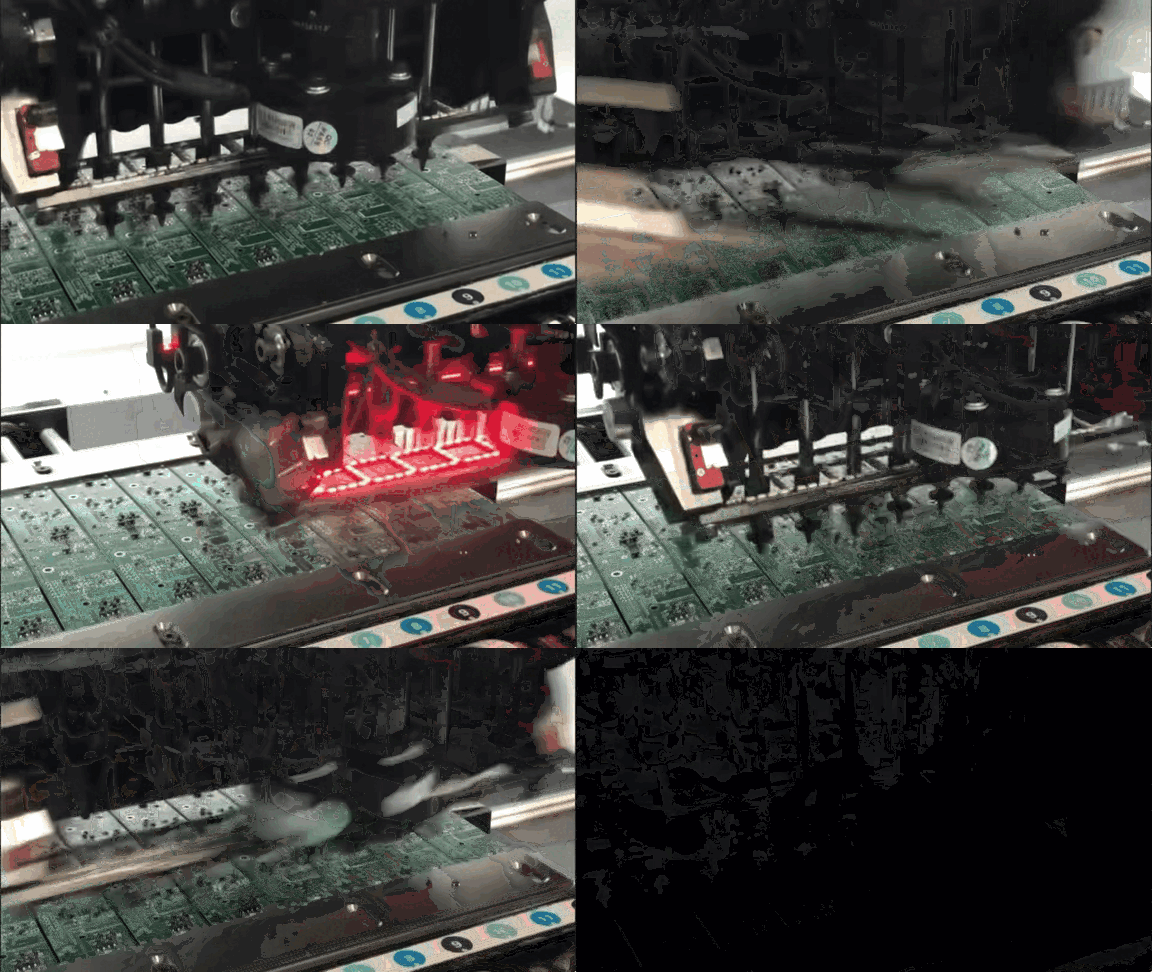
Chinese PCBA providers have invested heavily in automated equipment to handle high volumes and tight tolerances at speed. For Rapid SMT Assembly, high-speed pick-and-place machines (e.g., Yamaha YSM20R, Juki RS-1R) can place 50,000+ components per hour with ±0.01mm accuracy—critical for fine-pitch ICs in quick-turn prototypes. Automated optical inspection (AOI) and X-ray systems also speed up quality checks, ensuring defects are caught without slowing production.
4. Flexible Labor Markets
Skilled technicians and engineers are readily available to handle manual tasks that can’t be automated, such as reworking complex BGA joints or troubleshooting prototype issues. This flexibility is especially valuable for Rush PCB Assembly, where last-minute design changes or component shortages require human intervention to keep projects on track.
5. Competitive Pricing
China’s manufacturing ecosystem benefits from economies of scale, allowing providers to offer quick turn services at a fraction of the cost of Western counterparts. For example, a 4-layer PCB prototype with Rapid SMT Assembly might cost \(50–\)100 in China, compared to \(150–\)300 in the U.S. for the same turnaround time. This affordability encourages iterative prototyping, a cornerstone of fast product development.
How Quick Turn PCBA Services Work in China: The Process
Chinese manufacturers have refined their workflows to minimize delays, with each step optimized for speed. Here’s a breakdown of the typical process for a Fast Turn PCB Assembly order:
1. File Submission and DFM Review (0–4 Hours)
- Client Action: Submit Gerber files, BOM, and pick-and-place data via the manufacturer’s online portal. Most providers accept standard formats (RS-274X Gerbers, CSV BOMs) and offer 24/7 upload capabilities.
- Manufacturer Action: Run an automated Design for Manufacturability (DFM) check to flag issues like trace width violations or component availability. For rush orders, a technician reviews the files within 1–2 hours, providing feedback via email or WeChat (a popular communication tool in China).
2. Component Sourcing (Same Day for In-Stock Parts)
- Turnkey Sourcing: If using the manufacturer’s component inventory, common parts (resistors, capacitors, standard ICs) are kitted within hours. Chinese providers maintain large inventories of frequently used components, with warehouses attached to assembly facilities for immediate access.
- Consigned Components: If clients ship components, local couriers (e.g., SF Express) offer same-day delivery within manufacturing clusters, ensuring parts arrive in time for assembly.
3. PCB Fabrication (12–48 Hours)
- Quick Turn PCB Production: Bare boards are prioritized on fabrication lines, with 2-layer boards often completed in 12–24 hours and 4-layer boards in 24–48 hours. Advanced processes like laser drilling and ENIG surface finishing are streamlined for speed without compromising quality.
- In-Line Quality Checks: Automated testing (flying probe, continuity checks) is integrated into the fabrication process to avoid delays from post-production rework.
4. Assembly (6–24 Hours)
- Rapid SMT Assembly: Solder paste is applied via stencil, and components are placed using high-speed machines. Reflow soldering follows, with custom thermal profiles optimized for quick heating and cooling (while still meeting IPC standards).
- Mixed Technology Handling: For prototypes with through-hole components, selective wave soldering or manual assembly is completed in parallel with SMT processes to save time.
5. Inspection and Testing (2–8 Hours)
- AOI and X-Ray: Every board undergoes automated inspection to check for solder bridges, missing components, and alignment issues. BGAs and other hidden joints are verified via X-ray.
- Functional Testing: If requested, basic power-on tests or custom functional checks are performed to ensure the prototype works as intended.
6. Shipping (Same Day for Express)
- Global Delivery: Prototypes are shipped via DHL, FedEx, or UPS Express, with options for same-day pickup from the factory. Most international destinations receive rush orders within 2–3 days of assembly completion.
Key Considerations for Choosing a Quick Turn PCBA Provider in China
Not all Chinese manufacturers offer the same level of speed, quality, or reliability. To ensure your project stays on track, evaluate providers based on these critical factors:
1. Turnaround Time Guarantees
- Look for providers that offer clear, written guarantees for 24-Hour PCB Prototyping or 48-Hour PCBA services. Reputable companies will refund a percentage of the cost if they miss the deadline (e.g., 10% per day late).
- Note that turnaround times depend on design complexity: 24-hour services typically apply to 2-layer PCBs with <100 components, while 4-layer boards or those with fine-pitch BGAs may require 48–72 hours.
2. Quality Certifications
- Quick turn doesn’t mean cutting corners. Ensure the provider holds IPC-A-610 (assembly) and IPC-6012 (PCB fabrication) certifications, the industry standards for quality. For medical or automotive prototypes, look for ISO 13485 or IATF 16949 certifications.
- Ask for a sample of their work (e.g., a cross-section of a via or a photo of BGA solder joints) to verify quality before placing a rush order.
3. Component Sourcing Capabilities
- Choose a provider with strong relationships with authorized distributors (e.g., Huaqiangbei electronics market in Shenzhen) to avoid counterfeit components. Many Chinese assemblers offer “emergency sourcing” for hard-to-find parts, leveraging local networks to track down components within hours.
- Confirm that they can source RoHS-compliant or leaded components, depending on your requirements.
4. Communication and Support
- Language barriers can delay rush projects. Opt for providers with English-speaking engineers available 24/7 via email, phone, or video call. WeChat is widely used in China, so ensure your team is comfortable with this platform for real-time updates.
- Look for a dedicated project manager assigned to your order, who can escalate issues and provide hourly updates for critical deadlines.
5. Scalability
- If your prototype progresses to production, choose a provider that can scale from Low-Volume PCBA (1–100 units) to mass production (10,000+ units) without sacrificing speed. This avoids the need to switch manufacturers mid-project.
Tips for Maximizing Speed in Quick Turn PCBA Orders
To ensure your project meets its deadline, follow these best practices when working with Chinese manufacturers:
1. Prepare Files in Advance
- Generate error-free Gerbers, BOMs, and pick-and-place files before submitting your order. Use tools like KiCad or Altium to run DRC/ERC checks, and include a readme file with special instructions (e.g., “Use ENIG surface finish”).
- Avoid last-minute design changes, as they can reset the production clock. If changes are necessary, communicate them via email with clear revision numbers.
2. Simplify the Design for Prototyping
- For Rush PCB Assembly, use larger components (e.g., 0603 resistors instead of 0402) and avoid fine-pitch ICs (<0.4mm pitch) if possible. This reduces assembly time and lowers the risk of errors.
- Limit layer counts to 2 or 4 layers—more layers require longer fabrication times.
3. Use Turnkey Sourcing
- Let the manufacturer source components, even if you have parts in stock. Their local inventory and relationships with distributors will get parts to the factory faster than international shipping.
- Provide alternate part numbers for critical components to avoid delays if the primary part is out of stock.
4. Opt for Express Shipping
- Choose door-to-door express shipping (DHL/FedEx) with “priority” status to ensure prototypes clear customs quickly. Provide commercial invoices and HS codes in advance to avoid delays at border control.
- For urgent projects, ask about “hand carry” services, where couriers personally transport prototypes to your location (available for major cities).
5. Align Time Zones
- Schedule calls or file submissions during overlap hours (e.g., 8:00–12:00 UTC, which is 16:00–20:00 in China and 09:00–13:00 in New York). This ensures real-time communication to resolve issues.
FAQ: Quick Turn PCBA Prototyping in China
Q1: What is the fastest possible turnaround time for a PCBA prototype in China?
A1: Some providers offer 24-Hour PCB Prototyping for simple designs (2-layer, <50 SMT components). For more complex boards (4-layer, fine-pitch ICs), 48–72 hours is standard for High-Speed PCBA Turnaround.
Q2: Are quick turn PCBA prototypes from China lower quality?
A2: No—reputable manufacturers maintain strict quality controls even for rush orders. Look for IPC certifications and ask for quality reports (e.g., AOI images, X-ray scans) to verify. Speed is achieved through efficient processes, not reduced standards.
Q3: How much does Express PCBA Manufacturing in China cost?
A3: Costs vary by complexity: \(30–\)80 for a 2-layer PCB with 50 SMT components (24-hour turnaround), \(100–\)200 for 4-layer boards with fine-pitch parts (48-hour turnaround). Shipping adds \(20–\)50 for express delivery.
Q4: Can Chinese manufacturers handle custom components or odd-form parts in quick turn orders?
A4: Yes, but lead times may extend. For custom parts, provide 3D models and specifications in advance. Odd-form components often require manual assembly, which adds 4–8 hours to the process.
Q5: What happens if my prototype fails testing after delivery?
A5: Most providers offer a 30-day warranty for assembly defects. If the issue is due to manufacturing error, they will rework or replace the prototype at no cost. For design-related issues, they may offer discounted re-runs.
Q6: Is it possible to track the status of a rush PCBA order in real time?
A6: Yes—top providers offer online portals or mobile apps with live updates (e.g., “PCB fabrication: 70% complete,” “SMT assembly: in progress”). You can also contact your project manager for hourly updates.
Q7: How do I ensure intellectual property (IP) protection when sending designs to China?
A7: Sign a non-disclosure agreement (NDA) before sharing files. Choose manufacturers with a track record of IP protection (e.g., ISO 27001 certification for data security). Avoid sharing more details than necessary (e.g., omit proprietary firmware).
ShwayPCB: Your Partner for Quick Turn PCBA Prototypes in China
ShwayPCB specializes in Quick Turn PCBA Prototype services from our state-of-the-art facility in Shenzhen, leveraging China’s manufacturing ecosystem to deliver prototypes in as little as 24 hours. Our capabilities include:
- Rapid SMT Assembly: High-speed pick-and-place for components as small as 01005, with 24/7 production for rush orders.
- Turnkey Sourcing: Access to 10,000+ in-stock components, with emergency sourcing for hard-to-find parts.
- Certified Quality: IPC-A-610 Class 2 and 3 assembly, ensuring reliability even for quick-turn projects.
- Transparent Communication: English-speaking project managers provide real-time updates via email, phone, or WeChat.
Whether you need 24-Hour PCB Prototyping or Rush PCB Assembly for your next project, we combine speed, quality, and affordability to keep your development on track.
To request a quote or learn more about our quick turn services, contact us at yuan@shwaypcb.com.

Copyright © 2005-2025 ShwayPCB : PCB Fabrication and Assembly Manufacturer. All Rights Reserved. POWERED BY UEESHOP


Copyright © 2005-2025 ShwayPCB : PCB Fabrication and Assembly Manufacturer. All Rights Reserved. POWERED BY UEESHOP