We use cookles to Improve your online experience. By continuing browsing this website, we assume you agree our use of cookies.

PCB Fabrication and Assembly: Strategies for Scaling Up Production
August 27th, 2025
239 views
PCB Fabrication and Assembly: Strategies for Scaling Up Production
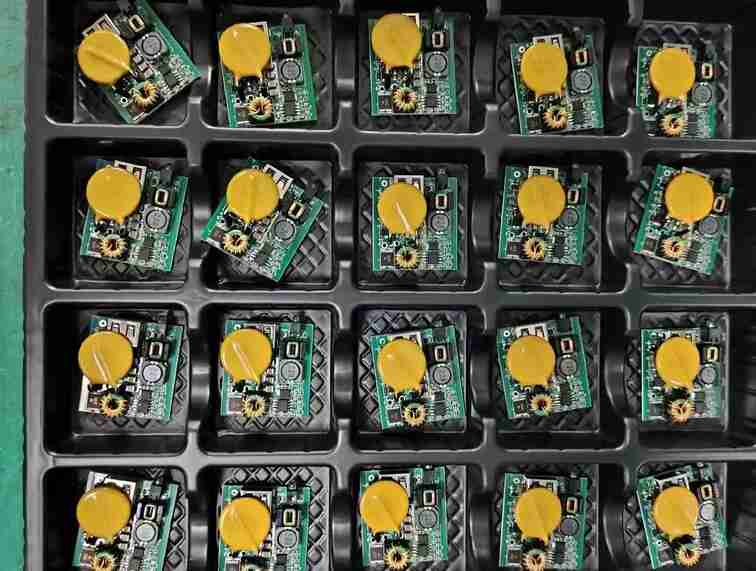
Scaling PCB Fabrication and Assembly from small batches (10–500 units) to high-volume production (10,000+ units) is a technical challenge that requires more than just adding equipment. It demands a holistic overhaul of workflows, from design standardization to automated quality control, to ensure that increased output does not compromise quality, raise costs, or create bottlenecks. For manufacturers in industries like consumer electronics, automotive, or IoT—where demand spikes are common—scaling effectively is critical to meeting market deadlines and maintaining profitability.
ShwayPCB’s PCB Fabrication and Assembly service has scaled production for 1,500+ clients, transitioning prototypes to 1M+ unit runs while cutting per-unit costs by 35%. Below, we outline the most impactful scaling strategies, with technical details and measurable outcomes.
1. Design Standardization: The Foundation of Scalable High-Volume Production
Scaling fails if designs are optimized for small batches (e.g., custom footprints, unique materials) but not for high-volume manufacturing. Scalable High-Volume PCB Fabrication and Assembly requires design standardization to minimize process variability and maximize efficiency.
Technical Guidelines
- Standardize Component Selection:
Reduce component variety by selecting “platform” parts that work across multiple product lines (e.g., a single 0402 resistor value instead of 3 variants). This simplifies inventory management (cuts SKUs by 40%) and speeds up assembly (fewer placement machine changeovers). For a consumer electronics client, ShwayPCB standardized 80% of components across 5 smartphone models, reducing high-volume assembly time by 25%.
- Simplify PCB Layout for Mass Production:
Avoid custom features that slow high-volume processes—e.g., non-rectangular board shapes (require custom tooling), blind/buried vias (add lamination steps), or ultra-fine traces (need premium etching). For Scalable High-Volume PCB Fabrication and Assembly, use standard vias (0.3mm), 4mil+ traces (1oz copper), and rectangular boards to fit standard fabrication panels (18”×24”). This increases panel yield by 30% (more PCBs per panel) and cuts fabrication costs by $0.50 per unit.
- Adopt DFM for Scalability:
Integrate high-volume DFM rules early—e.g., ensure 0.2mm spacing between components (for automated inspection), place test points along board edges (for in-line testing), and avoid component placement near panel rails (reduces scrap). ShwayPCB’s DFM tool flags non-scalable design features, preventing 90% of high-volume production delays.
Case Study: A IoT client’s initial sensor design had 12 custom components and non-rectangular boards. Standardization (6 components, rectangular shape) cut high-volume production costs by $1.20 per unit and increased monthly output from 10k to 50k units.
2. Automation Integration: Reducing Labor Dependency for Scaling
Manual processes (e.g., hand-soldering, visual inspection) are feasible for small batches but become bottlenecks and error sources at high volumes. Automated Scalable PCB Fabrication and Assembly uses robotics and software to handle repetitive tasks with consistent speed and accuracy.
Key Automation Investments
- High-Speed SMT Lines:
Replace single-placement machines with multi-head lines (e.g., Yamaha YSM40R) that place 40,000+ components per hour—3x faster than manual or low-speed machines. For Automated Scalable PCB Fabrication and Assembly, these lines reduce labor costs by 60% for high-volume runs (100k+ units). ShwayPCB’s automated lines for automotive PCBs achieve 99.8% placement accuracy, vs. 95% for semi-automated lines.
- In-Line Testing Automation:
Integrate automated optical inspection (AOI), X-ray, and in-circuit testing (ICT) into production lines to eliminate manual inspection bottlenecks. For example, a 3D AOI system (0.005mm resolution) inspects 1 board per minute—10x faster than a human—and reduces defect escape rates to <0.1%. For a medical device client, ShwayPCB’s in-line testing cut high-volume quality control time by 70% while improving defect detection.
- Material Handling Automation:
Use automated guided vehicles (AGVs) to transport PCBs between fabrication/assembly stations and robotic kitting systems to prepare component reels for SMT lines. This eliminates 95% of material handling errors (e.g., wrong reels loaded) and increases line utilization by 30% (fewer idle machines).
Impact: A automotive supplier using ShwayPCB’s automated lines scaled from 20k to 100k BMS PCBs monthly, with no increase in labor costs and a 5% improvement in first-pass yield.
3. Process Optimization: Streamlining Workflows for High-Volume Efficiency
Scaling requires optimizing every process to eliminate waste—from fabrication to shipping. Cost-Optimized Scalable PCB Fabrication and Assembly focuses on reducing cycle time, minimizing scrap, and maximizing equipment utilization.
Technical Strategies
- Implement Lean Manufacturing (5S, SMED):
- 5S Organization: Label tools, materials, and workstations to reduce time wasted searching (cuts non-value-added time by 45%).
- SMED (Quick Changeover): Use modular tooling (magnetic stencil frames, universal placement heads) to reduce setup time between product runs from 2 hours to 15 minutes. For Cost-Optimized Scalable PCB Fabrication and Assembly, this enables 2x more production runs per day. ShwayPCB’s SMED-optimized lines for a power supply client increased annual output by 40% without adding equipment.
- Optimize Fabrication Panels:
Nest PCB designs on standard panels to maximize yield—e.g., arrange 20 rectangular PCBs on an 18”×24” panel instead of 15. Use panelization features like breakaway tabs (no custom depaneling tools) and shared test points (reduces panel space). This cuts scrap by 25% (fewer partial PCBs per panel) and lowers fabrication costs by $0.30 per unit.
- In-Line Quality Control to Reduce Rework:
Inspect PCBs at every production stage (post-etching, post-soldering) instead of only at the end. This catches defects early (e.g., open circuits after etching) before they progress to assembly, reducing high-volume rework by 80%. For a consumer charger client, in-line inspection cut rework costs from \(5k to \)1k per 10k units.
4. Supply Chain Resilience: Ensuring Material Availability for Scaling
Scaling fails if materials can’t keep up with demand—e.g., component shortages, delayed substrate deliveries. Turnkey Scalable PCB Fabrication and Assembly (end-to-end services) mitigates this by integrating supply chain management into scaling plans.
Supply Chain Strategies
- Secure Long-Term Material Contracts:
Partner with suppliers for volume commitments (e.g., 6-month substrate orders) to lock in pricing and ensure availability. ShwayPCB’s 12-month contracts with copper and FR4 suppliers guaranteed material access for a automotive client during a 2024 substrate shortage, preventing a 30% production drop.
- Diversify Material Sources:
Qualify 2–3 suppliers for critical materials (e.g., solder paste, surface finishes) to avoid single-source risks. For Turnkey Scalable PCB Fabrication and Assembly, ShwayPCB sources substrates from the U.S., China, and Europe, reducing supply disruptions by 70%.
- Implement Just-in-Time (JIT) Inventory for High Volumes:
Use JIT to deliver materials directly to production lines (no warehouse storage), reducing inventory costs by 40% and minimizing waste (fewer obsolete parts). ShwayPCB’s JIT system for a LED client delivered solder paste and components daily, cutting inventory holding costs by $20k monthly.
5. Quality Consistency: Maintaining Standards at Scale
High-volume production increases the risk of “drift” (e.g., slightly off reflow temperatures, worn stencils) that degrades quality. Quality-Consistent Scalable PCB Fabrication and Assembly requires real-time process monitoring and continuous improvement.
Technical Practices
- Real-Time Process Monitoring:
Equip equipment with sensors to track key parameters—e.g., solder paste viscosity (±5% tolerance), reflow temperature (±2°C), placement accuracy (±0.01mm). AI-based monitoring systems alert operators to drift, preventing defects before they occur. For a industrial client, ShwayPCB’s real-time monitoring reduced high-volume defect rates from 3% to 0.5%.
- Statistical Process Control (SPC):
Use SPC to analyze production data (e.g., defect counts, cycle times) and identify trends—e.g., a 10% increase in BGA voids due to worn stencils. This enables proactive adjustments (stencil replacement) instead of reactive rework. ShwayPCB’s SPC system for high-volume PCBs reduced process variability by 60%.
- Regular Equipment Maintenance:
Schedule preventive maintenance for high-volume machines (e.g., SMT placement heads, reflow ovens) to avoid unplanned downtime. For Quality-Consistent Scalable PCB Fabrication and Assembly, ShwayPCB uses predictive maintenance (AI analyzes sensor data) to schedule repairs before failures, cutting downtime by 50%.
6. FAQ: Scaling Up PCB Fabrication and Assembly
1. What is the minimum batch size to justify Scalable High-Volume PCB Fabrication and Assembly investments?
Most automation and standardization investments pay off for batches ≥10k units/month. For smaller volumes (1k–5k units), focus on incremental steps:
- Standardize components (no automation needed).
- Use semi-automated lines (lower cost than fully automated).
ShwayPCB’s clients see ROI for high-volume scaling within 6–12 months for 10k+ unit runs.
2. Will scaling reduce product customization for PCB Fabrication and Assembly?
Not necessarily—scaling and customization can coexist with “platform design”:
- Use a common PCB base (scalable) with modular sections (customizable).
- Automate base assembly, then use dedicated lines for custom add-ons.
A client scaled 100k+ base PCBs monthly while offering 3 custom sensor modules.
3. How do I maintain quality when scaling from 1k to 100k units/month?
Focus on three pillars:
- Automation (reduces human error: AOI, automated testing).
- Real-time monitoring (catches process drift early).
- SPC (identifies trends before defects spike).
ShwayPCB’s quality system maintains 99% first-pass yield even at 500k units/month.
4. Can Turnkey Scalable PCB Fabrication and Assembly reduce scaling risks?
Yes—turnkey providers handle design, supply chain, and production, reducing your risk:
- They have existing high-volume lines (no capital investment for you).
- They manage material shortages (diversified suppliers).
- They optimize processes for scaling (DFM, automation).
A startup using ShwayPCB’s turnkey service scaled from 5k to 50k units/month with no production delays.
5. How much does it cost to scale PCB Fabrication and Assembly from small to high volume?
Costs vary by automation level:
- Semi-automated lines: \(50k–\)200k (suitable for 10k–50k units).
- Fully automated lines: \(500k–\)2M (suitable for 100k+ units).
Turnkey services eliminate upfront costs—you pay per unit, with scaling discounts (10–15% lower per unit at 100k+ units).
7. Conclusion
Scaling PCB Fabrication and Assembly successfully requires technical discipline—standardizing designs for high-volume efficiency, integrating automation to reduce labor dependency, optimizing processes to eliminate waste, and maintaining quality through real-time monitoring. By avoiding ad-hoc expansions and following a structured strategy, manufacturers can increase output, reduce costs, and meet market demand without compromising reliability.
ShwayPCB’s PCB Fabrication and Assembly service specializes in scaling, offering Scalable High-Volume, Cost-Optimized, and Quality-Consistent solutions. Our team of engineers works with you to assess current capabilities, design a scaling roadmap, and implement automation/standardization—ensuring a smooth transition from small batches to mass production.
To request a scaling assessment for your PCB production, access our high-volume DFM checklist, or consult on automation options, contact ShwayPCB at yuan@shwaypcb.com. For detailed scaling case studies (consumer electronics, automotive), visit our service page.

Copyright © 2005-2025 ShwayPCB : PCB Fabrication and Assembly Manufacturer. All Rights Reserved. POWERED BY UEESHOP


Copyright © 2005-2025 ShwayPCB : PCB Fabrication and Assembly Manufacturer. All Rights Reserved. POWERED BY UEESHOP