We use cookles to Improve your online experience. By continuing browsing this website, we assume you agree our use of cookies.

Low-Volume PCB Fabrication Guide: Balancing Cost and Quality for Startups
August 21st, 2025
290 views
Low-Volume PCB Fabrication Guide: Balancing Cost and Quality for Startups
For startups, low-volume PCB fabrication—typically 1–500 units—presents a unique challenge: achieving professional-grade quality without incurring the high costs associated with mass production. Limited budgets, tight timelines, and the need for iterative design make this balance critical. Unlike enterprise manufacturers, startups cannot spread fixed costs across thousands of units, so every dollar spent on PCBs must deliver tangible value. This guide outlines strategies to optimize low-volume fabrication, from design choices that reduce per-unit costs to selecting partners that specialize in flexible, cost-effective production. By leveraging quick turn PCBA prototypes and targeted optimizations, startups can maintain quality while keeping expenses manageable.
1. Design for Low-Volume Manufacturing
The foundation of cost-effective low-volume PCB fabrication lies in designs that minimize complexity without sacrificing functionality:
- Simplify Layer Counts: Each additional layer increases fabrication costs by 15–20%. For most startup projects (e.g., IoT sensors, consumer electronics), 2–4 layers suffice. Use design techniques like staggered vias and optimized routing to fit functionality into fewer layers. A smart home device startup reduced costs by 30% by redesigning a 6-layer PCB into a 4-layer equivalent with no performance loss.
- Standardize Materials: High-performance substrates (e.g., Rogers, Teflon) cost 5–10x more than standard FR4. For applications operating below 6 GHz, FR4 offers sufficient performance. Even for wireless devices, FR4 with low-loss additives (e.g., Isola 370HR) provides a cost-effective middle ground, cutting material expenses by 40–50%.
- Avoid Specialized Processes: Features like blind/buried vias, impedance control, or thick copper (>2oz) add significant costs in low volumes. Evaluate if these features are truly necessary: for example, many startups can achieve acceptable signal integrity with standard vias and careful layout, eliminating the need for expensive impedance tuning.
By prioritizing simplicity in design, startups can reduce per-unit costs by 25–35% while maintaining compatibility with low-volume production workflows.
2. Optimize Component Selection for Affordability
Component choices directly impact both cost and manufacturability in low-volume runs:
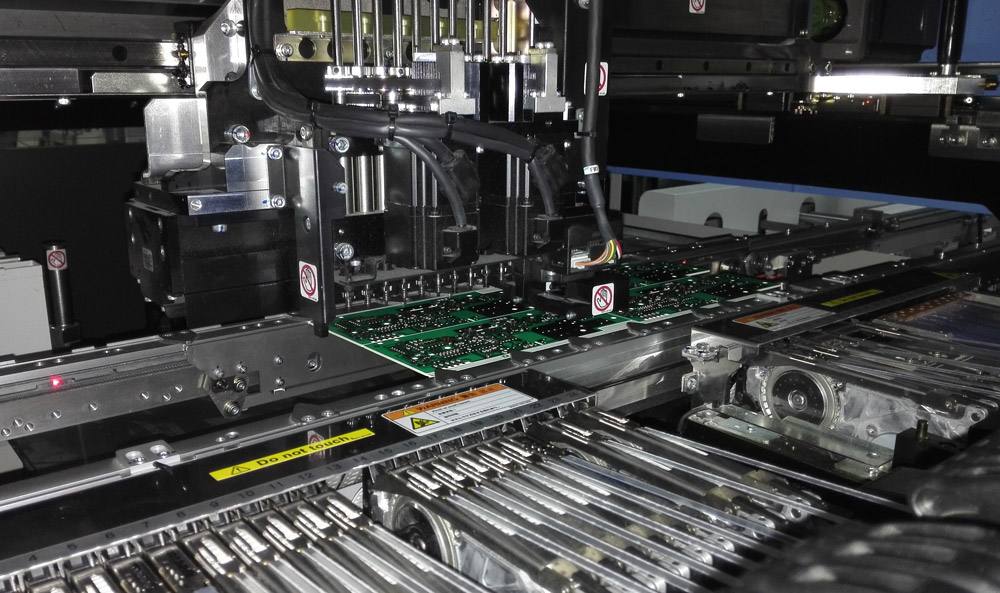
- Leverage Common Component Sizes: 0402–0805 passives, SOIC packages, and standard connectors are cheaper and easier to source than micro-sized (0201) or fine-pitch (≤0.4mm) components. They also reduce assembly time, as pick-and-place machines handle them more efficiently—cutting labor costs by 10–15%.
- Minimize Unique or Obsolete Parts: Rare components often require minimum order quantities (MOQs) that exceed low-volume needs, tying up capital in excess inventory. Use cross-reference tools to identify widely available alternatives with similar specs. A robotics startup reduced component costs by 20% by replacing a niche sensor with a common equivalent from a major supplier.
- Partner with Prototyping Services for Sourcing: Quick turn PCBA prototypes providers often maintain inventory of common components, allowing startups to purchase exact quantities (even 1–10 units) without MOQs. This eliminates waste and reduces upfront costs.
Smart component selection ensures startups pay only for what they need, avoiding the "overbuying" trap common in low-volume production.
3. Choose the Right Fabrication Partner
Not all PCB manufacturers are equipped to handle low-volume runs cost-effectively. Look for these key capabilities:
- No MOQ Requirements: Avoid suppliers with minimum order quantities (e.g., 500+ units), as they force startups to overproduce. Specialized low-volume providers offer flexibility, with pricing that scales linearly for 1–500 units.
- Prototype-to-Production Continuity: Partners that handle both quick turn PCBA prototypes and low-volume production eliminate redundant setup costs. They can reuse tooling, test fixtures, and process parameters from prototypes, reducing per-unit costs by 15–20%.
- Transparent Pricing Models: Seek suppliers with clear, itemized quotes that separate material, labor, and setup costs. This allows startups to identify cost drivers (e.g., a $200 setup fee for a 10-unit run) and negotiate or adjust designs accordingly.
A SaaS hardware startup saved 28% by switching to a low-volume specialist that waived setup fees for repeat orders, leveraging their prototype data to streamline production.
4. Batch Production and Timing Strategies
Timing and order batching can significantly reduce low-volume fabrication costs:
- Consolidate Orders: Combining multiple PCB designs into a single order reduces setup costs, which are often fixed regardless of quantity. For example, ordering 50 units of three different designs in one batch can cut total setup expenses by 50% compared to three separate orders.
- Align with Supplier Schedules: Many providers offer discounts for off-peak production times (e.g., weekends, end-of-quarter lulls). By being flexible with delivery dates, startups can save 10–15% on fabrication costs without compromising quality.
- Plan for Iterations: Budget for 2–3 prototype iterations before final production. Using quick turn PCBA prototypes for these iterations allows startups to catch design flaws early, avoiding costly rework in low-volume runs. A medtech startup avoided a $12,000 rework bill by identifying a solder mask issue in prototyping.
Strategic batching and timing transform fixed costs into variable expenses, better aligning with startup budgets.
5. Quality Control Without Overspending
Low-volume runs require targeted quality checks to avoid expensive failures without over-investing in testing:
- Statistical Sampling for Testing: Instead of testing every unit (costly in low volumes), use ANSI/ASQ Z1.4 sampling plans to test a representative subset. For 100 units, inspecting 13 units (with 0 allowable defects) provides 95% confidence in quality, cutting testing costs by 70%.
- Focus on Critical Features: Prioritize testing for high-risk elements (e.g., power management circuits, wireless modules) while using automated inspection (AOI) for standard components. This ensures critical functionality is verified without redundant checks.
- Leverage Supplier QA Data: Reputable providers include AOI/X-ray reports and material certificates with low-volume orders at no extra cost. These documents validate quality without requiring in-house testing equipment, a major cost saver for startups.
By focusing quality efforts where they matter most, startups maintain reliability without overspending on testing.
6. Negotiate Flexible Terms
Startups can further reduce costs by negotiating terms tailored to low-volume needs:
- Waived Setup Fees for Repeat Orders: Many suppliers will waive or reduce setup fees for subsequent runs of the same design, as tooling and programming are already in place. This can save \(100–\)500 per order.
- Material Cost Transparency: Request visibility into raw material costs (e.g., substrate, copper) and negotiate to pay "cost plus" a fixed margin. This avoids markup on materials, especially beneficial for larger low-volume runs (300–500 units).
- Payment Terms: Negotiate net-30 or net-60 payment terms to align cash flow with product sales, reducing upfront capital requirements. Some providers offer discounts for upfront payments, but this should be weighed against cash flow needs.
A hardware accelerator survey found that startups negotiating flexible terms saved an average of 18% on low-volume PCB fabrication costs compared to those accepting standard terms.
FAQ
Q: What is the typical cost range for low-volume PCB fabrication (1–500 units)?
A: For a 2-layer FR4 PCB (100mm × 100mm) with standard components, expect \(15–\)30 per unit for 1–50 units, dropping to \(8–\)15 per unit for 300–500 units. Costs increase with layers, materials, and complexity. Quick turn PCBA prototypes often have higher per-unit costs but avoid MOQs.
Q: How can startups verify quality in low-volume runs without in-house testing?
A: Partner with providers that include AOI/X-ray reports, functional test data, and material certificates. Third-party labs offer affordable testing (e.g., \(50–\)200 per PCB) for critical projects, ensuring quality without investing in equipment.
Q: Is offshore fabrication cheaper for low-volume runs?
A: Often, yes—offshore providers like ShwayPCB offer lower labor costs, even for small batches. However, factor in shipping time/costs: air freight for 50 units adds ~\(50–\)100 but delivers in 3–5 days, making it viable for startups.
Q: How do design changes affect low-volume fabrication costs?
A: Minor changes (e.g., resistor values) may incur minimal fees, but major changes (e.g., layer count, component footprints) require new tooling, adding \(100–\)300. Use quick turn PCBA prototypes to validate changes before low-volume runs.
Q: What’s the biggest mistake startups make in low-volume PCB fabrication?
A: Over-engineering designs with unnecessary features (e.g., 6 layers when 4 suffice) or choosing expensive components "just in case." Focus on core functionality first—you can add complexity in future iterations as revenue grows.
For startups, low-volume PCB fabrication is a balancing act: minimizing costs without compromising the quality that builds customer trust. By designing for simplicity, selecting the right partners, and leveraging quick turn PCBA prototypes for iterations, startups can achieve this balance. ShwayPCB specializes in low-volume fabrication for startups, offering flexible terms, transparent pricing, and the ability to scale from prototypes to 500+ units without sacrificing quality. To discuss your project’s needs and optimize costs, contact ShwayPCB at yuan@shwaypcb.com.

Copyright © 2005-2025 ShwayPCB : PCB Fabrication and Assembly Manufacturer. All Rights Reserved. POWERED BY UEESHOP


Copyright © 2005-2025 ShwayPCB : PCB Fabrication and Assembly Manufacturer. All Rights Reserved. POWERED BY UEESHOP