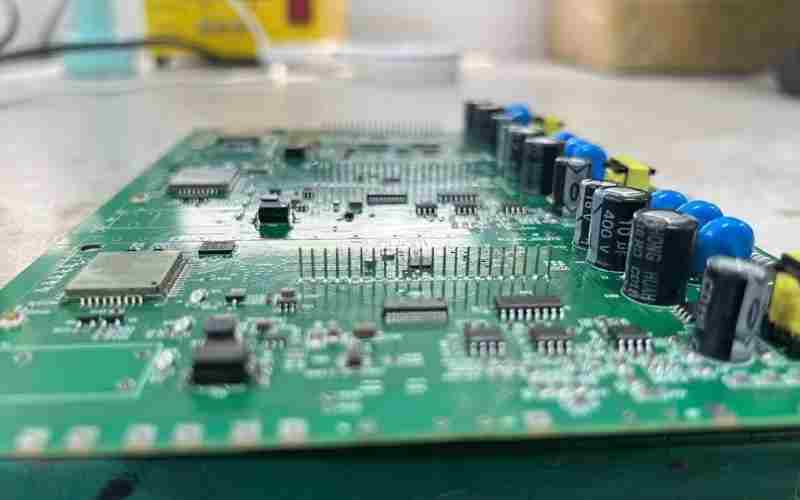
Low Volume PCB Assembly: Precision Solutions for Small-Scale Production
Low Volume PCB Assembly: Precision Solutions for Small-Scale Production
Introduction
In the dynamic world of electronics manufacturing, low volume PCB assembly plays a crucial role. Whether it's for prototyping new designs, conducting market testing, or producing specialized niche products, low volume PCB assembly offers flexibility and cost-effectiveness that large-scale production often cannot match. ShwayPCB stands out as a reliable partner in this domain, providing high-quality PCB manufacturing and assembly services tailored to low volume requirements. This article will delve into the intricacies of low volume PCB assembly, exploring its significance, processes, benefits, and how ShwayPCB excels in this area.
Understanding Low Volume PCB Assembly
Low volume PCB assembly typically refers to the production of a relatively small number of PCBs, usually ranging from a few pieces to several hundred. This is in contrast to high volume production, which involves thousands or even millions of units. Low volume assembly is ideal for various scenarios, such as:
- Prototyping: Before committing to large-scale production, engineers need to test and validate their PCB designs. Low volume assembly allows for quick iterations and modifications, reducing the risk of costly errors in mass production.
- Market Testing: Introducing a new product to the market requires initial testing to gauge customer response. Low volume production enables companies to gather feedback without investing heavily in inventory.
- Niche Products: Some products cater to specific, limited markets. Low volume assembly ensures that these products can be manufactured efficiently and cost-effectively, even with smaller demand.
The Importance of PCB Manufacturing in Low Volume Assembly
The foundation of any PCB assembly, whether low or high volume, lies in the quality of the PCB itself. PCB manufacturing involves several intricate steps, including design, material selection, layer stacking, drilling, etching, and surface finishing. Each step must be executed with precision to ensure the PCB meets the required specifications.
Key Considerations in PCB Manufacturing for Low Volume Assembly
- Material Selection: Choosing the right materials is crucial for the performance and reliability of the PCB. FR4, a fiberglass-reinforced epoxy laminate, is a common choice due to its good electrical insulation, mechanical strength, and cost-effectiveness. For high-frequency applications, specialized materials like Rogers laminates may be preferred.
- Layer Stacking: The number of layers in a PCB depends on the complexity of the circuit. Low volume assembly often involves simpler designs with fewer layers, but the stacking process must still be carefully controlled to ensure proper electrical connectivity and signal integrity.
- Drilling and Etching: Accurate drilling of vias and etching of circuit traces are essential for the functionality of the PCB. In low volume production, manual or semi-automatic processes may be used, but precision is still paramount.
- Surface Finishing: The surface finish protects the copper traces from oxidation and improves solderability. Common finishes include HASL (Hot Air Solder Leveling), ENIG (Electroless Nickel Immersion Gold), and OSP (Organic Solderability Preservative). The choice of finish depends on the application requirements and cost considerations.
PCB Assembly Process for Low Volume Production
Once the PCBs are manufactured, the next step is assembly, which involves mounting electronic components onto the board. Low volume PCB assembly can utilize both Surface Mount Technology (SMT) and Through-Hole Technology (THT), depending on the component types and design requirements.
Surface Mount Technology (SMT)
SMT is a popular method for low volume PCB assembly due to its high efficiency and ability to handle small component sizes. The process involves the following steps:
- Solder Paste Application: Solder paste is applied to the PCB pads using a stencil. The stencil ensures that the paste is deposited accurately and uniformly.
- Component Placement: Components are picked and placed onto the solder paste using automated or manual pick-and-place machines. In low volume production, manual placement may be more cost-effective for simple designs.
- Reflow Soldering: The PCB is then passed through a reflow oven, where the solder paste melts and forms a permanent connection between the components and the PCB.
Through-Hole Technology (THT)
THT is used for components that require a stronger mechanical connection or are not suitable for SMT. The process involves:
- Component Insertion: Component leads are inserted into pre-drilled holes on the PCB.
- Wave Soldering or Manual Soldering: The leads are then soldered to the opposite side of the PCB using wave soldering or manual soldering techniques. Wave soldering is more suitable for high volume production, while manual soldering is often used in low volume scenarios.
Turnkey PCB Assembly for Low Volume Projects
For customers looking for a hassle-free solution, Turnkey PCB Assembly is an excellent option. In a turnkey assembly, the service provider takes care of everything from PCB manufacturing and component procurement to assembly and testing. This approach offers several advantages for low volume projects:
- Time Savings: By outsourcing the entire assembly process to a single provider, customers can save time and focus on other aspects of product development.
- Cost Efficiency: Turnkey providers often have established relationships with component suppliers, allowing them to negotiate better prices and reduce overall costs.
- Quality Assurance: A reputable turnkey provider like ShwayPCB has strict quality control measures in place to ensure that the final product meets the highest standards.
Quick Turn PCB Assembly for Low Volume Needs
In today's fast-paced market, time-to-market is a critical factor. Quick Turn PCB Assembly services are designed to meet the urgent needs of customers, providing fast turnaround times without compromising on quality. For low volume projects, quick turn assembly offers the following benefits:
- Rapid Prototyping: Engineers can quickly receive prototypes for testing and validation, accelerating the product development cycle.
- Flexibility: Quick turn services allow customers to make last-minute changes to their designs without significant delays.
- Competitive Advantage: By getting their products to market faster, companies can gain a competitive edge and capture market share more effectively.
Advantages of Choosing PCB Assembly China for Low Volume Production
China has long been recognized as a global leader in electronics manufacturing, and PCB Assembly China is no exception. There are several reasons why customers choose Chinese providers for their low volume PCB assembly needs:
- Cost-Effectiveness: China's large-scale manufacturing infrastructure and competitive labor costs make it an attractive option for cost-sensitive projects.
- Advanced Technology: Chinese PCB manufacturers invest heavily in research and development, adopting the latest technologies and equipment to ensure high-quality production.
- Skilled Workforce: China has a vast pool of skilled engineers and technicians with extensive experience in PCB manufacturing and assembly.
- Comprehensive Services: Many Chinese providers, including ShwayPCB, offer a wide range of services, from design support to turnkey assembly, providing customers with a one-stop solution.
Case Study: ShwayPCB's Success in Low Volume PCB Assembly
To illustrate the capabilities of ShwayPCB in low volume PCB assembly, let's consider a real-world case study. A startup company approached ShwayPCB with a prototype design for a wearable fitness tracker. The company needed a small batch of PCBs for initial testing and market validation.
Challenges
- Tight Deadline: The startup wanted to launch a crowdfunding campaign within a few weeks, requiring quick turnaround times for the PCB assembly.
- Budget Constraints: As a startup, the company had limited funds and needed a cost-effective solution.
- Complex Design: The fitness tracker featured a compact design with a mix of SMT and THT components, requiring precise assembly techniques.
Solution
ShwayPCB provided a comprehensive turnkey solution, handling everything from PCB manufacturing to component procurement and assembly. The company utilized its advanced SMT and THT assembly capabilities to ensure accurate component placement and reliable soldering. Additionally, ShwayPCB's quick turn services enabled the startup to receive the prototypes within the required timeframe.
Results
- Successful Crowdfunding Campaign: The startup was able to launch its crowdfunding campaign on schedule, thanks to the timely delivery of the prototypes.
- Positive Market Feedback: The initial prototypes received positive feedback from potential customers, validating the design and encouraging further investment.
- Cost Savings: By choosing ShwayPCB's cost-effective solution, the startup was able to stay within its budget and allocate funds to other critical areas of product development.
Data and Tables: Enhancing Understanding
To provide a more comprehensive understanding of low volume PCB assembly, let's consider some relevant data and tables.
Table 1: Comparison of Low Volume and High Volume PCB Assembly
| Aspect | Low Volume Assembly | High Volume Assembly |
|---|---|---|
| Production Quantity | Few pieces to several hundred | Thousands to millions |
| Lead Time | Shorter (quick turn options available) | Longer (due to larger production runs) |
| Cost per Unit | Higher (due to lower economies of scale) | Lower (due to higher production volumes) |
| Flexibility | Higher (easier to make design changes) | Lower (design changes can be costly and time-consuming) |
| Quality Control | More manual inspection may be used | Automated inspection systems are common |
Table 2: Common Component Types in Low Volume PCB Assembly
| Component Type | Technology Used | Applications |
|---|---|---|
| Resistors | SMT/THT | Current limiting, voltage division |
| Capacitors | SMT/THT | Energy storage, filtering |
| Inductors | SMT/THT | Energy storage, filtering, impedance matching |
| Integrated Circuits (ICs) | SMT | Microcontrollers, sensors, amplifiers |
| Connectors | THT | Power and signal connections |
Conclusion
Low volume PCB assembly is a vital segment of the electronics manufacturing industry, offering flexibility, cost-effectiveness, and rapid turnaround times for prototyping, market testing, and niche product production. ShwayPCB stands out as a reliable partner in this domain, providing high-quality PCB manufacturing and assembly services tailored to low volume requirements. With its advanced technology, skilled workforce, and comprehensive turnkey and quick turn solutions, ShwayPCB is well-equipped to meet the diverse needs of customers in the low volume PCB assembly market.
For more information about our low volume PCB assembly services or to request a quote, please contact us at yuan@shwaypcb.com or visit our website at https://fr4pcb.tech/.