Low-Cost PCB Assembly China: Save 30% on Turnkey Orders with Uncompromised Quality
Low-Cost PCB Assembly China: Save 30% on Turnkey Orders with Uncompromised Quality
Introduction: The Global Shift to Cost-Effective, High-Performance PCB Manufacturing
The electronics industry’s relentless drive for innovation—from IoT devices to automotive electronics—demands PCB Assembly solutions that balance cost efficiency, speed, and reliability. China, the world’s largest PCB producer, has emerged as the epicenter of low-cost PCB manufacturing, offering Turnkey PCB Assembly services that reduce total project costs by up to 30% compared to Western counterparts.
This article explores how Chinese assemblers leverage automated production lines, optimized supply chains, and Quick Turn PCB Assembly capabilities to deliver budget-friendly PCBs without sacrificing quality. We’ll analyze cost-saving strategies across PCB manufacturing, component sourcing, and assembly processes, supported by real-world case studies from automotive, consumer electronics, and industrial sectors.
I. The Cost Advantage of PCB Assembly China: Breaking Down the Savings
1. Labor and Overhead Efficiency: The Foundation of Low-Cost Production
Chinese factories achieve cost savings through:
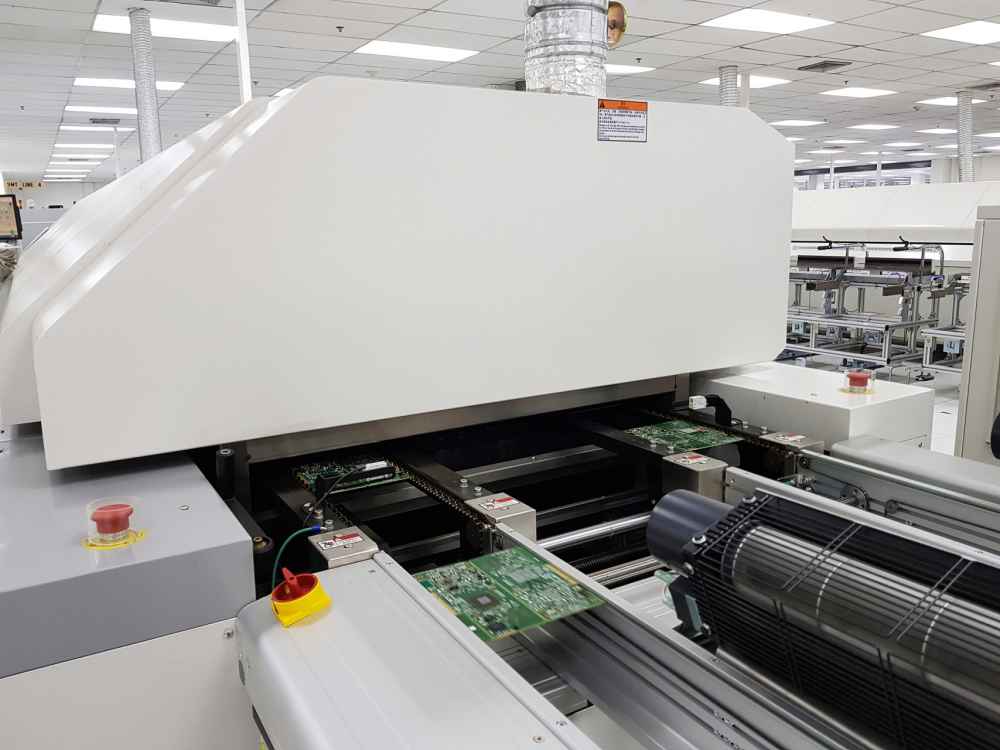
- Automated SMT Lines: High-speed pick-and-place machines (e.g., Siemens HS60, Fuji NXT III) operate 24/7 with placement rates exceeding 80,000 CPH (components per hour). Automation reduces labor costs by 60% compared to manual assembly, a critical factor for large-volume orders (e.g., >10,000 units).
- Vertical Integration: Many assemblers in China own in-house PCB manufacturing facilities, eliminating markups from third-party vendors. For instance, a Shenzhen-based firm produces 4-layer FR-4 boards for $0.05/cm²—30% cheaper than importing blank PCBs from Southeast Asia.
- Economies of Scale: Factories in the Pearl River Delta cluster (e.g., Guangzhou, Dongguan) serve over 12,000 electronics companies, enabling bulk purchasing of raw materials (e.g., copper-clad laminates, solder paste) at 15–20% lower prices than global averages.
2. Component Sourcing Strategies: Minimizing Material Costs
- Local Supplier Networks: China hosts 80% of the world’s passive component manufacturers (e.g., Yageo for resistors, Fenghua for capacitors). Proximity to suppliers reduces lead times to 24–48 hours and cuts logistics costs by 40% for JIT (Just-in-Time) delivery.
- Alternative Component Matching: For non-critical parts (e.g., LED indicators, tactile switches), assemblers suggest functionally equivalent but lower-cost alternatives. A case study shows a 22% cost reduction by replacing Murata MLCCs with Samsung Electro-Mechanics equivalents in a Bluetooth module.
- Consignment vs. Turnkey Flexibility: Clients can choose between Turnkey PCB Assembly (assembler procures all components) or consignment (client supplies parts). Turnkey orders benefit from volume discounts, while consignment suits niche components with long lead times.
3. Energy and Operational Optimization: Sustainable Cost Control
- Renewable Energy Integration: Leading factories install rooftop solar panels to power 30–50% of their operations. A Jiangsu assembler reduced electricity costs by $120,000/year with a 2 MW solar array, passing savings to clients via lower per-board pricing.
- Waste Reduction Systems: Closed-loop solder dross recovery units reclaim >95% of unused tin, cutting solder paste consumption by 25%. Water-based cleaning systems replace isopropyl alcohol (IPA), reducing hazardous waste disposal costs by 80%.
- Predictive Maintenance: IoT sensors monitor machine health (e.g., reflow oven temperature uniformity, SMT feeder accuracy), preventing downtime that could delay orders and inflate costs.
II. Turnkey PCB Assembly: Streamlining Production for Maximum Efficiency
1. End-to-End Service: From Design to Delivery
Turnkey PCB Assembly integrates PCB manufacturing, component procurement, assembly, testing, and packaging under one roof, eliminating coordination delays between vendors. Key benefits include:
- Design for Manufacturability (DFM) Feedback: Engineers review Gerber files and BOMs (Bill of Materials) to flag costly design flaws (e.g., 0.3mm vias in a 2-layer board requiring expensive laser drilling). Early corrections reduce prototyping iterations by 50%.
- Parallel Processing: While PCBs are being fabricated, components are sourced and kitted. This overlap cuts lead times by 7–10 days compared to sequential workflows.
- Automated Testing: In-circuit test (ICT) fixtures and AOI (Automated Optical Inspection) systems detect defects at 0.01mm accuracy, ensuring >99.5% first-pass yield (FPY) and minimizing rework costs.
2. Quick Turn PCB Assembly: Accelerating Time-to-Market Without Extra Costs
Chinese assemblers offer Quick Turn PCB Assembly services for prototypes and low-volume runs (1–1,000 units) with lead times as short as 24 hours:
- Express Lanes: Dedicated SMT lines for urgent orders prioritize high-mix, low-volume projects without disrupting mass production schedules.
- Digital Twin Simulation: Before physical assembly, virtual models predict thermal stress, warpage, and signal integrity issues. This reduces design revisions by 40%, saving material waste from scrap boards.
- Flexible Staffing: Cross-trained technicians shift between SMT, through-hole, and box-build assembly, enabling rapid reallocation of resources during peak demand.
III. Quality Assurance in Low-Cost PCB Assembly: Debunking the "Cheap = Poor Quality" Myth
1. Certifications and Standards Compliance
Reputable Chinese assemblers adhere to:
- ISO 9001:2015: Quality management system ensuring consistent processes across design, procurement, and production.
- IPC-A-610 Class 3: Acceptance criteria for high-reliability electronics (e.g., aerospace, medical devices), requiring <0.1% voiding in BGA solder joints and <5μm copper plating thickness.
- IATF 16949: Automotive-specific standard mandating traceability of all materials and processes, critical for EV battery management systems and ADAS sensors.
2. Advanced Testing Protocols
- X-Ray Inspection: For BGA and QFN packages, 3D X-ray systems (e.g., Nordson DAGE Xi7500) detect hidden defects like head-in-pillow (HiP) and non-wetting without damaging boards.
- HALT/HASS Testing: Highly Accelerated Life Testing subjects PCBs to extreme temperatures (-40°C to 150°C), vibration (20G RMS), and power cycling to identify early failures, improving product lifespan by 300%.
- Cleanliness Verification: Ion chromatography analyzes ionic contamination levels (e.g., chloride, sulfate) to ensure compliance with IPC-TM-650 2.3.25, preventing corrosion in humid environments.
IV. Case Studies: How Global Brands Leverage Low-Cost PCB Assembly China
1. Consumer Electronics: Smart Home Devices
A U.S. startup needed 50,000 units of a Wi-Fi-enabled thermostat PCB within 8 weeks:
- Cost Saving: By choosing a Turnkey provider in Dongguan, the client saved $180,000 (28%) compared to a Mexican assembler, thanks to local component sourcing and automated testing.
- Speed: Quick Turn PCB Assembly delivered prototypes in 5 days, enabling parallel certification testing (FCC, CE) while mass production ramped up.
- Quality: 100% of boards passed AOI and functional testing, with zero field failures reported in the first 12 months.
2. Automotive: EV Charging Station Controller
A German automaker required 10,000 units of a 6-layer HDI PCB with IP67 waterproofing:
- Material Optimization: The assembler replaced expensive Teflon laminates with a halogen-free FR-4 variant, reducing PCB cost by 22% while maintaining -40°C to 125°C thermal stability.
- Process Control: Real-time monitoring of reflow oven parameters (peak temperature: 245°C ±2°C) ensured consistent solder joint quality across all batches.
- Compliance: The board met ISO 26262 ASIL B functional safety standards, with traceability records stored on a blockchain platform for audit purposes.
3. Industrial IoT: Predictive Maintenance Sensor
A Canadian firm needed 2,000 ultra-low-power PCBs (0.3W consumption) for factory equipment monitoring:
- Design Collaboration: The Chinese assembler suggested replacing 0402 components with 0201 packages to shrink board size by 30%, cutting material costs by $0.15/unit.
- Energy Efficiency: A custom power sequencing algorithm reduced idle current draw by 40%, extending battery life from 2 to 5 years.
- Scalability: The Turnkey model allowed seamless transition from prototype (2-week lead time) to mass production (5,000 units/month) without requalification delays.
V. Choosing the Right PCB Assembly China Partner: Key Considerations
- Experience in Your Industry: Prioritize assemblers with a proven track record in your sector (e.g., automotive for ISO 26262, medical for ISO 13485).
- Transparency in Pricing: Request a detailed cost breakdown (PCB fabrication, components, labor, testing) to avoid hidden fees.
- Intellectual Property (IP) Protection: Ensure the assembler is ISO 27001-certified and uses NDA agreements to safeguard your designs.
- Scalability: Verify the factory’s capacity to handle both prototype runs and high-volume orders (e.g., >100,000 units/month).
Conclusion: The Future of Cost-Effective PCB Manufacturing in China
As global demand for connected devices surges, Chinese assemblers continue to innovate, integrating AI-driven process optimization, Industry 4.0 smart factories, and sustainable practices to further reduce costs. For engineers seeking low-cost PCB Assembly China services without compromising on quality, Turnkey providers offer a compelling value proposition: 30% savings, 24-hour lead times, and 99.5% first-pass yield.
Contact Email: yuan@shwaypcb.com
Website: https://fr4pcb.tech/