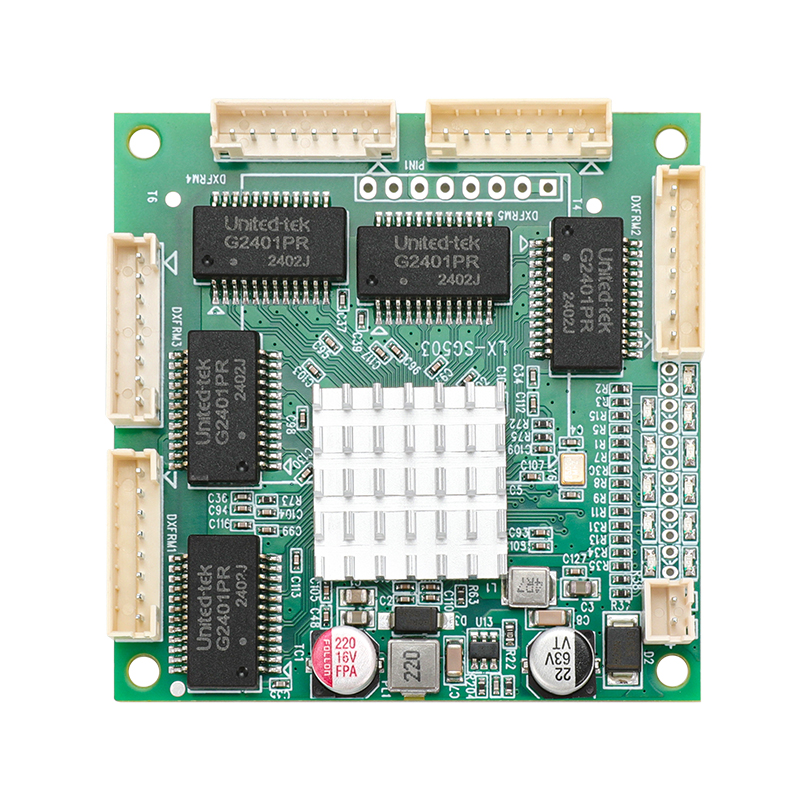
Halogen-Free PCB: An Innovative Choice Balancing Environmental Protection and Performance
Halogen-Free PCB: An Innovative Choice Balancing Environmental Protection and Performance
I. Halogen-Free Substrate Materials: Precise Definition and Stringent Standards
According to the JPCA - ES - 01 - 2003 standard, there are extremely strict limits on the chlorine (Cl) and bromine (Br) contents in copper-clad laminates. When the chlorine (Cl) and bromine (Br) contents in a copper-clad laminate are each less than 0.09% Wt (weight ratio), and the total amount of Cl + Br is ≤ 0.15% (i.e., 1500 PPM), the copper-clad laminate is defined as a halogen-free copper-clad laminate. This standard provides clear and accurate guidelines for the production and quality control of halogen-free PCBs, ensuring that they meet industry norms in terms of environmental protection and performance.
II. Reasons for Halogen Ban: Dual Considerations of Health and Environment
Halogens are elements in the halogen group of the periodic table, including fluorine (F), chlorine (Cl), bromine (Br), and iodine (I). In the field of flame-retardant substrate materials, such as FR4 and CEM - 3, brominated epoxy resins were once commonly used as flame retardants. However, research by relevant institutions has revealed the serious hazards of halogen-containing flame-retardant materials. Polymeric polybrominated biphenyls (PBB) and polymeric polybrominated diphenyl ethers (PBDE) and other halogen-containing flame-retardant materials release toxic substances such as dioxins (dioxin, also known as TCDD) and benzofurans (Benzfuran) when they burn after being discarded. These substances not only produce a large amount of smoke and have an unpleasant odor but are also highly toxic and carcinogenic. Once ingested by the human body, they cannot be excreted, posing a severe threat to health.
Based on this, EU laws explicitly prohibit the use of six substances, including PBB and PBDE. The Ministry of Information Industry of China has also issued documents requiring that electronic information products placed on the market must not contain substances such as lead, mercury, hexavalent chromium, polymeric polybrominated biphenyls, or polymeric polybrominated diphenyl ethers. Although PBB and PBDE are basically no longer used in the copper-clad laminate industry at present, other brominated flame-retardant materials, such as tetrabromobisphenol A and dibromophenol (with the chemical formula C₁₂H₁₀Br₄O₂), still pose potential risks. These brominated copper-clad laminates release a large amount of toxic gases (brominated) and produce a large amount of smoke when burning or in case of electrical fires. When PCBs undergo hot air leveling and component soldering, the boards are affected by high temperatures (>200°C), and trace amounts of hydrogen bromide are also released. Whether these substances will produce toxic gases is still under evaluation. It is evident that the negative consequences of using halogens as raw materials are significant, and banning halogens is imperative.
III. Principle of Halogen-Free Substrates: Innovative Flame-Retardant Mechanism
Currently, most halogen-free materials are mainly phosphorus-based and phosphorus-nitrogen-based. When phosphorus-containing resins burn, they decompose upon heating to generate polyphosphoric acid. Polyphosphoric acid has extremely strong dehydrating properties, enabling the formation of a carbonized film on the surface of the polymer resin. This carbonized film acts as a sturdy barrier, isolating the burning surface of the resin from contact with air, thereby extinguishing the fire and achieving a flame-retardant effect. Meanwhile, polymer resins containing phosphorus-nitrogen compounds produce non-combustible gases when burning, which assist the resin system in achieving flame retardancy, providing dual protection for the flame-retardant performance of halogen-free substrates.
IV. Characteristics of Halogen-Free Boards: Significant Advantages in Performance
1. Material Insulation
The use of P or N to replace halogen atoms reduces the polarity of the molecular bond segments of the epoxy resin to a certain extent. This significantly improves the insulation resistance and breakdown voltage resistance of the material, providing reliable electrical performance guarantees for the stable operation of PCBs.
2. Water Absorption
In phosphorus-nitrogen-based epoxy resins, the number of lone pair electrons on N and P is relatively lower than that in halogen materials, resulting in a lower probability of forming hydrogen bonds with hydrogen atoms in water. Therefore, the water absorption of halogen-free boards is lower than that of conventional halogen-based flame-retardant materials. Low water absorption helps improve the reliability and stability of the material, reducing the risk of performance changes and failures caused by water absorption.
3. Thermal Stability
The nitrogen and phosphorus contents in halogen-free boards are higher than the halogen contents in ordinary halogen-based materials, leading to an increase in their monomer molecular weights and glass transition temperatures (Tg values). Under heating conditions, the molecular mobility of halogen-free materials is lower than that of conventional epoxy resins, and their coefficients of thermal expansion are relatively smaller. This enables halogen-free boards to maintain good dimensional stability and performance consistency in high-temperature environments.
V. Insights from the Production of Halogen-Free PCBs: Process Optimization and Detail Control
1. Lamination
The lamination parameters vary for boards from different companies. Taking the production of multilayer boards using Shengyi substrate materials and prepregs as an example, to ensure sufficient resin flow and good adhesion, a relatively low heating rate of the board material (1.0 - 1.5°C/min) should be used in combination with multi-stage pressure application. At the high-temperature stage, a relatively long time is required, with a maintenance of 180°C for more than 50 minutes. According to the recommended press program settings, the adhesion between the copper foil and the substrate of the pressed board can reach 1.0 N/mm, and the board after pattern plating does not show delamination or blistering after six thermal shocks.
2. Drilling Processability
Drilling conditions are a key parameter affecting the hole wall quality of PCBs during processing. Halogen-free copper-clad laminates use P and N series functional groups, which increase the molecular weight and enhance the rigidity of the molecular bonds, thereby increasing the rigidity of the material. At the same time, the Tg values of halogen-free materials are generally higher than those of ordinary copper-clad laminates. Therefore, using the drilling parameters for ordinary FR - 4 to drill halogen-free boards usually does not yield ideal results, and appropriate adjustments need to be made under normal drilling conditions.
3. Alkali Resistance
Generally, the alkali resistance of halogen-free boards is lower than that of ordinary FR - 4. Special attention should be paid to controlling the soaking time in alkaline stripping solutions during the etching process and the rework process after solder mask application to prevent the appearance of white spots on the substrate, which can affect the quality of PCBs.
4. Halogen-Free Solder Mask Application
Currently, there are various types of halogen-free solder mask inks available on the market, and their performance is similar to that of ordinary liquid photosensitive inks. The specific operations are also basically the same.
Halogen-free PCBs, with their low water absorption and compliance with environmental protection requirements, can also meet the quality requirements of PCBs in other performance aspects. Their demand is increasing day by day. With continuous technological progress and process optimization, halogen-free PCBs will undoubtedly play a more important role in the field of electronic information, driving the industry towards a more environmentally friendly and efficient direction.
ShwayPCB, Specialized Production: FP4, High TG, halogen-free, aluminum/copper/ceramic-based, and Rogers material printed circuit boards (PCBs).
Offerings: Double-sided boards, multilayer boards, HDI (High-Density Interconnect) boards, rigid-flex boards, high-frequency boards, etc., to cater to diverse requirements.
Surface Finish Processes: OSP (Organic Solderability Preservative), HASL (Hot Air Solder Leveling), ENIG (Electroless Nickel/Immersion Gold), immersion silver, immersion tin, electroplated nickel-gold, and electroless palladium, etc.
Product Application Areas: Industrial control, telecommunications equipment, consumer electronics, automotive electronics, medical devices, aerospace, computers and data centers, energy and power, IoT (Internet of Things) and smart home, military and defense, marine electronics, AI (Artificial Intelligence) terminals.
Contact us immediately at yuan@shwaypcb.com to obtain preferential quotations.