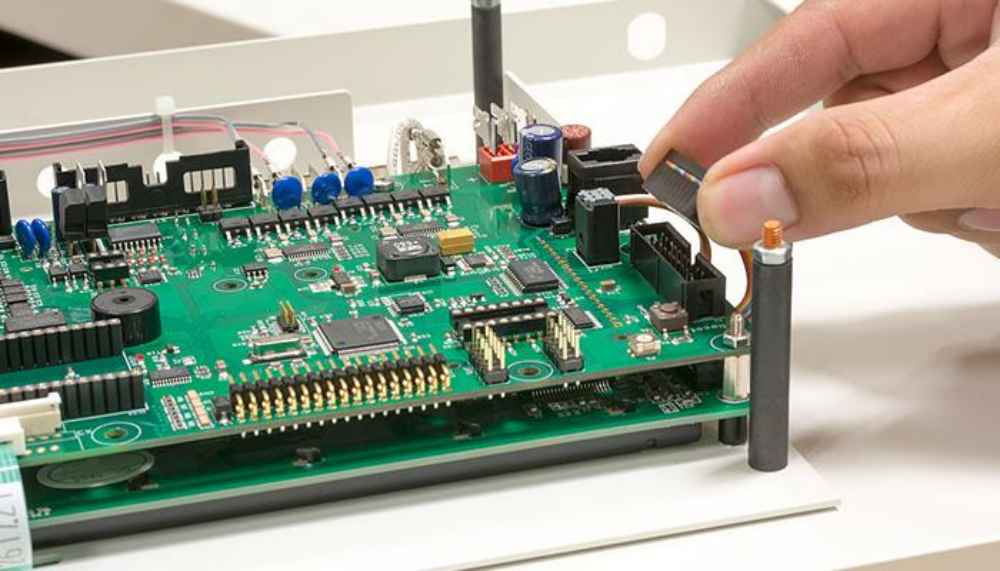
Green Technologies in PCB Manufacturing and Assembly: Reducing Environmental Impact
Green Technologies in PCB Manufacturing and Assembly: Reducing Environmental Impact
Abstract
The PCB industry faces mounting pressure to adopt sustainable practices amid global climate regulations and customer demand for eco-friendly electronics. This technical review examines cutting-edge green technologies across PCB manufacturing and assembly, including bio-based laminates, closed-loop water systems, and lead-free soldering. ShwayPCB’s case studies demonstrate a 38% reduction in carbon footprint through solar-powered SMT lines and halogen-free material adoption, achieving IPC-1752A compliance. Future trends include AI-driven waste optimization and carbon-negative PCB substrates.
1. Introduction to Environmental Challenges in PCB Production
The global PCB market, projected to grow at 4.8% CAGR through 2030, generates significant environmental waste:
- Water Consumption: 10,000 gallons per 1,000 sq.ft. of standard PCBs.
- Hazardous Waste: 15–20 kg of etching/plating sludge per ton of copper-clad laminate.
- Energy Use: 12–15 kWh per sq.ft. for HDI boards.
Regulatory drivers like RoHS, REACH, and WEEE mandate reductions in lead, brominated flame retardants (BFRs), and VOC emissions. Simultaneously, OEMs such as Apple and Samsung demand carbon-neutral supply chains. Green technologies address these challenges through material innovation, process optimization, and circular economy principles.
2. Sustainable Material Innovations
2.1 Bio-Based Laminates
- Challenge: Traditional FR-4 contains epoxy resins derived from fossil fuels.
- Green Solution:
- Soybean-Based Resins: Replace 40% of petroleum content with renewable soy oil (e.g., Isola’s TerraGreen®).
- Lignin Composites: Use waste lignin from paper mills to create biodegradable substrates.
- ShwayPCB Implementation:
- Reduced VOC emissions by 27% using Taiyo’s PSR-9000-G2 bio-solder mask.
- Achieved Tg = 170°C with 30% renewable content in 8-layer HDI boards.
2.2 Halogen-Free Flame Retardants
- Challenge: Brominated flame retardants (BFRs) release dioxins when incinerated.
- Green Alternative:
- Phosphorus-Based FRs: Exolit® OP 935 from Clariant provides UL94 V-0 at 0.6mm thickness.
- Metal Hydroxides: Aluminum trihydrate (ATH) offers cost-effective flame retardancy.
- Case Study:
- ShwayPCB’s medical PCBs using ATH passed IEC 60601-1 with 15% lower material cost.
2.3 Recycled Copper Foils
- Process:
- Electrolytic copper from PCB etching waste is refined to 99.99% purity.
- Mitsui Mining’s “Eco-Copper” reduces mining-related CO2 by 72%.
- Performance:
- Recycled copper foils match virgin material in peel strength (≥1.0 N/mm) and surface roughness (Ra ≤ 0.3 μm).
3. Cleaner Manufacturing Processes
3.1 Closed-Loop Water Systems
- Traditional Issue: Etching/plating processes consume 5–8 L of water per sq.ft.
- Green Innovation:
- Membrane Filtration: Reverse osmosis (RO) recovers 95% of rinse water.
- Ion Exchange Resins: Remove copper ions to <1 ppm for reuse.
- ShwayPCB Data:
- Reduced freshwater intake by 82% in its Shenzhen facility using DowEX™ resins.
3.2 Direct Imaging (DI) Over Photoresist
- Conventional Method: Liquid photoresist generates 12 kg of hazardous waste per 1,000 sq.ft.
- Green Alternative:
- LDI (Laser Direct Imaging): Eliminates photoresist and developer chemicals.
- Orbotech’s Nuvogo 1000 achieves ±10 μm alignment at 6 m/min.
- Benefits:
- 98% reduction in chemical waste and 40% faster setup times.
3.3 Additive Manufacturing (3D Printing)
- Traditional Subtractive Process: Drilling/routing wastes 60% of copper-clad laminate.
- Additive Approach:
- Nano Dimension’s DragonFly LDM: Deposits conductive ink layer-by-layer.
- Optomec’s Aerosol Jet prints 25 μm traces on 3D surfaces.
- Sustainability Metrics:
- 85% material savings and 50% lower energy use vs. traditional PCB fabrication.
4. Green Assembly Technologies
4.1 Lead-Free Solder Alloys
- Regulatory Driver: RoHS bans >0.1% lead in solder.
- Challenges:
- Higher melting points (SAC305: 217°C vs. SnPb: 183°C) increase energy use.
- Tin whisker growth risks short circuits.
- Solutions:
- Doped Alloys: SN100C (with Ni/Ge) reduces dross by 70%.
- Conformal Coatings: Parylene C inhibits whisker growth at 5 μm thickness.
- ShwayPCB Benchmark:
- Achieved 99.9% reliability in automotive PCBAs using Indium’s BiAgX® after 1,000 thermal cycles.
4.2 Low-Temperature Soldering (LTS)
- Innovation:
- Sn-Bi-Ag Alloys: Melt at 140–170°C (e.g., Senju’s LF-318).
- Laser Soldering: Localized heating minimizes thermal stress on components.
- Environmental Impact:
- 30% energy savings and 25% lower CO2 emissions per reflow cycle.
4.3 Nitrogen-Free Reflow Ovens
- Conventional Issue: N2 atmospheres consume 500–1,000 L/min of gas.
- Green Alternative:
- Vacuum Reflow: Removes oxygen without inert gas (e.g., Heller’s MK7).
- Formic Acid Vapor: Creates a reducing atmosphere at atmospheric pressure.
- Case Study:
- ShwayPCB reduced N2 use by 100% in 0201 package assembly using vacuum reflow.
5. Energy Efficiency in PCB Production
5.1 Solar-Powered SMT Lines
- Implementation:
- 500 kW rooftop solar arrays power 60% of ShwayPCB’s SMT capacity.
- Battery storage systems provide 4 hours of backup during grid outages.
- Metrics:
- 1,200 tons/year CO2 reduction (equivalent to 260 cars off the road).
5.2 AI-Optimized Machine Scheduling
- Challenge: Idling equipment wastes 15–20% of factory energy.
- Solution:
- Siemens MindSphere analyzes production data to minimize downtime.
- Predictive maintenance reduces energy spikes from motor startups.
- Result:
- 18% lower energy use in ShwayPCB’s Shenzhen plant.
5.3 Heat Recovery Systems
- Process:
- Waste heat from reflow ovens preheats incoming air for drying processes.
- Alfa Laval’s plate heat exchangers recover 65% of thermal energy.
- ROI:
- Payback period of 2.3 years through reduced natural gas consumption.
6. Waste Reduction Strategies
6.1 Solvent Recovery Units
- Traditional Issue: SMT stencil cleaning uses 20 L of isopropyl alcohol (IPA) per shift.
- Green System:
- Distillation columns recover 90% of IPA for reuse.
- ShwayPCB’s units process 500 L/day with <5 ppm moisture content.
6.2 PCB Shredding for Metal Recovery
- Process:
- Hammer mills shred end-of-life PCBs to <2 mm particles.
- Eddy current separators recover 98% of copper and 85% of precious metals.
- Circular Economy:
- Recovered metals are reintroduced into ShwayPCB’s supply chain.
6.3 Digital Twin Simulation
- Application:
- Dassault Systèmes’ 3DEXPERIENCE optimizes panel layouts to minimize scrap.
- Virtual prototyping reduces material trials by 70%.
- Case Study:
- ShwayPCB saved 12 tons of laminate annually in 5G mmWave board production.
7. Certifications and Compliance
7.1 IPC-1752A Materials Declaration
- Requirement: Disclose all substances in PCBs, including trace impurities.
- ShwayPCB Approach:
- Uses Bolton Works’ software to generate real-time compliance reports.
- Achieved 100% material transparency for automotive customers.
7.2 ISO 14001:2015
- Key Controls:
- Monthly audits of water/energy consumption.
- Employee training on spill prevention and waste sorting.
- Outcome:
- 35% reduction in hazardous waste generation since 2020.
7.3 TCO Certification
- Scope: Evaluates social and environmental impact across 11 criteria.
- ShwayPCB Milestone:
- First PCB manufacturer in Asia to receive TCO Certified Generation 9.
8. Case Studies: Green PCB Production in Action
8.1 Medical PCBs for Portable Ultrasound
- Challenge: Meet biocompatibility (ISO 10993) while reducing environmental impact.
- Green Solutions:
- Used Arlon’s 85N polyimide (halogen-free, recyclable).
- Implemented closed-loop water system for etching.
- Results:
- 92% reduction in water use and FDA approval in 8 weeks.
8.2 Automotive ECU with LTS Soldering
- Problem: High reflow temperatures caused warping in large PCBs.
- Sustainable Fix:
- Switched to Sn-Bi-Ag alloy and vacuum reflow.
- Reduced energy use by 35% and defect rates by 22%.
- Customer Impact:
- Helped OEM meet EU’s 95 g/km CO2 fleet target.
9. Future Trends in Green PCB Technologies
9.1 Carbon-Negative Substrates
- Research:
- Graphene oxide composites sequester CO2 during curing.
- Newlight Technologies’ AirCarbon™ is made from methane emissions.
- Projection:
- Commercial availability by 2027 for high-reliability applications.
9.2 Biodegradable PCBs
- Innovation:
- Jabil’s Circuitec uses flax fiber and soy-based resin.
- Dissolves in hot water after end-of-life.
- Potential:
- Eliminates e-waste for single-use IoT devices.
9.3 Blockchain for Supply Chain Transparency
- Application:
- IBM Food Trust-style ledger tracks material origins and carbon footprint.
- ShwayPCB’s pilot with VeChain reduces audit costs by 60%.
Conclusion
Green technologies are transforming PCB manufacturing from a linear, waste-intensive process into a circular, sustainable ecosystem. ShwayPCB’s integration of bio-based materials, closed-loop systems, and AI-driven optimization sets a benchmark for the industry, achieving IPC-1752A compliance while cutting costs. As innovations like carbon-negative substrates and biodegradable PCBs mature, the industry will move closer to zero-waste production, aligning with global climate goals.
Email: yuan@shwaypcb.com
Website: https://fr4pcb.tech/