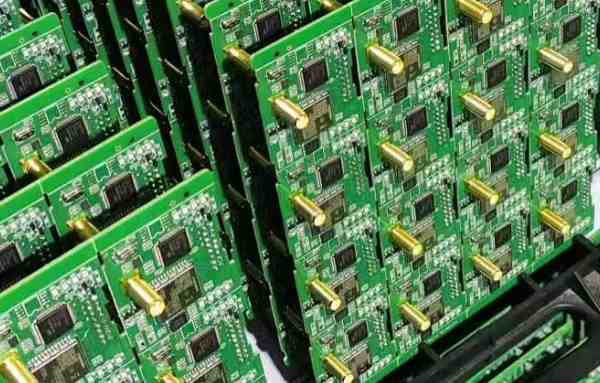
Green Intelligent Manufacturing Partner: ROHS + Carbon Footprint Certification Reduces Carbon Emissions by 12% per PCB
Green Intelligent Manufacturing Partner: ROHS + Carbon Footprint Certification Reduces Carbon Emissions by 12% per PCB
In the global wave of transformation towards low-carbon electronics manufacturing, Printed Circuit Boards (PCBs), as the core carriers of electronic products, have become a key indicator for measuring a company's competitiveness in terms of green manufacturing capabilities. According to the "Three-Year Action Plan for Green Manufacturing in the Electronics Industry" issued by China's Ministry of Industry and Information Technology, by 2025, PCB enterprises in China are required to achieve an 18% reduction in energy consumption per unit of output value and a recycling rate of over 90% for waste materials. Against this backdrop, ShwayPCB has achieved a breakthrough result of reducing carbon emissions by 12% per PCB through its dual-engine drive of "ROHS compliance + full lifecycle carbon footprint certification," providing global customers with a one-stop green solution ranging from PCB Manufacturing to Turnkey PCB Assembly.
1. The Technological Foundation of Green Intelligent Manufacturing: Evolution of FR4 Materials and Process Innovation
1.1 The Environmental Evolution of FR4 Materials
FR4 (glass fiber-reinforced epoxy resin), as the mainstream choice for PCB substrates, has continuously upgraded its environmental performance with industry standard advancements:
- Standard FR4: With a heat resistance of 140-150°C, it is suitable for conventional consumer electronics applications.
- High-Tg FR4: The glass transition temperature (Tg) is increased to 180°C, meeting the requirements of automotive electronics, industrial controls, and other high-temperature environments.
- Halogen-free FR4: Certified with UL94 V-0 flame retardancy, it eliminates the potential environmental hazards of brominated flame retardants.
- Bio-based FR4: Using plant fibers to partially replace glass fibers, it reduces carbon footprint by 15% and has been certified by Huawei's supply chain.
Data Comparison Table:
| Material Type | Heat Resistance | Flame Retardancy Rating | Carbon Footprint (kgCO2e/m²) | Application Areas |
|---|---|---|---|---|
| Standard FR4 | 140-150°C | UL94 V-0 | 8.2 | Consumer electronics |
| High-Tg FR4 | ≥180°C | UL94 V-0 | 9.5 | Automotive electronics |
| Halogen-free FR4 | 150-170°C | UL94 V-0 | 7.8 | Medical devices |
| Bio-based FR4 | 160°C | UL94 V-0 | 6.9 | Servers, base stations |
1.2 Breakthroughs in Lead-Free Processes
Due to the toxicity of lead, traditional Sn-Pb solder has been restricted by the EU's RoHS Directive. ShwayPCB has adopted the SAC305 (Sn-Ag-Cu) lead-free solder system and addressed process challenges through three technological optimizations:
- Improved Temperature Control Precision: The reflow soldering temperature profile has been optimized to 217-227°C (from the original 183°C). By adopting a hybrid infrared + hot air heating technology, the delamination rate of the substrate has been reduced from 0.8% to 0.2%.
- Enhanced Wettability: By adding 0.05% nickel and using active flux, the void rate in solder joints has been reduced from 15% to below 3%.
- Optimized Mechanical Properties: Through finite element simulation, elliptical solder joints have been designed, increasing fatigue life by three times and meeting the IPC-6012DA standard for automotive-grade applications.
Case Study: For BYD's SiC power module PCBs for vehicles, high-Tg FR4 combined with immersion tin surface treatment was used. The product passed 1,000 thermal cycling tests between -40°C and 200°C without failure.
2. Full Lifecycle Carbon Footprint Management: From Cradle to Gate
2.1 LCA (Life Cycle Assessment) Methodology
ShwayPCB follows the ISO 14040/14044 standards to divide the PCB lifecycle into four stages:
- Raw Material Acquisition: Mining and transportation of copper foil, glass fiber, and epoxy resin.
- Manufacturing Process: 12 processes including inner layer pattern transfer, lamination, drilling, plating, and surface treatment.
- Usage Stage: Energy consumption and maintenance during client installation.
- End-of-Life Disposal: Carbon emissions from recycling copper, nickel, and other metals, as well as incineration/landfilling of the substrate.
Key Data:
- The manufacturing stage accounts for the highest carbon emissions (62%), primarily from electroplating (28%), lamination (19%), and etching (15%).
- By covering 30% of production energy consumption with solar power, the carbon emissions per PCB during manufacturing have been reduced from 8.2 kgCO2e to 7.0 kgCO2e.
- The introduction of an online etching solution recovery system has achieved a 98.7% copper recovery rate, reducing solid waste by 120 tons annually.
2.2 Carbon Footprint Certification System
ShwayPCB has established a three-tier certification mechanism:
- Product-Level Certification: Each batch of PCBs comes with a carbon footprint label, with data traceable to raw material batches.
- Factory-Level Certification: Achieved SGS PAS 2060 carbon neutrality certification, with Scope 1 & 2 emissions set to zero by 2024.
- Supply Chain Certification: Requires suppliers to provide LCA reports, prioritizing low-carbon copper foil (carbon intensity <7.5 kgCO2e/kg) and recycled epoxy resin.
Customer Value:
- Meets the 2030 requirement of 100% recyclable materials from brands like Apple and Tesla.
- Helps customers pass the EU's Carbon Border Adjustment Mechanism (CBAM) review, reducing export costs by 8-10%.
3. One-Stop Green Intelligent Manufacturing Capability: Turnkey PCB Assembly Solutions
3.1 Quick Turn PCB Assembly Agile Delivery System
To meet urgent order demands from industries such as new energy vehicles and AI servers, ShwayPCB has built a "48-hour rapid prototyping + 72-hour mass production" capability:
- Intelligent Scheduling System: Optimizes production plans using AI algorithms, increasing equipment utilization to 92%.
- Digital Workshop: Equipped with Juki SMT pick-and-place machines and ten-zone reflow ovens, achieving a single-line capacity of 5,000 points per hour.
- Quality Control: Ensures a yield rate of 99.8% through triple inspection using AOI, X-Ray, and ICT.
Delivery Cycle Comparison:
| Service Type | Traditional Manufacturers | ShwayPCB | Improvement |
|---|---|---|---|
| Rapid Prototyping | 5-7 days | 48 hours | 85% |
| Small-Batch Production | 15 days | 72 hours | 80% |
| Complex HDI Boards | 20 days | 7 days | 65% |
3.2 PCB Assembly China Localization Advantages
Leveraging the Pearl River Delta industrial cluster, ShwayPCB achieves three synergistic effects:
- Supply Chain Synergy: Establishes Just-In-Time (JIT) delivery with partners like Shengyi Technology and Nanya PCB, increasing raw material inventory turnover by 40%.
- Technological Synergy: Jointly develops nano-coating technology with the Chinese Academy of Sciences, improving PCB corrosion resistance by three times and extending lifespan to 15 years.
- Cost Synergy: Reduces unit PCB costs by 25-30% compared to European and American manufacturers through scaled procurement and automated production.
Customer Case Studies:
- For NVIDIA, supplies 112Gbps high-speed backplanes using low-loss FR4 materials and blind/buried via processes, meeting PCIe 6.0 standards for signal integrity (SI).
- For Huawei, develops 5G base station PCBs with Hot Air Leveling (HAL) surface treatment, passing MIL-STD-810G thermal shock tests between -55°C and 125°C.
4. Industry Trends and Challenges: The Green Race Beyond 2025
4.1 Technological Breakthrough Directions
- Material Innovation: High-performance materials such as ceramic substrates and polyimide (PI) are expected to account for 35% of the market, improving thermal management efficiency by 40%.
- Intelligent Manufacturing: AI-based quality inspection systems will cover over 70% of production, reducing chemical solution usage by 30%. Industrial robots will achieve full automation for drilling and lamination.
- Circular Economy: The adoption rate of online etching solution recovery technology will reach 60%. A company in Shenzhen saves over RMB 20 million annually through waste solution regeneration.
4.2 Sustainable Development Challenges
- Transformation Pressure on SMEs: High R&D investment in eco-friendly materials has forced 30% of small and medium-sized PCB factories in the Yangtze River Delta to shut down for non-compliance with wastewater discharge standards.
- International Standard Barriers: The EU's Carbon Border Adjustment Mechanism (CBAM), set to be fully implemented in 2026, may increase export costs by 8-10%.
- Technical Talent Shortage: The demand for green process engineers is surging, with an industry-wide talent gap of 150,000.
Response Strategies:
- Industry Chain Collaboration for Cost Reduction: Kingboard Holdings jointly develops low-cost recycled copper with upstream copper foil manufacturers, reducing carbon emissions per unit by 25%.
- Digital Platform Empowerment: JLCPCB launches a PCB carbon footprint tracking system, allowing customers to view real-time environmental data for their products.
- International Technological Cooperation: The Chinese Academy of Sciences and Germany's Fraunhofer Institute jointly develop nano-coating technology, improving PCB corrosion resistance by three times.
Conclusion: Green Intelligent Manufacturing Redefines Industry Competitiveness
In the context of carbon neutrality goals, competition in the PCB industry has shifted from single-product performance to full-chain service capabilities. Through its "ROHS compliance + carbon footprint certification + Turnkey solutions" triple guarantee, ShwayPCB not only helps customers reduce carbon emissions by 12% per PCB but also serves as a global benchmark for low-carbon transformation in the electronics manufacturing industry with an annual production capacity of 8 million square meters of green PCBs.
Contact Us Now to embark on your green intelligent manufacturing journey:
- Email: yuan@shwaypcb.com
- Website: https://fr4pcb.tech/