We use cookles to Improve your online experience. By continuing browsing this website, we assume you agree our use of cookies.

Challenges and Solutions in Low Volume PCB Assembly
August 19th, 2025
165 views
Challenges and Solutions in Low Volume PCB Assembly
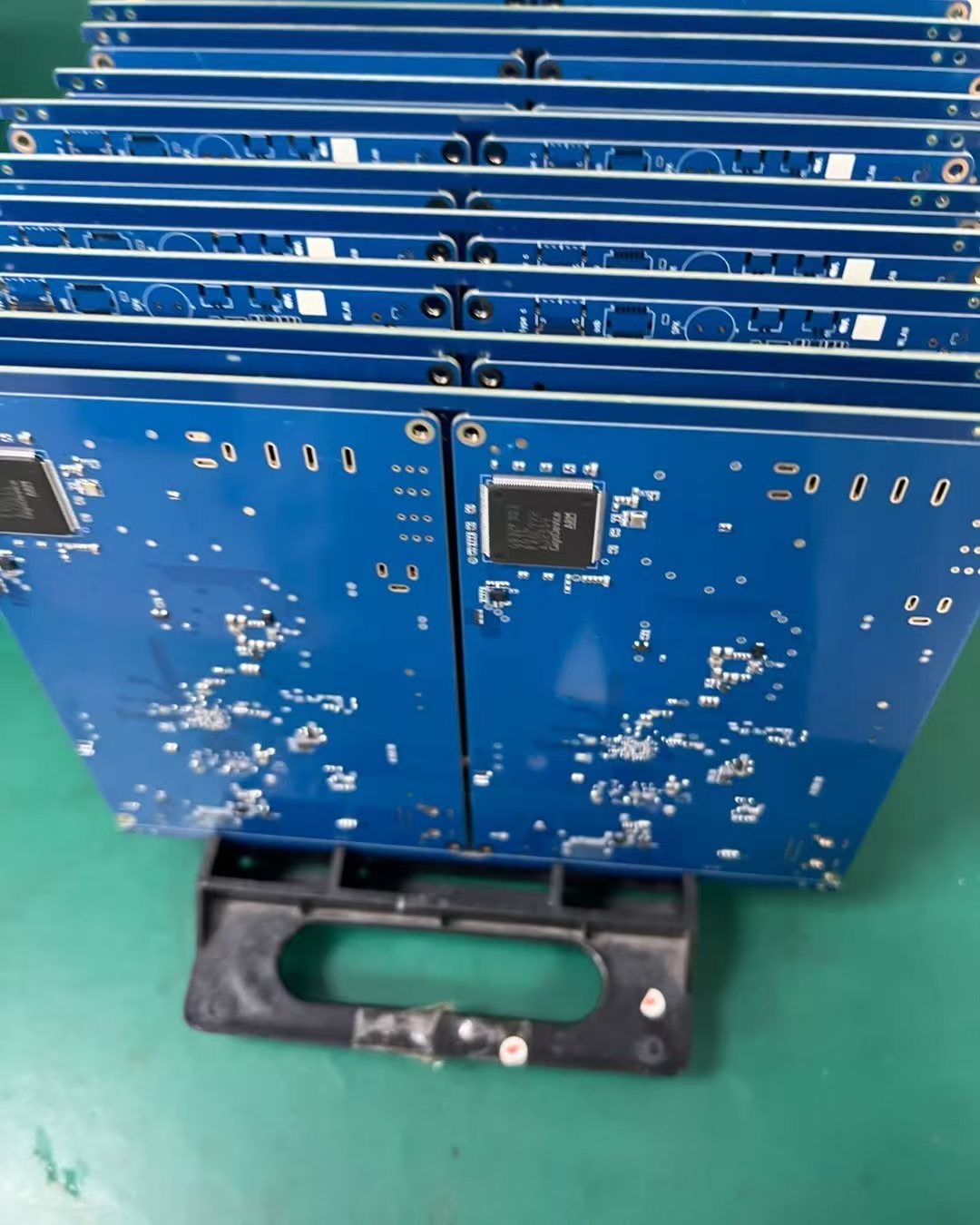
Low volume PCB assembly offers unparalleled flexibility for startups, niche markets, and prototype development, but it also presents unique challenges that differ from high-volume manufacturing. From component sourcing to quality control, these challenges require targeted solutions to ensure efficiency, reliability, and cost-effectiveness. This article explores the key challenges in low volume PCB assembly and the strategies that address them, helping businesses navigate the complexities of small-batch production.
Challenge 1: High Per-Unit Costs Due to Setup and Sourcing
One of the most significant challenges in low volume PCB assembly is the higher per-unit cost compared to high-volume production. This is primarily driven by fixed setup costs (e.g., stencil creation, machine programming) spread across fewer units, as well as premium pricing for small-quantity component orders. For example, a batch of 50 PCBs may incur the same stencil cost as a batch of 5,000, leading to a much higher per-unit expense.
Solutions:
- Consolidated Orders: Combine multiple small orders into a single production run to spread setup costs across more units. A manufacturer needing 20 PCBs for three different prototypes can produce 60 units in one batch, reducing per-unit setup expenses.
- Strategic Component Sourcing: Partner with low volume PCB assembly providers with access to bulk component inventory, who can offer better pricing by leveraging their supplier relationships. Many providers also offer consignment inventory for frequently used parts, minimizing upfront costs.
- Design Standardization: Use common components across multiple projects to reduce sourcing complexity and qualify for volume discounts, even for small batches.
Challenge 2: Component Shortages and Availability
Low volume projects often rely on specialized or obsolete components, which are prone to shortages. Sourcing small quantities of these parts can be time-consuming and expensive, with suppliers imposing minimum order quantities (MOQs) that exceed project needs. This is particularly problematic for prototype PCB assembly, where delays can derail development timelines.
Solutions:
- Alternative Component Identification: Work with assembly providers to identify equivalent components that meet design specifications. For example, a discontinued sensor can be replaced with a modern alternative with similar performance characteristics, verified through testing.
- Multi-Supplier Networks: Partner with providers who maintain relationships with multiple distributors and brokers, enabling rapid sourcing of hard-to-find parts. This is a key advantage of custom PCB assembly services, which prioritize flexibility in component sourcing.
- Forward Planning: For projects with known timelines, pre-order critical components to avoid shortages. Low volume providers can store these components in controlled environments, ensuring availability when needed.
Challenge 3: Quality Control in Small Batches
Ensuring consistent quality in low volume PCB assembly is challenging due to the limited sample size for statistical process control. A single defective unit in a batch of 50 can have a disproportionately large impact on project success, especially for high-reliability applications like medical devices or aerospace components.
Solutions:
- 100% Inspection Protocols: Implement comprehensive testing for every unit, including automated optical inspection (AOI), X-ray inspection for hidden joints, and functional testing. This is standard practice in small batch PCB assembly and ensures defects are caught before delivery.
- Process Validation: For critical projects, validate assembly processes with a small test run (e.g., 5 units) before full production. This identifies issues like solder paste inconsistencies or component placement errors early, reducing the risk of defects in the main batch.
- Traceability Systems: Use detailed documentation to track each component and process step, enabling root-cause analysis if defects occur. This is essential for compliance in regulated industries and supports continuous improvement.
Challenge 4: Balancing Speed and Precision in Quick Turnaround
Many low volume projects require rapid turnaround, but speed can compromise precision—especially for complex designs with fine-pitch components or mixed technology (SMT and through-hole). Rushing assembly increases the risk of errors like misaligned components or cold solder joints.
Solutions:
- Optimized Workflows: Quick turn PCB assembly providers use streamlined processes, such as pre-programmed machine templates for common component packages and dedicated teams for urgent orders, to maintain speed without sacrificing quality.
- Design for Quick Assembly: Simplify designs for rapid production by avoiding overly complex features (e.g., 0.3mm pitch BGAs) when possible, or clearly specifying tolerances to guide assembly teams.
- Parallel Processing: Conduct tasks like component sourcing and PCB fabrication simultaneously, reducing overall lead time. This requires close coordination between design, sourcing, and assembly teams— a strength of integrated turnkey providers.
Challenge 5: Scalability from Prototyping to Production
Low volume projects often serve as a bridge to larger production runs, but scaling from a prototype batch of 50 to a production run of 5,000 can reveal unforeseen issues. Design features that work for small batches may be inefficient or costly to scale, leading to delays or redesigns.
Solutions:
- Design for Manufacturability (DFM) for Scalability: Involve production engineers early in the design phase to ensure prototypes use features compatible with high-volume manufacturing (e.g., standard component packages, scalable solder paste stencils). Low volume PCBA providers with high-volume capabilities can offer valuable insights here.
- Incremental Scaling: Test scalability with intermediate batches (e.g., 50 → 200 → 1,000 units) to identify issues like component availability at scale or production bottlenecks, addressing them incrementally.
- Supplier Continuity: Partner with providers who can handle both low and high-volume production, ensuring consistency in processes and quality as volumes increase. This avoids the need to re-qualify new suppliers during scaling.
Challenge 6: Managing Design Iterations and Rework
Low volume assembly often involves frequent design iterations, especially for prototypes. Each iteration can require rework, such as replacing components or modifying traces, which is time-consuming and increases costs if not managed properly.
Solutions:
- Modular Design Approaches: Use modular PCB designs where critical sections can be modified without reworking the entire board, reducing rework time. For example, a sensor module can be designed as a separate sub-assembly that plugs into a main board, allowing easy updates.
- Efficient Rework Processes: Train technicians in advanced rework techniques for delicate components (e.g., hot-air rework stations for QFNs) and use specialized tools to minimize damage during adjustments.
- Clear Revision Control: Implement strict version control for design files and BOMs to avoid confusion between iterations. This ensures rework is based on the latest specifications, reducing errors.
FAQ
Q: How do low volume PCB assembly providers handle obsolete components for legacy system repairs?
A: Providers use reverse engineering to identify functional equivalents and maintain relationships with specialty suppliers of obsolete parts. Low volume PCB assembly services often include component substitution testing to ensure replacements perform identically to the original.
Q: Can low volume assembly meet the same reliability standards as high-volume for critical applications?
A: Yes. By implementing 100% inspection, material traceability, and compliance with standards like IPC-A-610 Class 3, small batch PCB assembly can achieve reliability levels comparable to high-volume production. This is validated through environmental testing (e.g., thermal cycling) for critical applications.
Q: What is the most cost-effective way to address frequent design changes in low volume projects?
A: Use a turnkey provider who can bundle design updates into the assembly process, avoiding separate fees for retooling. Custom PCB assembly providers often offer flexible pricing for iterations, especially if changes are communicated early.
Q: How do providers ensure consistent quality across multiple small batches of the same design?
A: Providers document all process parameters (e.g., reflow profiles, stencil designs) and store them for repeat orders. This ensures each batch uses identical settings, maintaining consistency. Regular equipment calibration also supports repeatable quality.
Q: What strategies reduce lead times for low volume PCB assembly with complex components?
A: Pre-qualify and stock critical complex components, use design simplifications (e.g., larger pitch components where possible), and partner with quick turn PCB assembly providers with in-house capabilities for rapid prototyping of custom stencils or fixtures.
Low volume PCB assembly presents unique challenges, but with targeted solutions—from strategic sourcing to rigorous quality control—these obstacles can be effectively managed. By partnering with experienced providers and adopting proactive strategies, businesses can leverage the flexibility of low volume PCB assembly while ensuring efficiency, reliability, and scalability. To address your specific low volume assembly challenges, contact ShwayPCB at yuan@shwaypcb.com.

Copyright © 2005-2025 ShwayPCB : PCB Fabrication and Assembly Manufacturer. All Rights Reserved. POWERED BY UEESHOP


Copyright © 2005-2025 ShwayPCB : PCB Fabrication and Assembly Manufacturer. All Rights Reserved. POWERED BY UEESHOP